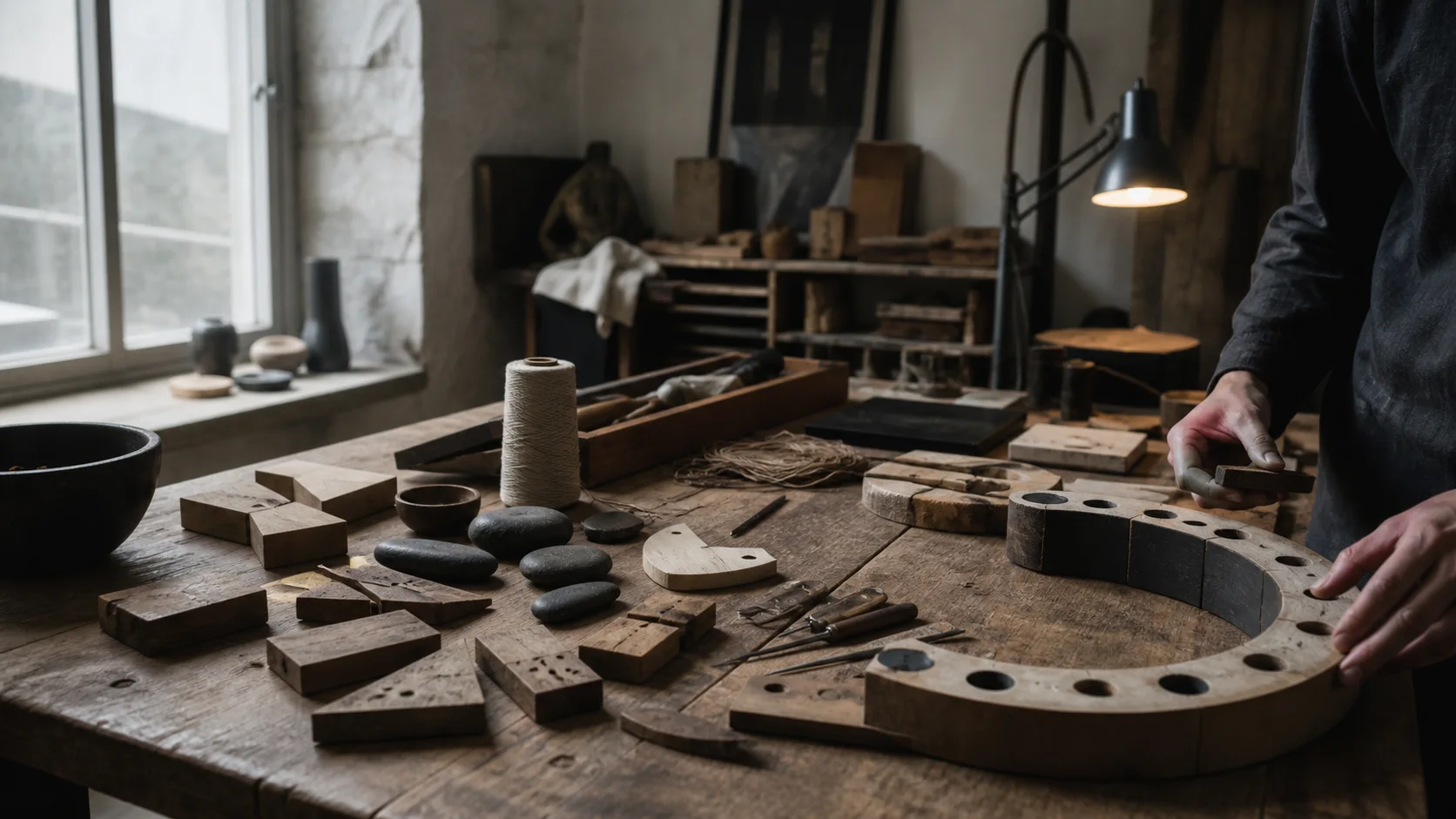
BEFORE THE OBJECT
A finished surface can hide the decisions that made it possible.
A handmade object often appears simple after the difficult work has been absorbed into its proportions. Someone chose the material, judged its scale, tested a connection, adjusted tension, accepted one variation, rejected another, and decided when the piece was ready to leave the bench. None of this needs theatrical language. It needs enough specificity that a customer can understand where skill, time, and responsibility entered the chain.
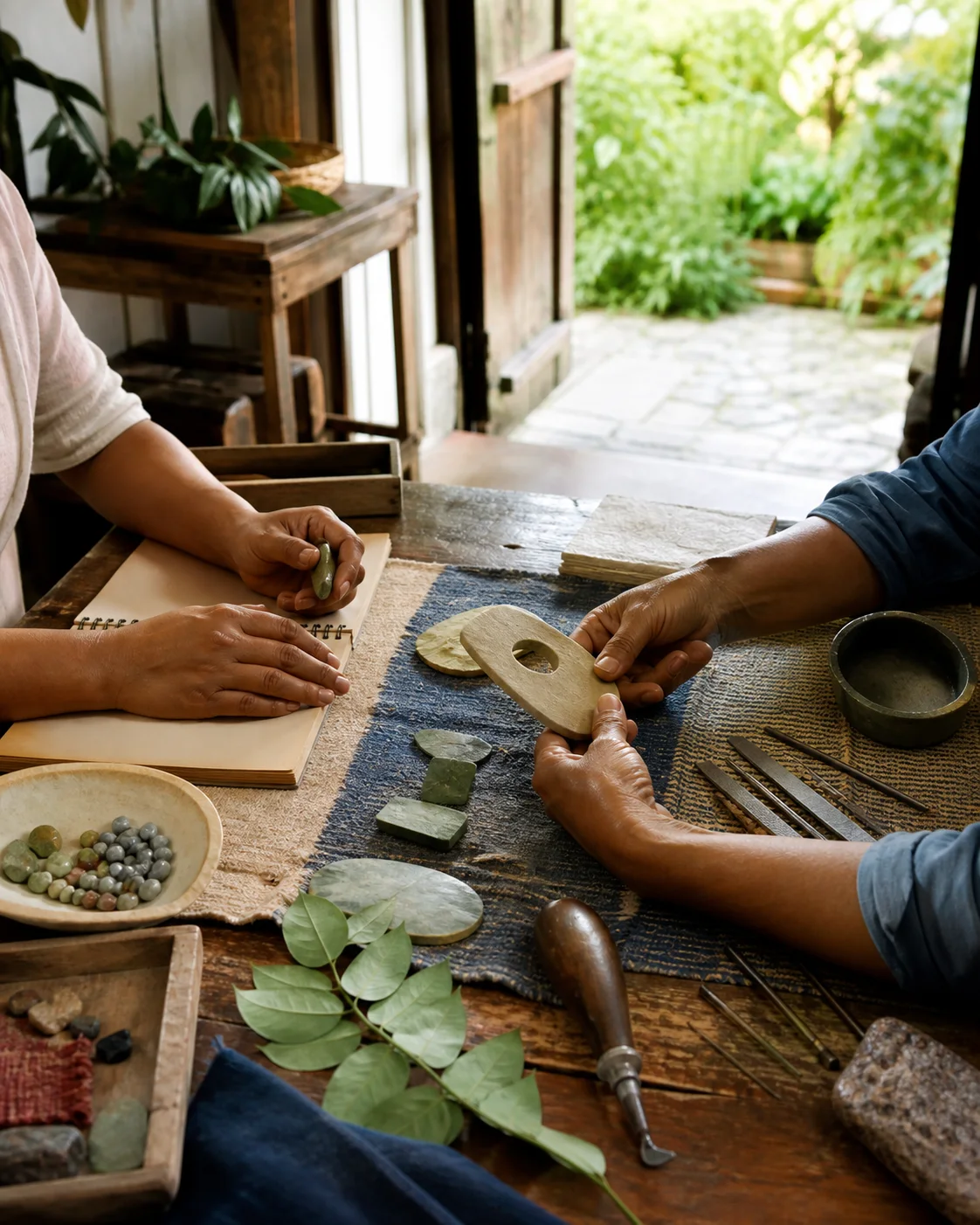
A photograph of a quiet studio can create atmosphere, but atmosphere is not process evidence. A useful craft story can show what the maker actually does, what is sourced, what is assembled, and what is checked. That information does not make the object less poetic. It gives the poetry a structure that can be respected instead of asking a sentimental word to carry the whole story.
“A craft story becomes trustworthy when the work can still be seen after the mood has passed.”
LIVING KNOWLEDGE
Craft is not only an object preserved in the past. It is knowledge that people continue to practise, teach, and adapt.
UNESCO’s framing of traditional craftsmanship places attention on safeguarding skills and knowledge, not only collecting finished artifacts. The distinction matters. An object can survive in a museum while the conditions for making it become fragile: fewer apprentices, less access to materials, unstable income, or no time to teach. A living practice needs people to have a future inside it, not only an audience looking back at it.
For a contemporary brand, this suggests a quieter responsibility. Tell the story in a way that leaves makers with agency. Name the skill rather than generalising a place. Explain the support rather than implying that a purchase magically rescues a community. If YUANCHARM supports handmade work by people with disabilities or older makers in rural communities, the meaningful proof is how the work, payment, training, or partnership is organised—not simply the emotional power of the image.
SHOW THE DECISION
The most valuable detail may be the moment when a maker chooses one material over another.
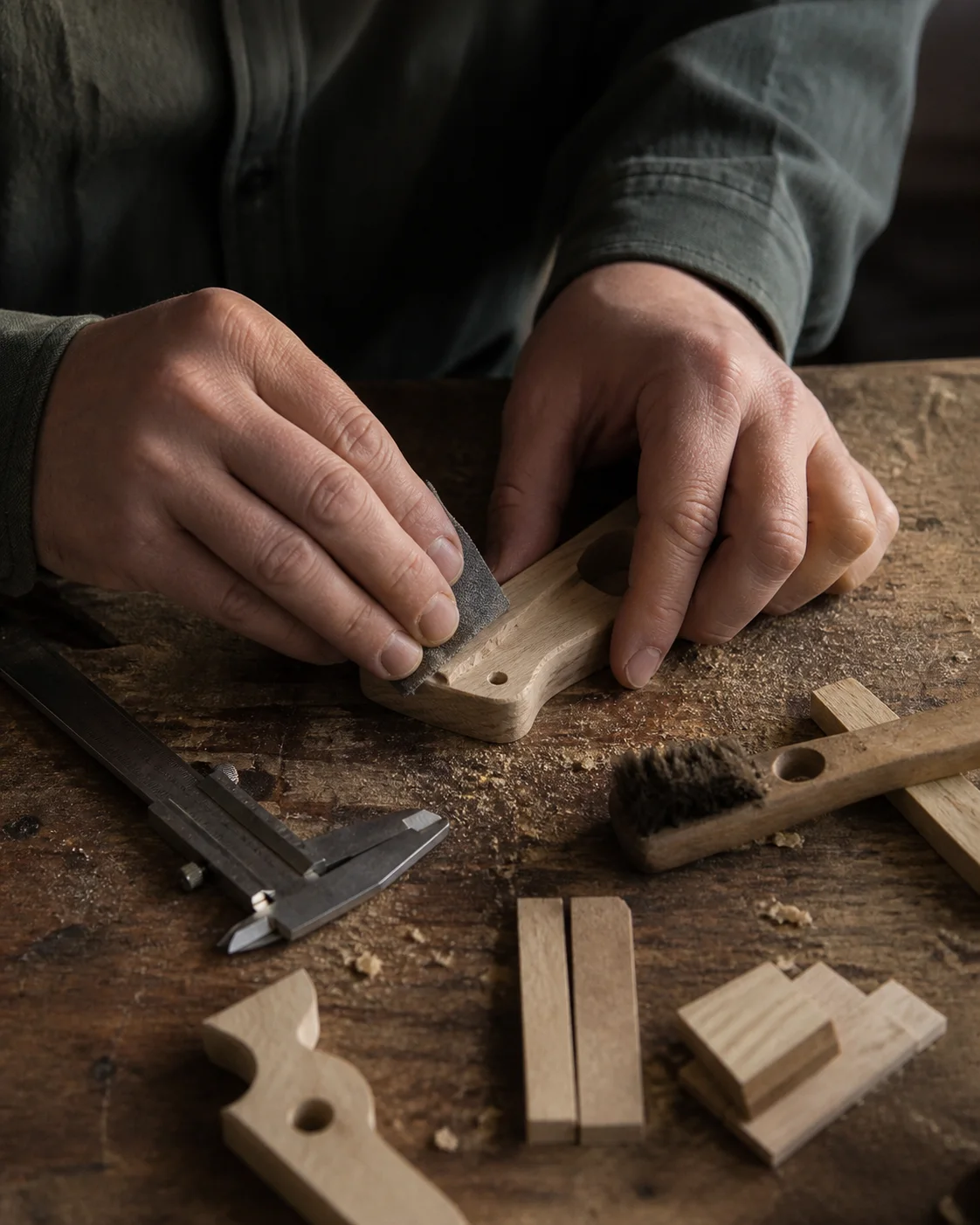
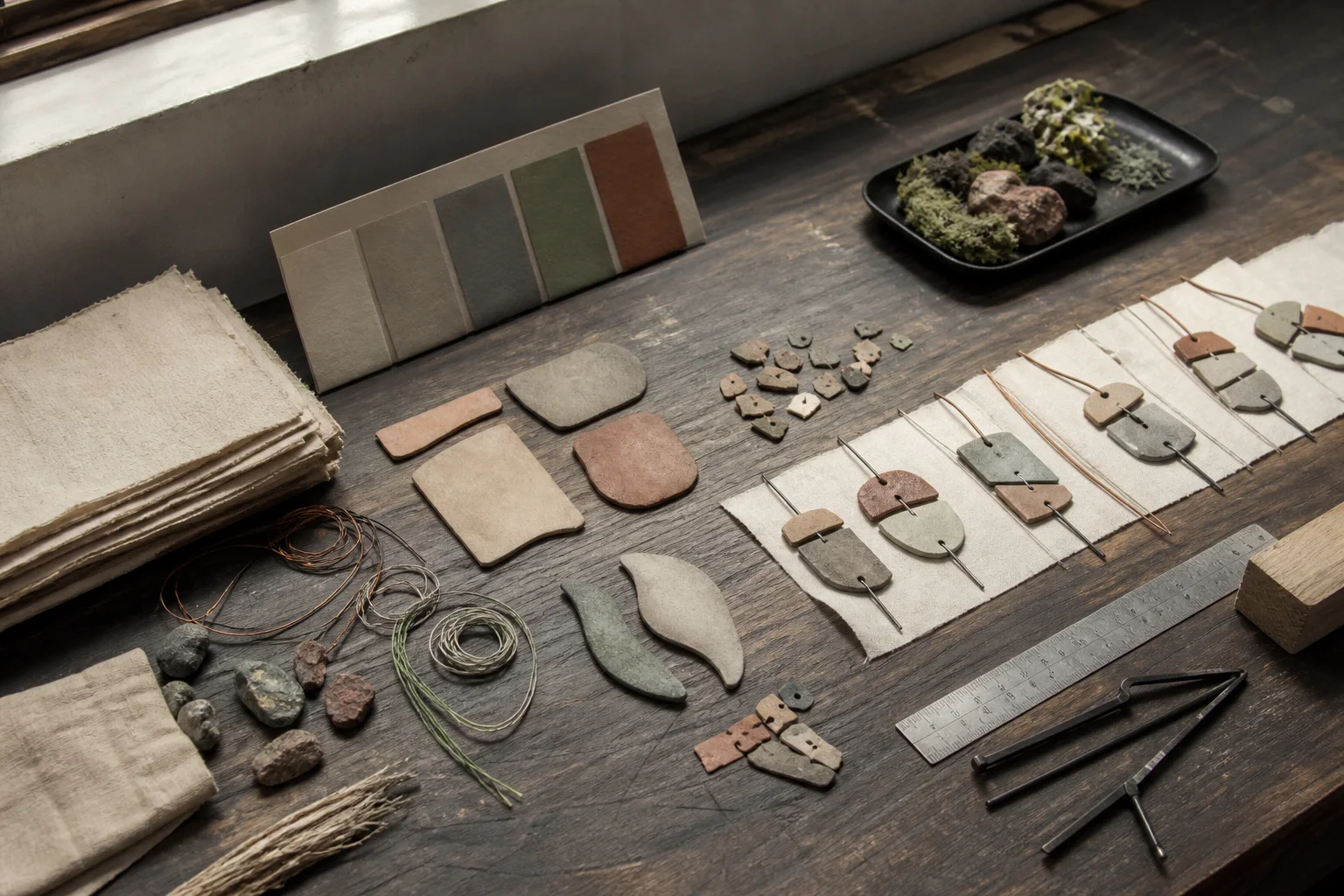
Material choice is a form of authorship. A maker may select a piece of wood for its grain, avoid a stone because its structure is uncertain, change the order of components for balance, or leave a small irregularity because removing it would erase something worth keeping. These decisions are rarely visible in a product grid, yet they are what separate a resolved object from a collection of attractive parts.
Show one or two of those decisions plainly. What was the material asking for? What did the maker change? What does the customer receive because of that judgment? Specificity is especially important when the product includes natural variation. Tell the reader which differences are expected, which are checked, and which may appear in the piece they receive. Character should not become a convenient name for an avoidable defect.
DIGNITY IS NOT DECORATION
A person’s life should never be used as a shortcut around the evidence of their work.
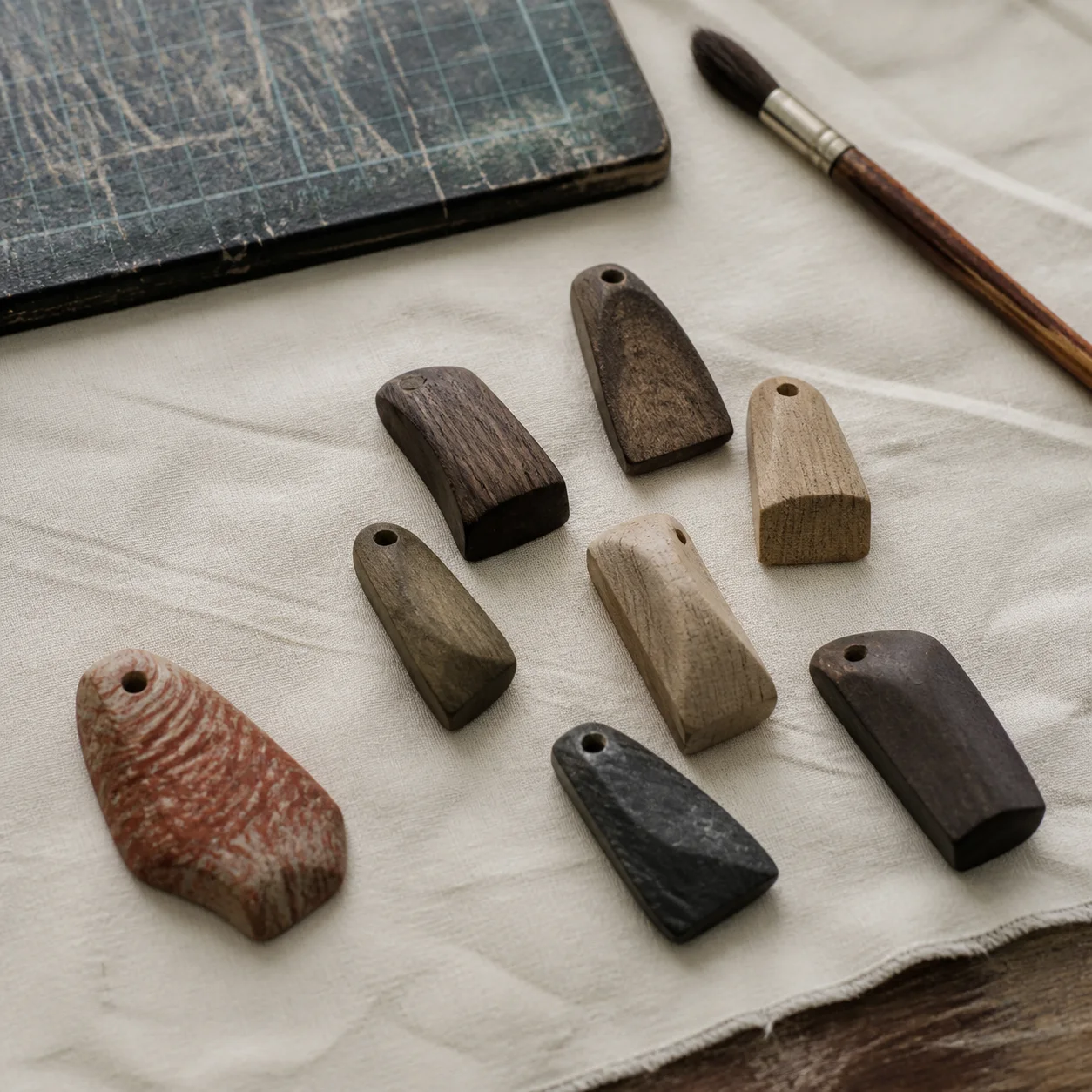
Stories about disability, age, rural life, or economic difficulty can invite care, but they can also flatten a person into a reason for someone else to feel generous. The maker is not a symbol of hardship. They are a worker, a designer, a teacher, a neighbour, and a person with preferences that may not fit the campaign. The work deserves to be described with the same precision we would give any other form of expertise.
Before publishing an origin story, ask who has consented to it, who benefits from its circulation, and what the customer is actually being invited to support. Avoid promises that imply one purchase changes a whole life. Make the relationship legible instead: this is the work, this is the role of the partner, this is what is known, and this is what remains in progress. Honest limits are not a weakness in a social story. They are part of its respect.
A BUYER’S FIELD NOTE
You can support a craft practice with curiosity instead of a rescue fantasy.
Ask four questions before buying. What part is made by hand? Which materials are selected or finished by the maker? What variation should I expect? What happens if the item needs care, adjustment, or repair? If a community or social purpose is part of the story, ask how support reaches the people doing the work. You do not need to demand a factory audit from a small studio. You do deserve an answer that is more precise than a mood.
Then look at the object itself. Do the proportions feel considered? Are the connections secure? Does the description help you understand the material rather than making it sound magical? A modest piece can be carefully resolved. A high price can reflect skill and time, but price alone cannot prove either. Let the work, the words, and the relationship between them carry the decision together.
LET THE WORK REMAIN
Verdant Stillness is strongest when the material and the making can speak without a borrowed promise.
Verdant Stillness brings translucent Green Rutilated Quartz, warm agarwood, and floral silver details into a composed, everyday form. Its meaning does not have to be inflated into a guarantee of clarity or a claim about the maker’s life. The useful story is closer to the object: color, proportion, hand assembly, natural variation, and the care that lets those details remain visible. The wearer can then decide what steadiness or forward motion means in their own context.
Let the origin story continue after the sale. Give clear care guidance. Keep the maker’s work named in the archive. Update the community project when the facts change. Invite customers to learn without asking them to perform gratitude. A craft practice earns long-term trust when its people remain present as skilled participants in a living chain, not as a background image that disappears once checkout is complete.