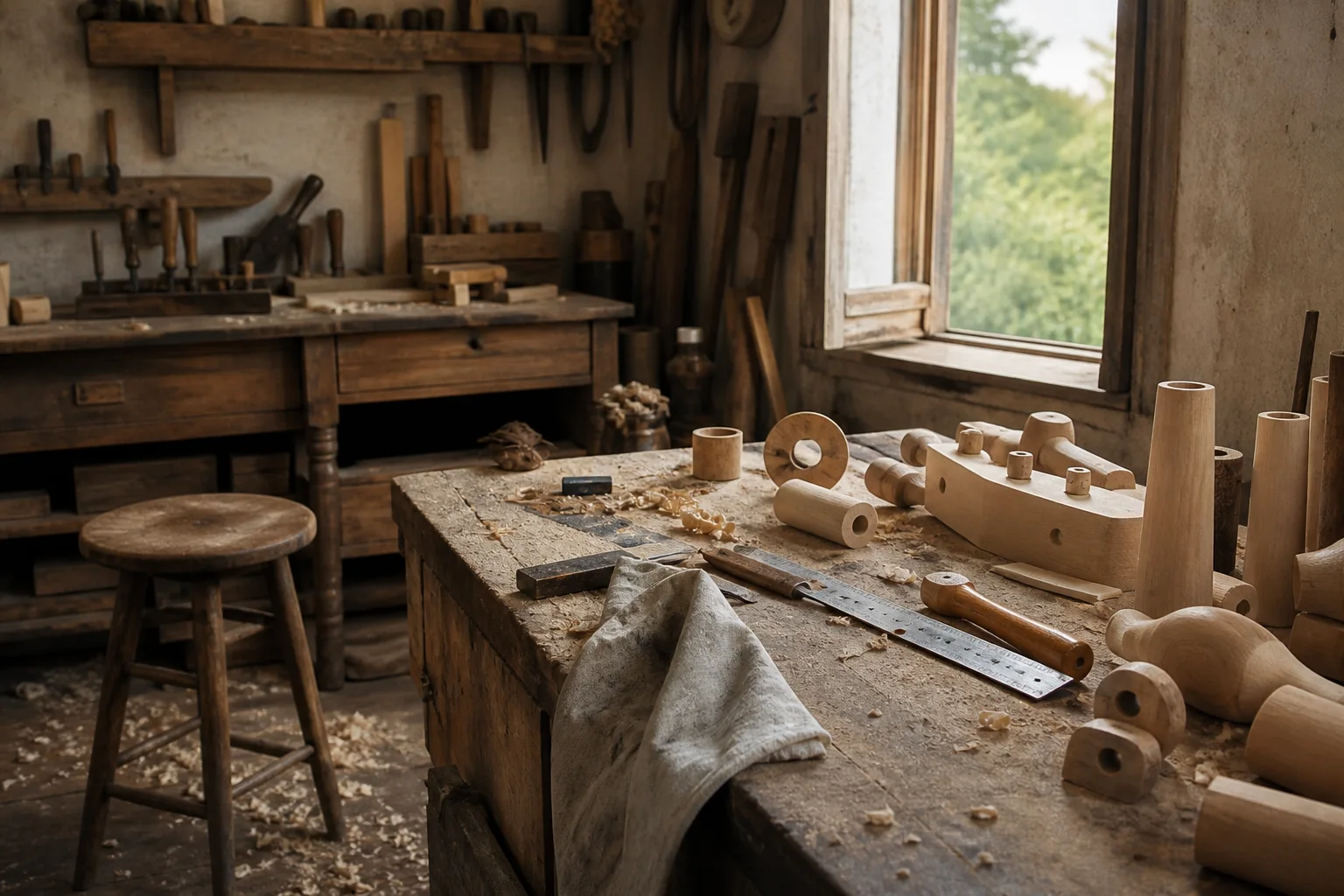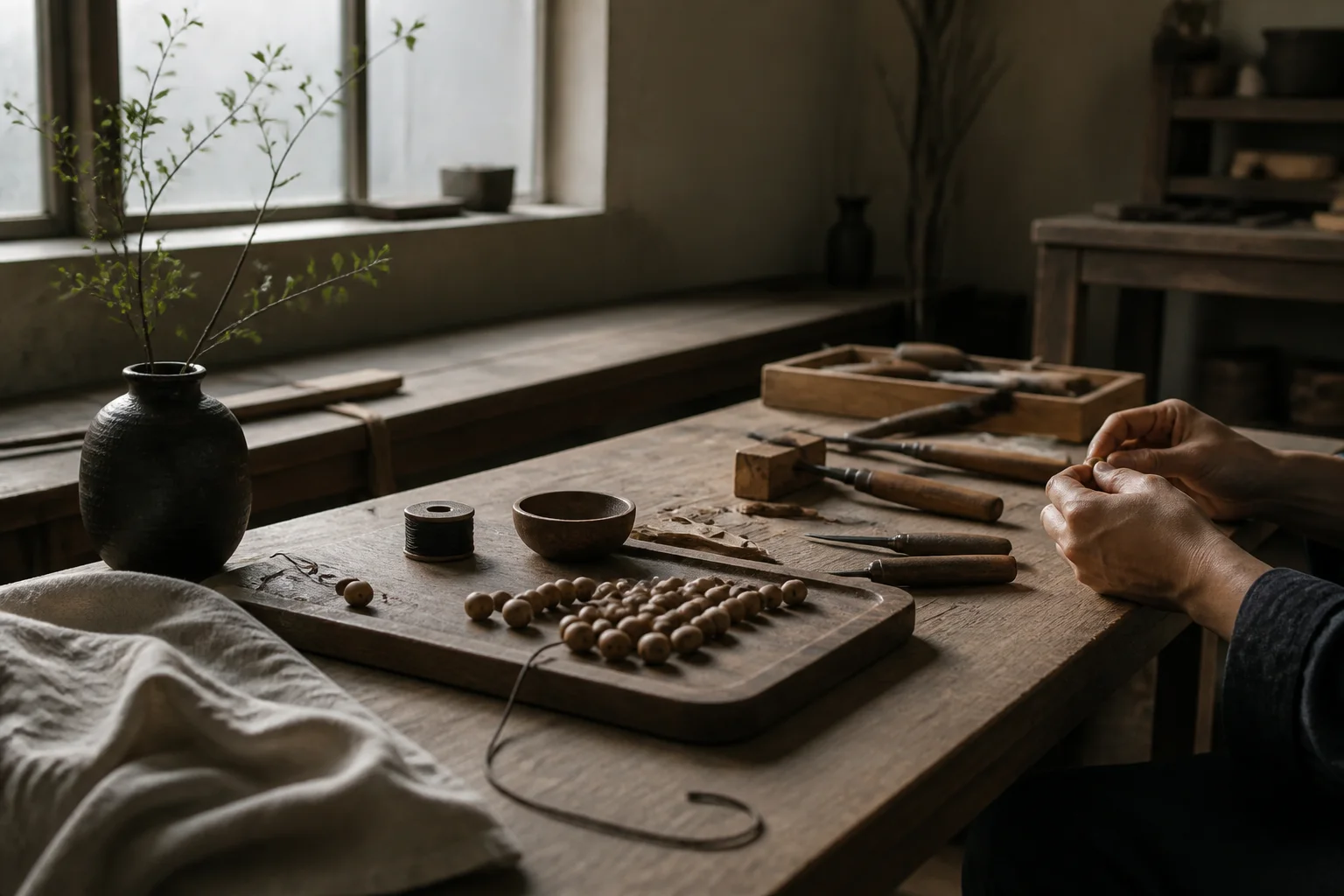
THE FINISHED PIECE IS NOT THE WHOLE STORY
A photograph shows an outcome. Craft begins in the decisions the photograph leaves outside the frame.
A handmade piece can look simple after the difficult decisions have disappeared into its surface. Someone selected the materials, judged their scale, tested the tension, adjusted the sequence, accepted or rejected variation, and decided when the work was finished. None of those actions needs to be made theatrical. They simply need to be recognised as knowledge. Without them, handmade becomes an adjective attached to a product rather than a relationship between skill, time, and material.
This is why origin language should be specific. Instead of saying that a piece was made with love, a useful description can explain which parts are assembled by hand, where variation is expected, how the materials are chosen, and what the maker is responsible for. Specificity does not drain the poetry from an object. It gives the poetry something solid to stand on.
“Handmade is not a mood. It is a chain of decisions that someone can stand behind.”
CRAFT IS KNOWLEDGE IN MOTION
A craft tradition is kept alive by skills, teaching, adaptation, and the people who make those things possible.
UNESCO's approach to traditional craftsmanship places emphasis on safeguarding skills and knowledge, not only collecting finished objects. That distinction matters. A beautiful artifact can be preserved in a case while the ability to make it becomes harder to practise, teach, or sustain. Craft belongs to living conditions: access to materials, time to learn, fair recognition, and the freedom to adapt a technique without erasing its lineage.
For a contemporary jewelry brand, this suggests a more responsible way to tell a making story. Show the decision points. Name the material pressure. Give attention to the hands and the learning around the work without turning a maker into a marketing symbol. When a process is shared, it should increase respect for the person and the skill, not merely create a more persuasive reason to buy.
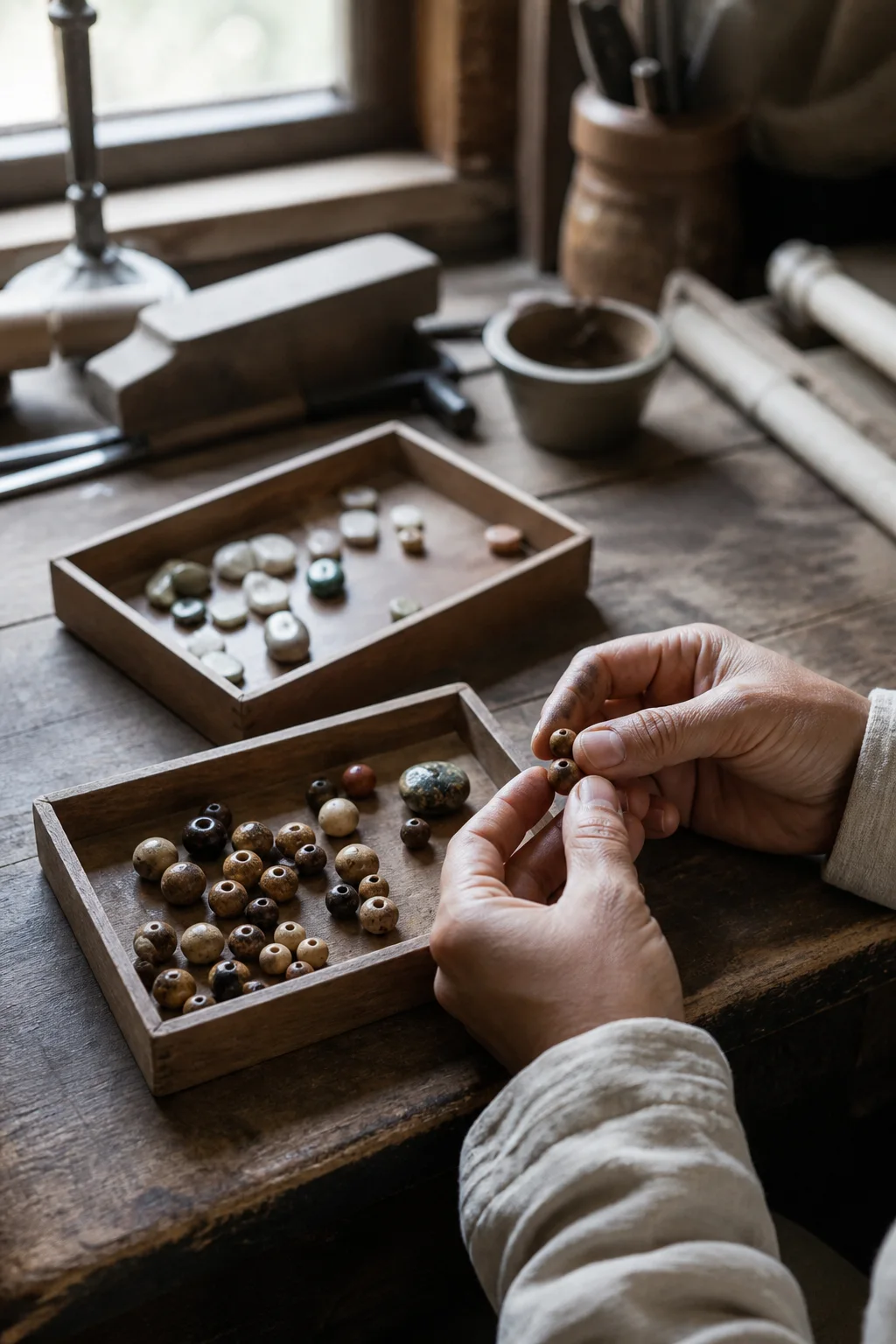
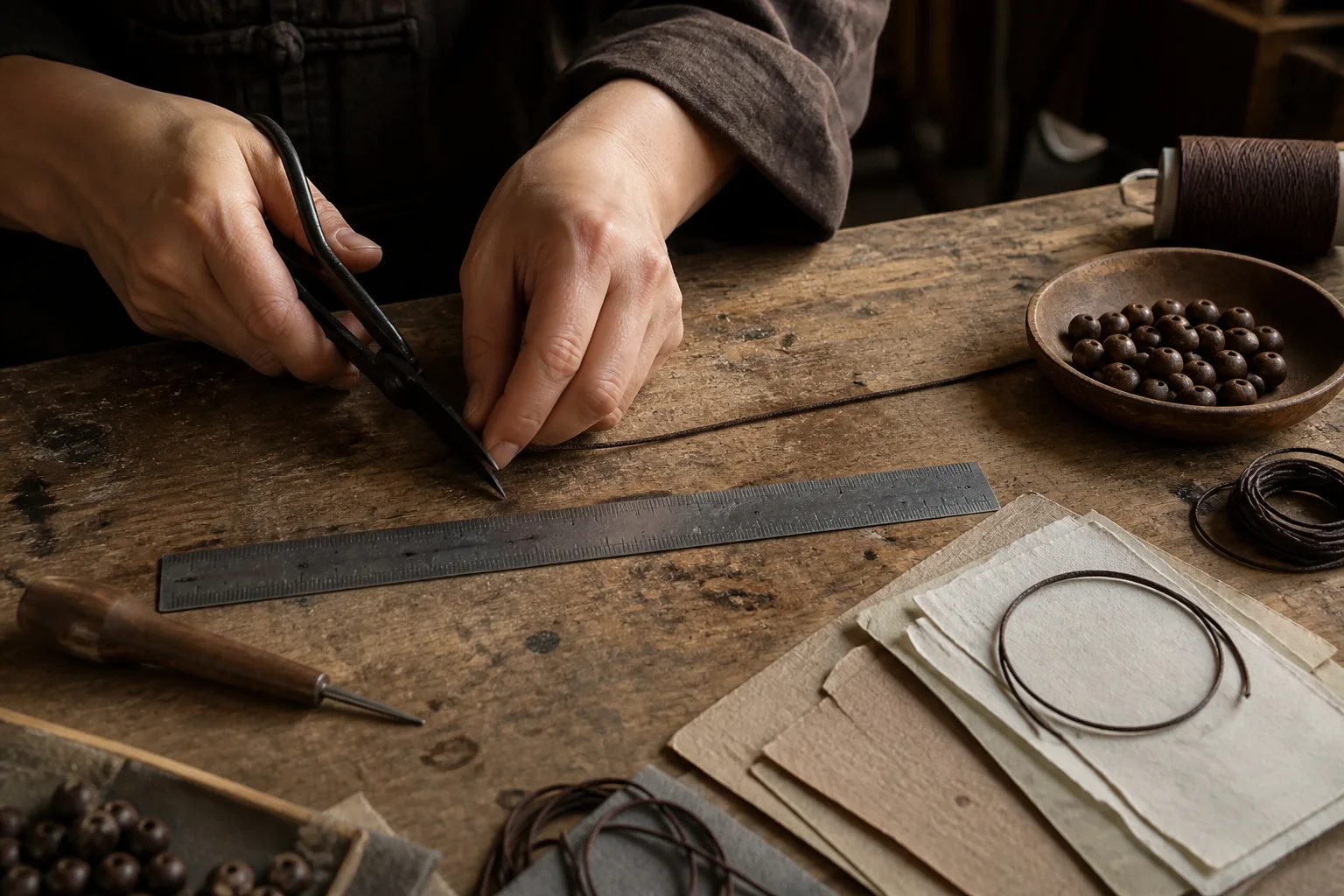
VARIATION IS NOT A PERFORMANCE
A small difference can be evidence of process, but it should never be used to excuse avoidable carelessness.
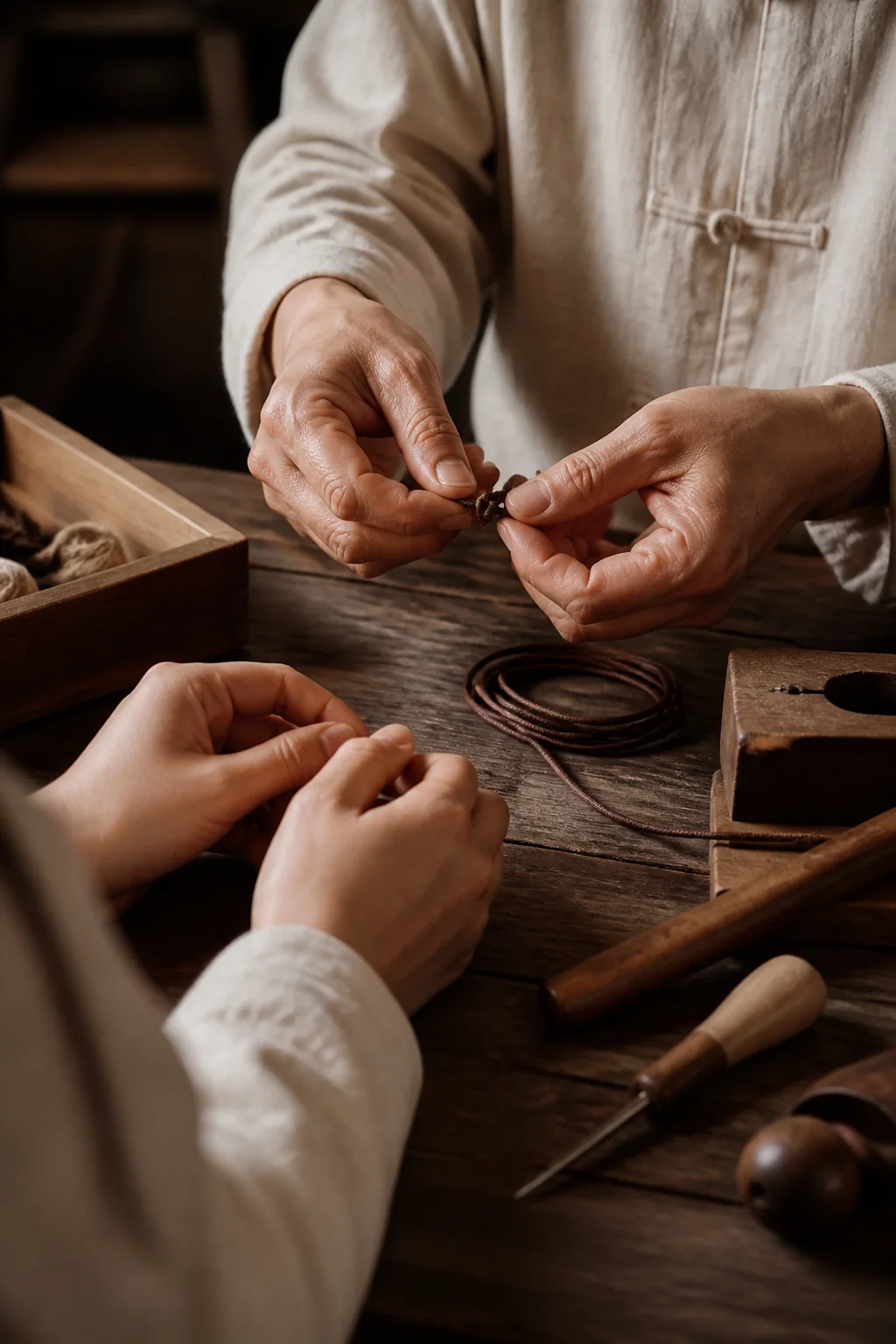
Wood grain shifts. Stone color moves. Cord tension changes slightly as a knot settles. These details may be part of the character a customer wants from handmade work. But variation has a boundary. A piece still needs to be structurally sound, comfortable to wear, consistent with its description, and checked before it leaves the studio. Respecting craft means respecting the standard as well as the irregularity.
The most honest product language separates the two. Say which differences are expected and visible, and say what the maker checks for. A customer should not have to guess whether an uneven edge is intentional, whether a component is secure, or whether a color difference comes from the material or from the image. Trust grows when the process leaves room for character without turning every uncertainty into charm.
QUESTIONS WORTH ASKING
A good handmade purchase can survive a few plain questions.
Ask what part of the object is made by hand and what part is sourced ready-made. Ask how the materials are selected and whether natural variation is visible in the piece you will receive. Ask what the maker checks before shipping and what care the finished object needs. If a social or community story is part of the offer, ask how the work, payment, or support is organised rather than relying on a moving image or a general promise.
These questions are not a demand for a factory report from a small studio. They are a way of understanding the relationship you are entering as a buyer. A concise, direct answer is often enough. If information is not yet available, saying so is more trustworthy than filling the gap with a sentimental sentence. Unknown can be a temporary condition; vagueness should not become the brand voice.
A BETTER BUYING STANDARD
Choose the piece whose process aligns with the kind of relationship you want to support.
Price is only one part of a handmade decision. Consider durability, repair or care guidance, material clarity, the scale of the maker's work, and whether the story gives people agency rather than reducing them to a cause. A piece can be modest and still be carefully made. A higher price can be justified by skill and time, but the price alone cannot prove either. Let evidence, description, and the object in your hand work together.
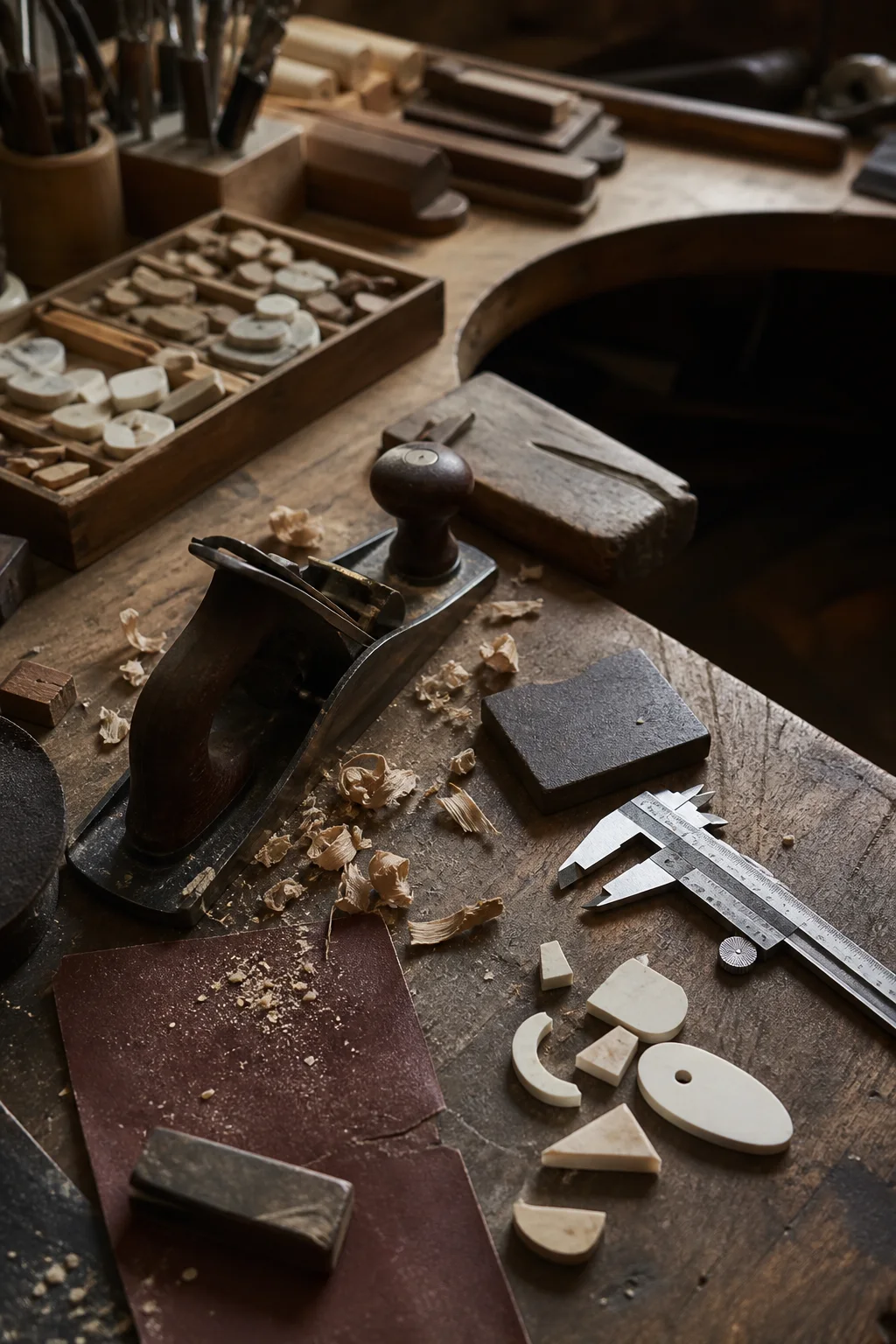
This standard also leaves room for different forms of making. Contemporary design may combine machine-cut components, sourced materials, and hand assembly. That is not a failure if it is described clearly. Craft is not protected by pretending that every stage happens in one pair of hands. It is protected by naming the chain, valuing the knowledge within it, and refusing to let the most human part of the story become invisible once the sale is complete.
WHERE THE STORY CONTINUES
The origin story should continue in the way an object is worn, cared for, and remembered.
Citrine Wealth is a quiet example of how a product can meet this idea without needing a dramatic claim. Natural citrine is woven with gold thread in a piece intended for everyday wear. The connection is practical: the material and the handwork give the object a tactile rhythm, while the wearer decides what that rhythm comes to mean. The bracelet is not proof of a social story by itself. The responsibility remains in the clarity of the making and the care after purchase.
When you choose handmade, let the object lead you back to the process rather than replacing the process with a slogan. Notice the tension, the grain, the tiny decisions, and the people whose knowledge made them possible. A meaningful purchase does not freeze craft in the past. It helps a living skill remain visible, respected, and able to change with the people who carry it forward.