BEFORE THE FINISHED PIECE
A bracelet is designed long before it reaches the wrist.
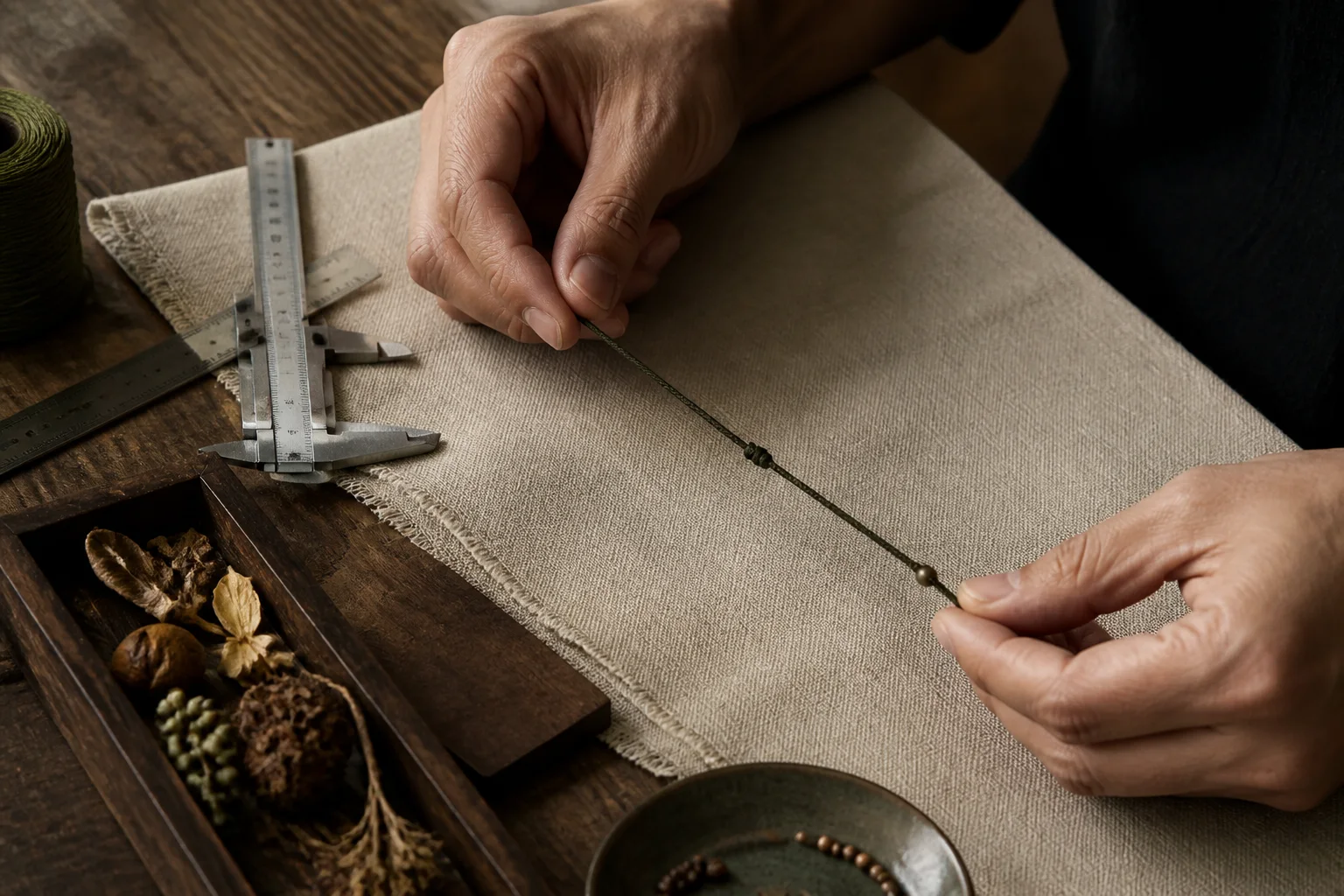
The finished circle makes making look effortless. Beads appear to have found their order, the thread disappears into the rhythm, and the object seems to have always known its shape. In practice, a small bracelet is a chain of choices: which materials belong together, which surface deserves the centre, how much contrast the eye can hold, and how the piece should move when a hand moves.
That sequence is why handmade jewelry can feel unusually present. You are not only looking at a result. You are sensing the trace of decisions that have been kept visible rather than smoothed into anonymity. The design is resolved, but it is not sterile. A minute difference in grain, colour, or tension can make the piece feel like an object with a life rather than a diagram of an object.
“The hand does not interrupt the design. It is one of the design materials.”
SELECTION IS EDITING
Natural variation becomes beautiful when it is given a clear boundary.
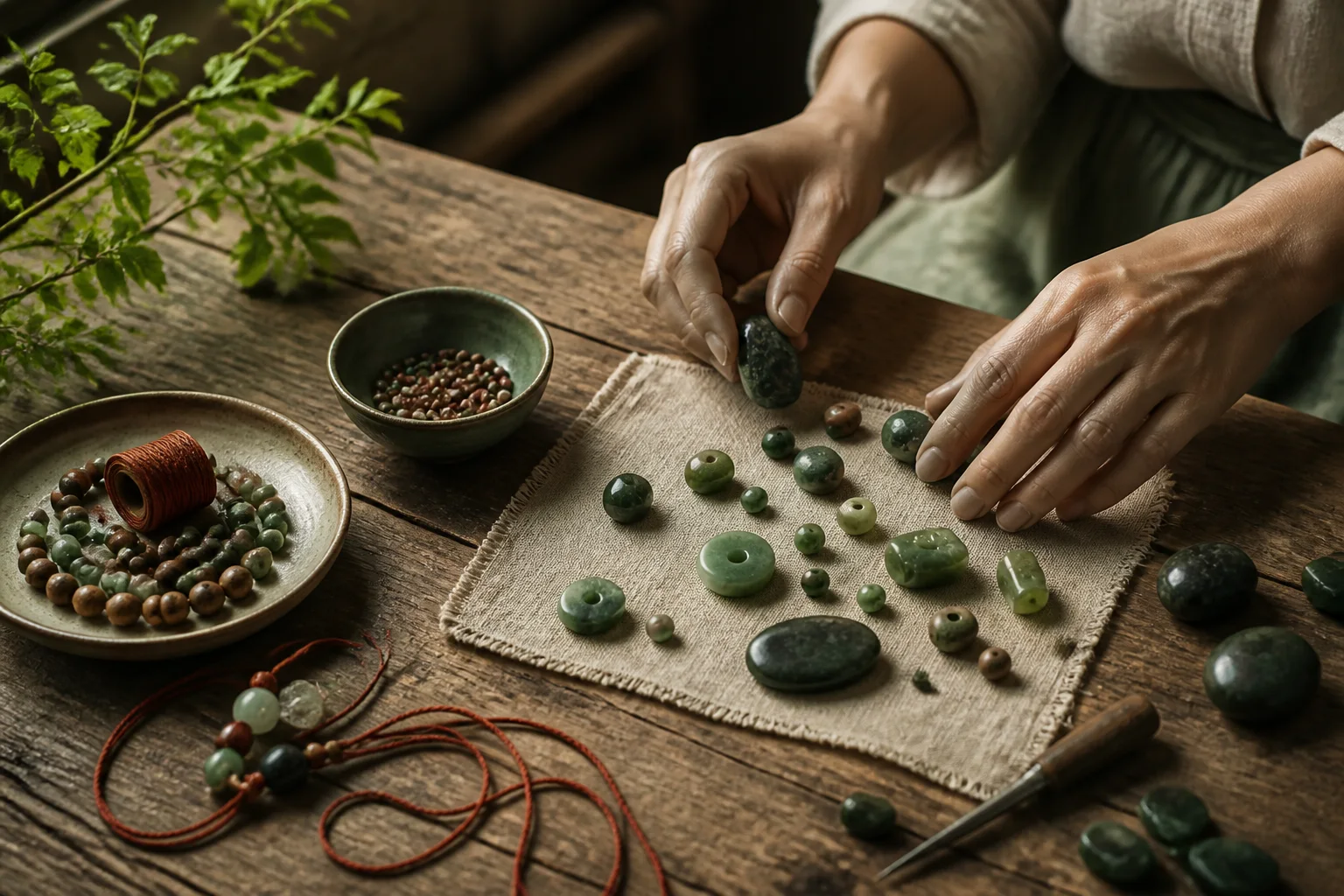
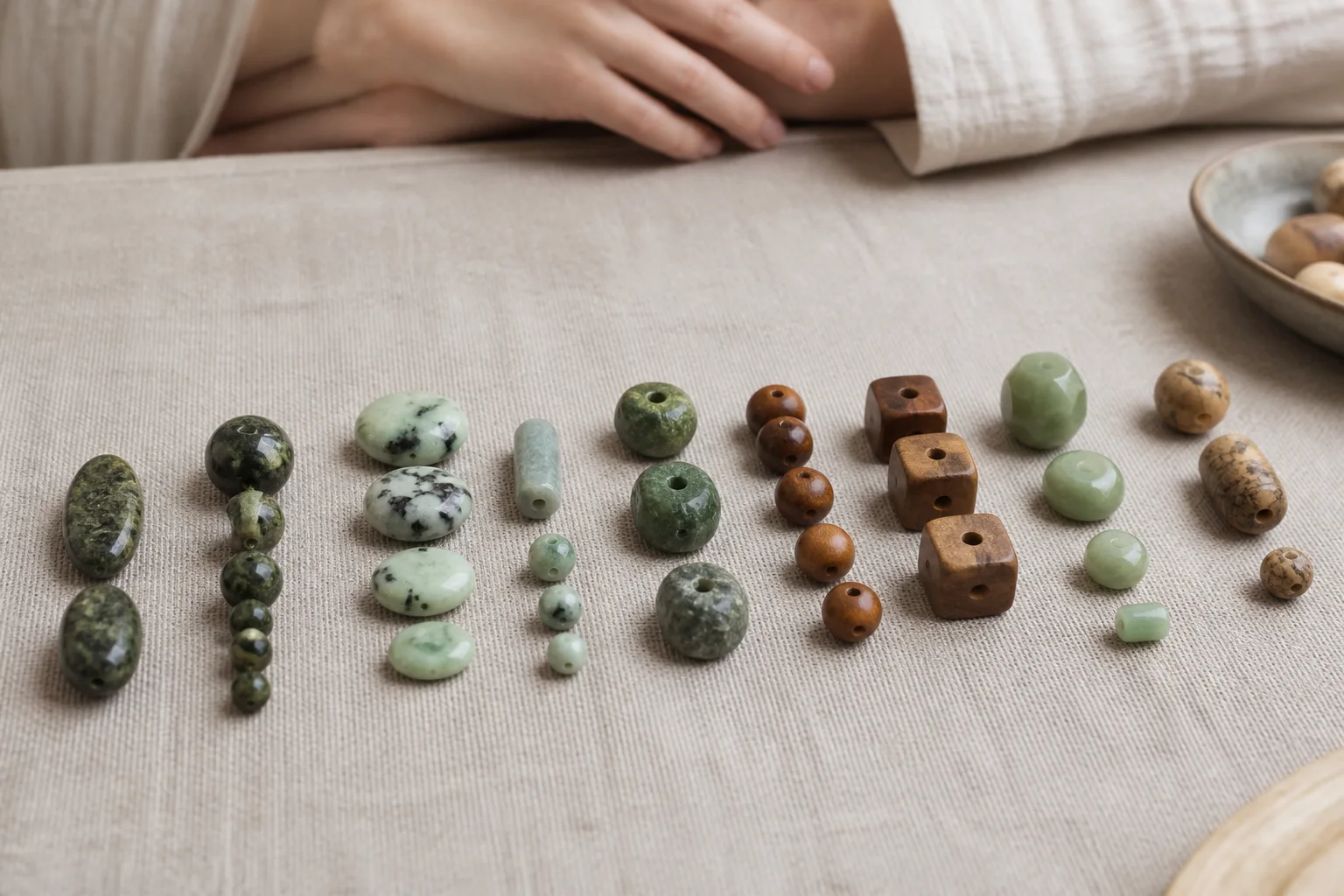
Working with natural materials does not mean accepting every component without thought. It means paying closer attention to what each component is already saying. One bead may carry a warmer brown, another a quieter vein, another a small inclusion that catches light only when the wrist turns. The maker's task is not to erase those differences, but to place them where the whole can hold them.
This is a form of editing. A restrained palette gives variation somewhere to breathe. Repeated bead sizes create rhythm. A single accent can keep the eye from losing the centre. The result feels calm not because every part is identical, but because the differences have been arranged with enough discipline to belong to one sentence.
SKILL IN THE THREAD
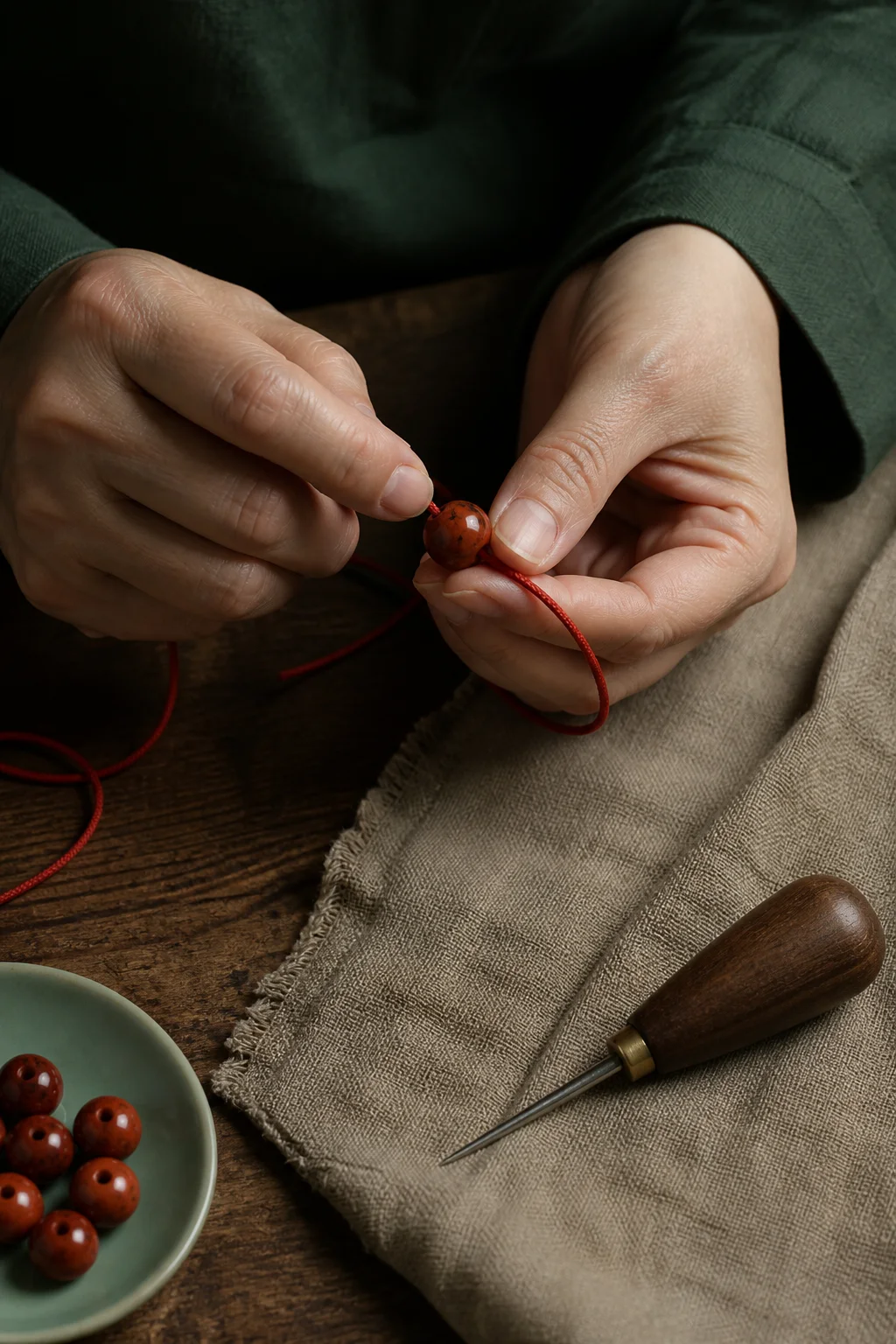
The most important detail may be the one that lets the bracelet move well.
A bracelet is a moving object, so its quality cannot be judged only from a still photograph. The thread has to hold the circle while allowing the hand to live normally. The beads need to sit in rhythm rather than fight one another. Edges and metal details should feel considered against the skin. Small construction decisions become the difference between a piece that is admired once and one that is chosen again tomorrow.
UNESCO's writing on traditional craftsmanship places emphasis on knowledge, skills, apprenticeship, and the communities that keep making practices alive. That perspective changes how we read the word handmade. It is not merely a mood or a rustic finish. It points to a body of attention that has to be learned, repeated, and passed through people before it can appear simple in the final object.
VARIATION WITHIN A SERIES
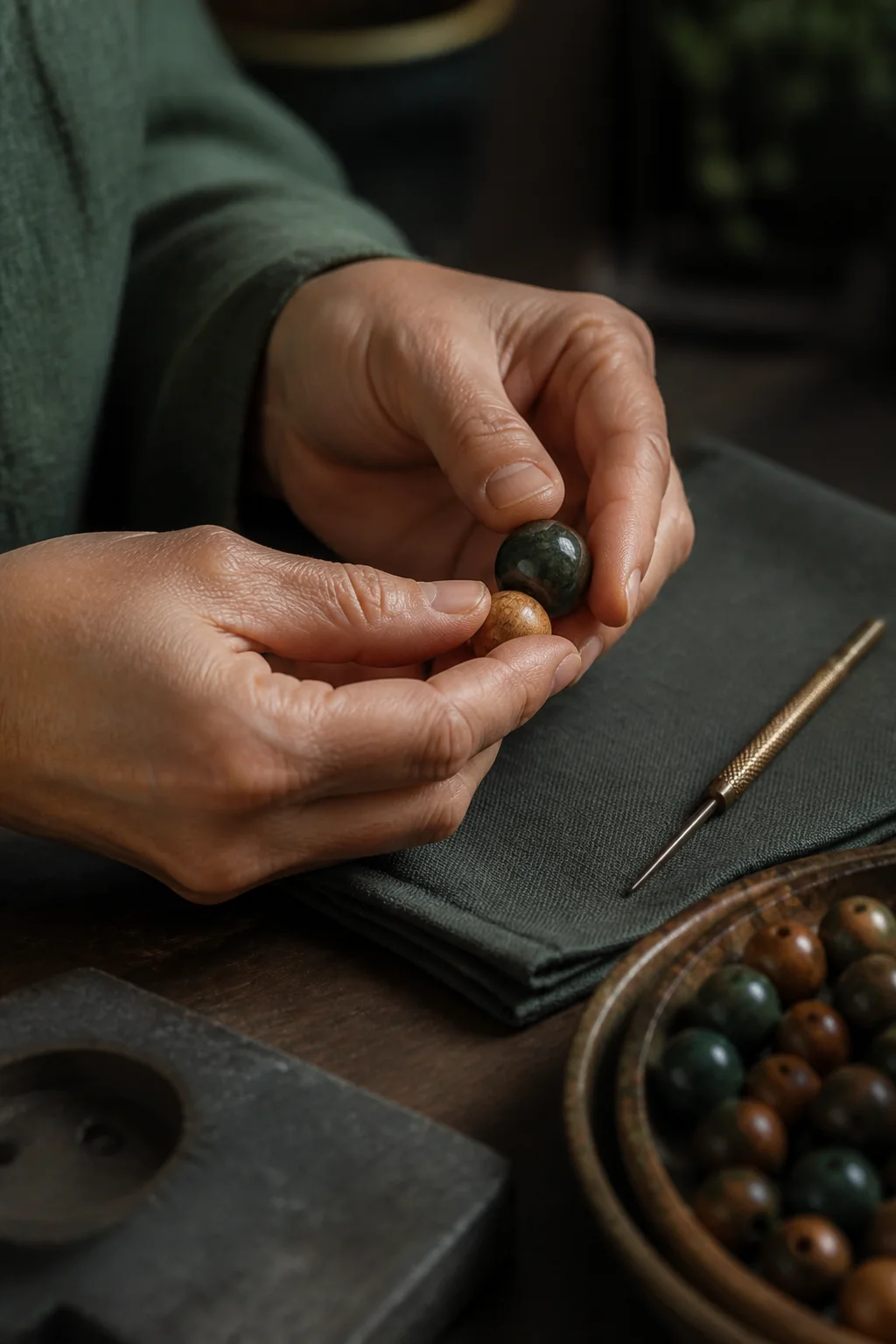
A collection can share a language without speaking in identical voices.
A useful collection has a recognisable grammar: the proportions feel related, the material choices make sense together, and the objects can live in the same world. But a collection made entirely from visual copies quickly loses the feeling of discovery. The small differences are what let a wearer find a piece that feels more specific to them.
For YUANCHARM, that language begins with the meeting of natural material, modern restraint, and a meaning that is chosen rather than prescribed. The object can nod to an Eastern vocabulary without becoming costume. It can carry an old idea of connection while remaining at home with a white shirt, a dark coat, or the practical clothes of a working day.
YUAN TOGETHER
The story of an object becomes wider when making leaves room for dignity.
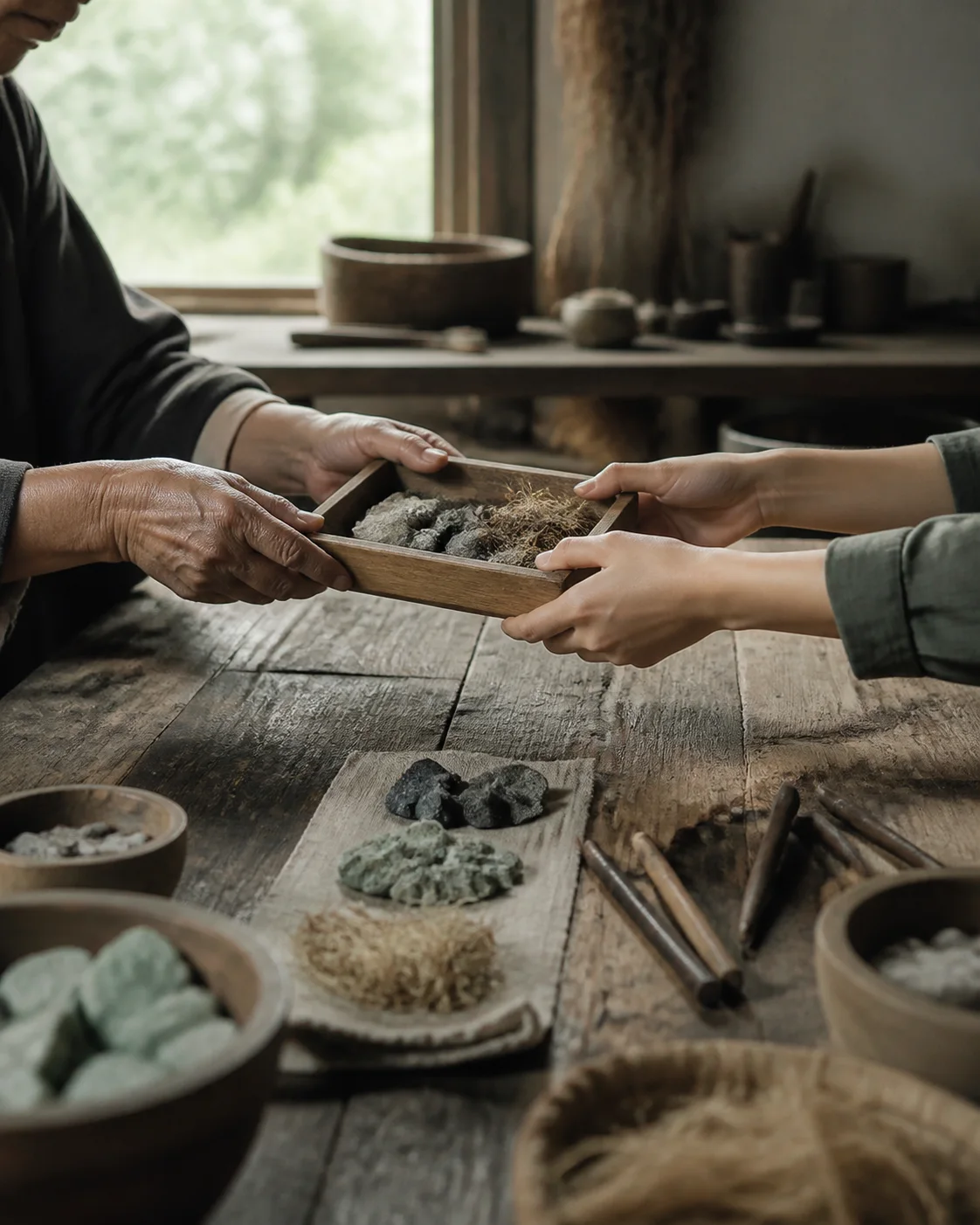
YUAN TOGETHER is the part of the YUANCHARM story that asks what a meaningful object can return to the world around it. The ambition is simple to describe and serious to practise: create a path for handmade work, including work by people with disabilities and older makers in rural communities, to be seen with respect and connected to a wider gifting culture.
That work should never be reduced to a sentimental label. The maker is not a marketing device, and a gift is not meaningful because a buyer has been asked to feel sorry for someone. Dignity sits in the details: fair attention to the work, clear credit when appropriate, a patient standard of finish, and a relationship that treats contribution as real contribution. A small bracelet can be part of that circle when the system around it is built carefully.
CHOOSE THE HANDMADE LINE
Look for an object that feels resolved and still remembers how it was made.
When choosing handmade jewelry, look beyond the word itself. Read the material description. Look at the construction. Notice whether the object has a clear proportion and whether the promise around it stays honest. Ask if the variation feels like natural character or like an excuse for careless finishing. The best handmade pieces let you see both discipline and life at once.
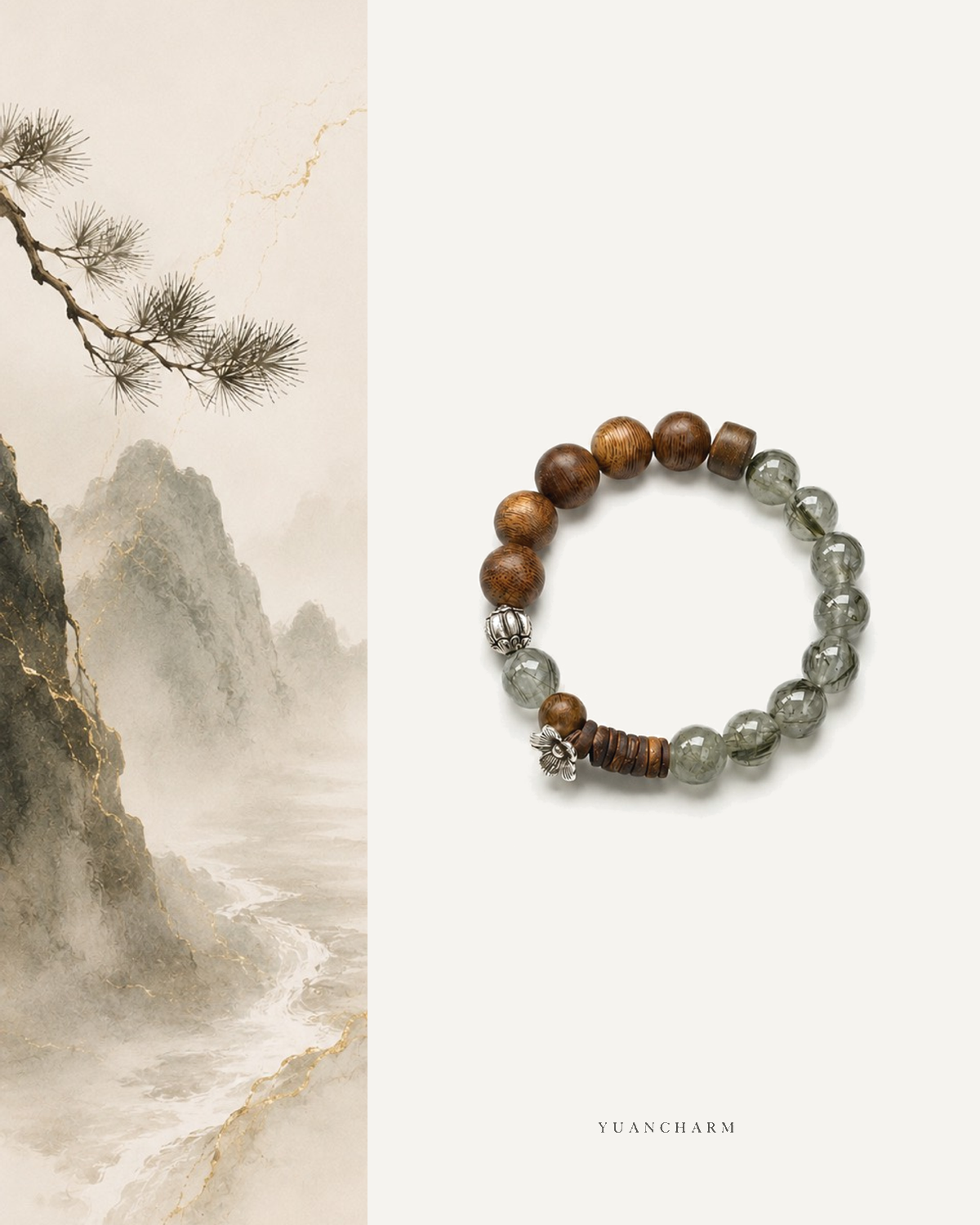
Verdant Stillness carries that balance through green-rutilated quartz, warm agarwood, and restrained silver-toned detail. The palette is quietly alive rather than loud, and the single-loop form keeps the material conversation close to the wrist. It is a piece for someone who wants an object with visible character, but also wants that character to live comfortably inside a real routine.