A CLOSER LOOK
Materials become meaningful when we stop asking them to look identical.
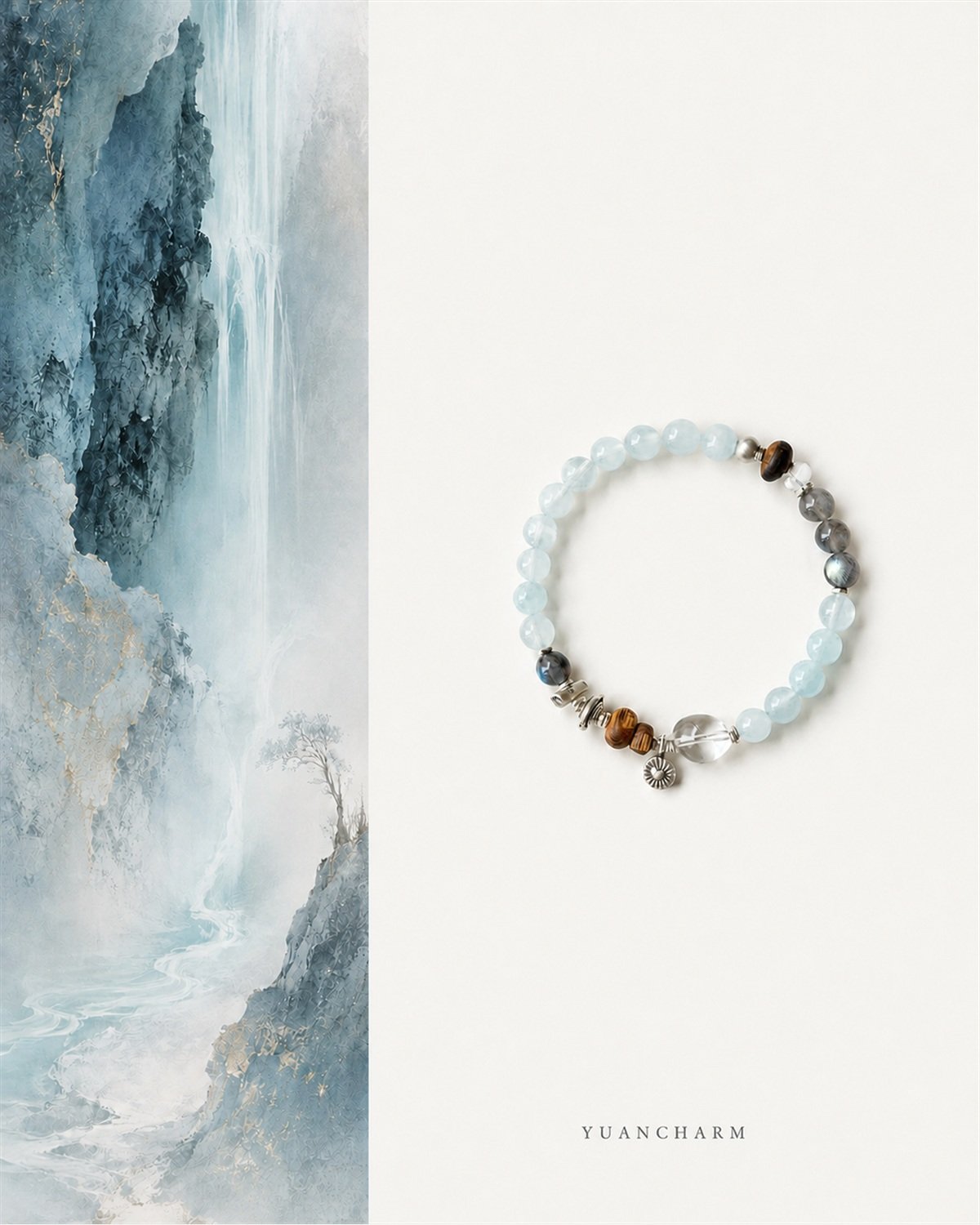
A finished bracelet is easy to read as a whole: a line of beads, a colour story, a circle that sits neatly around the wrist. The material underneath is slower. Wood carries grain, density, small changes in tone, and the evidence of how it was shaped. Stone carries its own variation in transparency, inclusion, and polish. The closer the eye comes, the less useful the word perfect becomes.
That is not an argument against care or consistency. It is an argument for a more accurate kind of quality. A meaningful object should be resolved in proportion and finish while still allowing natural material to remain visible. The small variation is part of the reason two pieces can belong to the same design without being identical copies.
“A material does not become refined by losing every trace of where it came from.”
A RESINOUS HISTORY
Agarwood is a name with a living supply chain behind it.
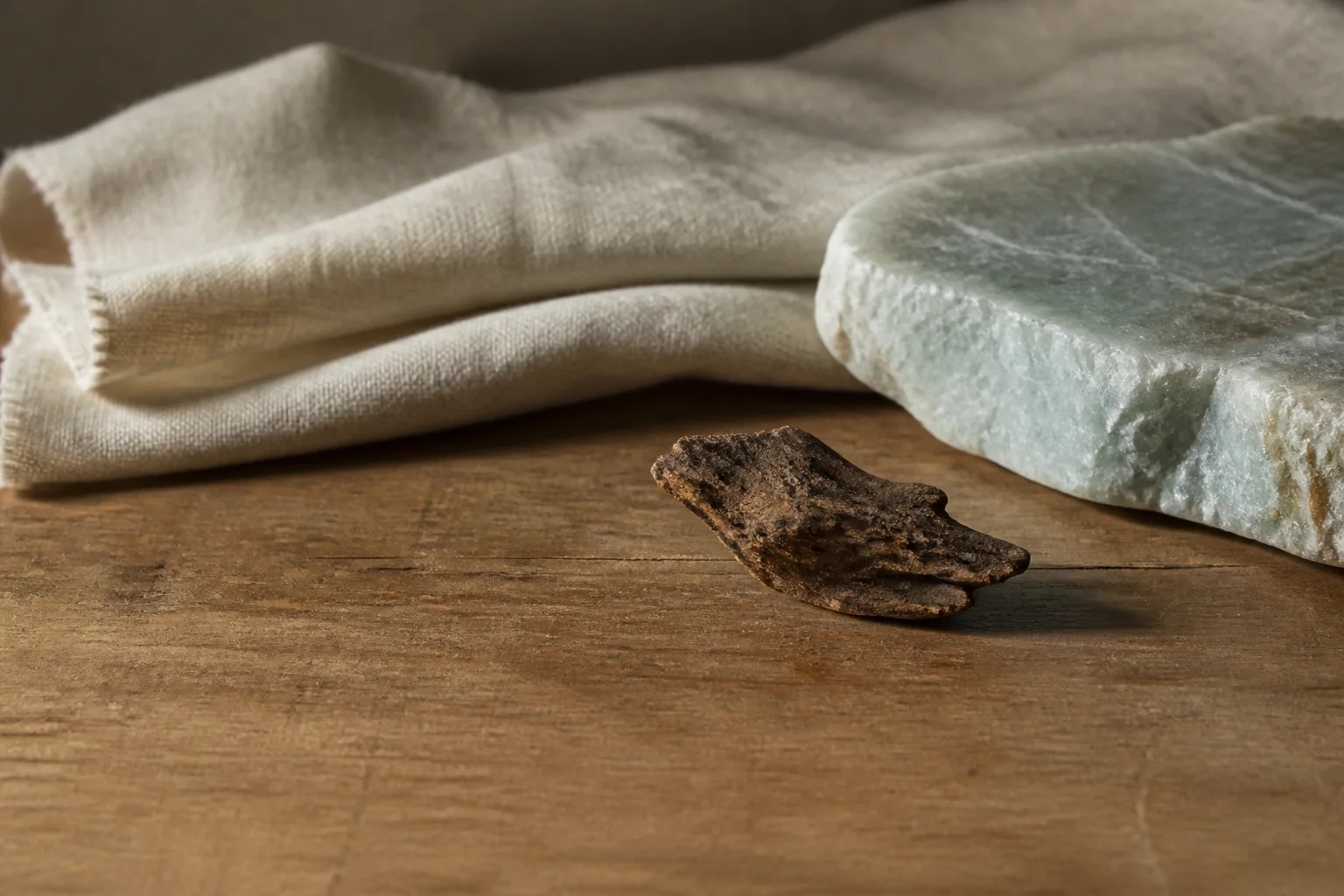
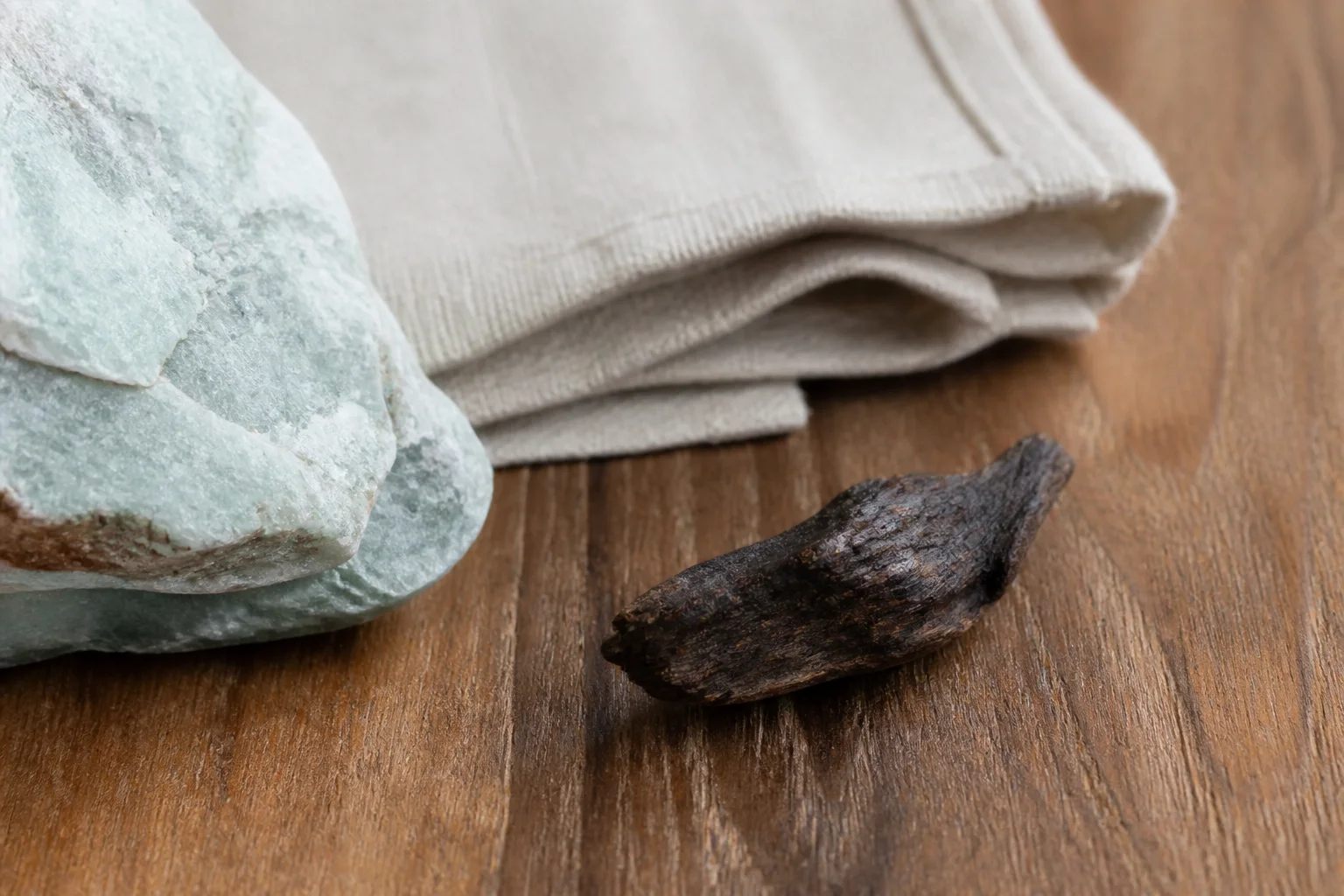
Agarwood refers to resinous wood associated with trees in the Aquilaria and Gyrinops genera. CITES materials describe agarwood as moving through trade in several forms, from raw wood and chips to oils, powders, beads, and finished objects. The useful point is not to turn a complicated material into a romantic sentence. It is to remember that every dark wood bead begins with a plant, a process, and a chain of decisions.
Those decisions matter because agarwood-producing species have conservation and trade considerations. The CITES guide notes that both wild and artificially propagated sources appear in commerce, and that identification and documentation can be difficult once wood has been processed. For a buyer, asking what the material is called, where it came from, and what the seller can responsibly verify is part of appreciating the object rather than an interruption to the story.
READ THE GRAIN
Colour is only the first thing the eye notices.
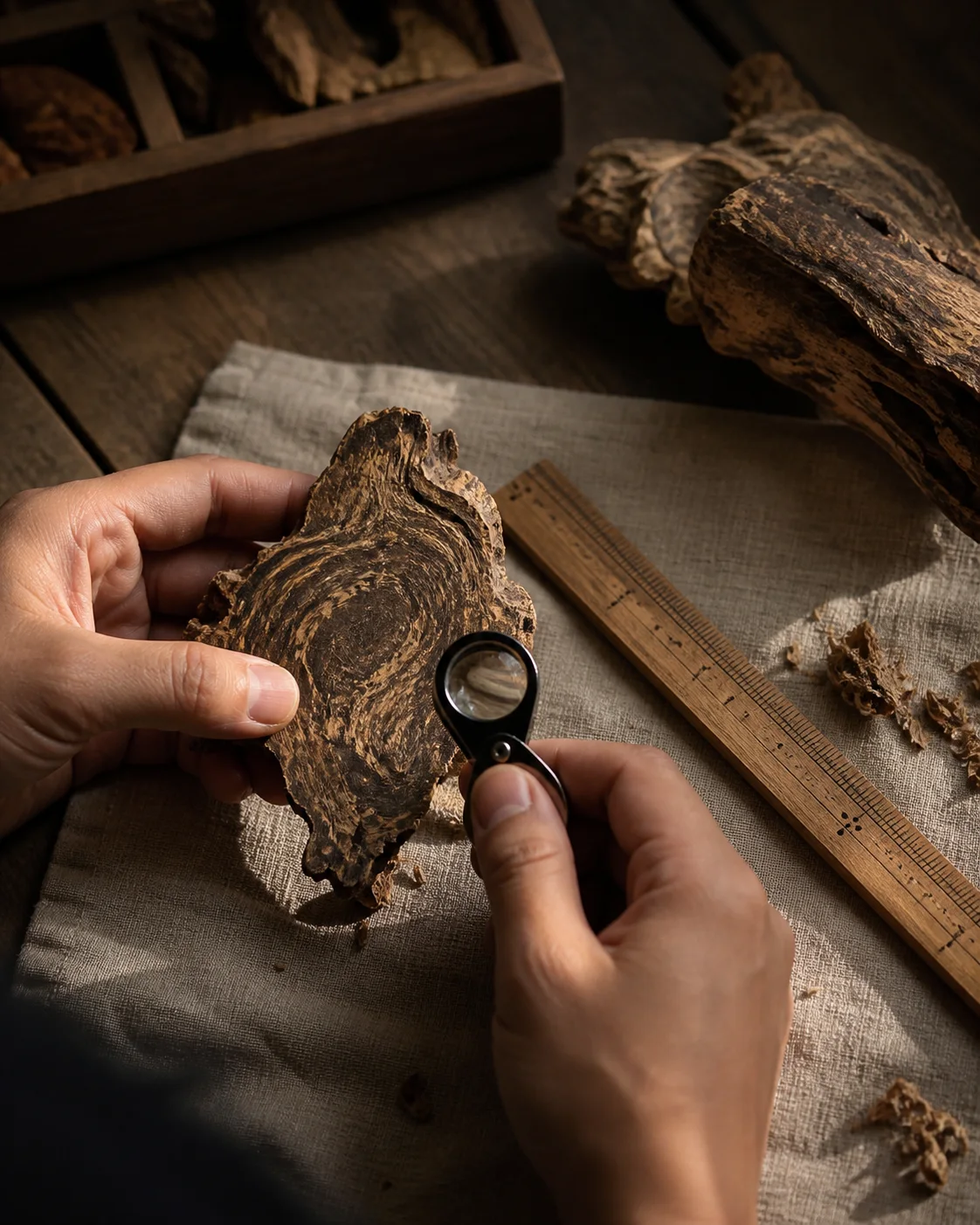
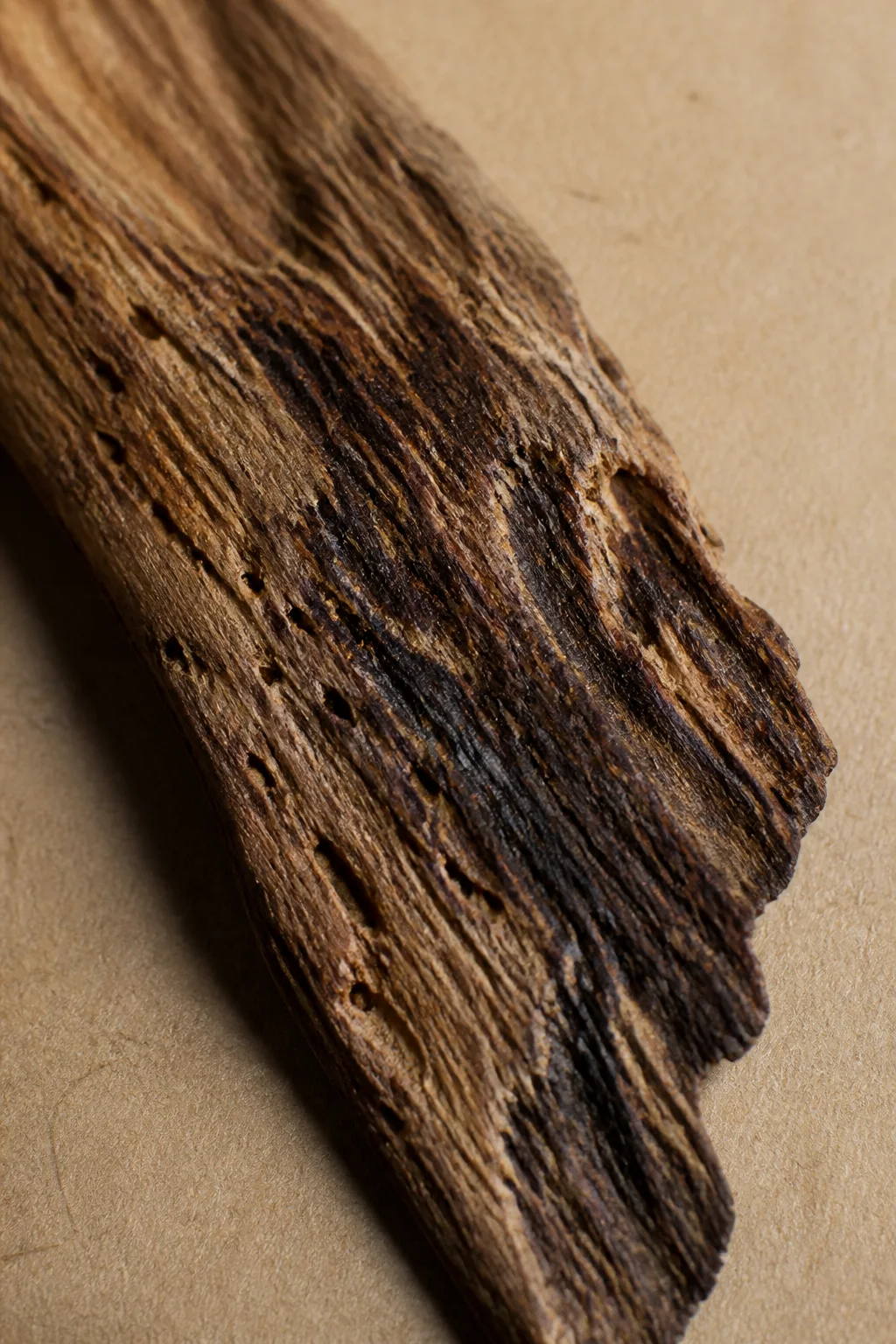
Dark wood is often described with broad words such as rich, warm, or deep. Look again and the surface becomes more specific. Is the grain linear or clouded? Does the tone shift from brown to almost black? Does the polish catch light softly or throw it back sharply? These are not laboratory conclusions, but they are useful observations when choosing an object you intend to keep close for a long time.
The same patience helps with stone. GIA explains that a coloured gem is perceived through hue, saturation, tone, and the distribution of colour. A pale blue bead beside dark wood can look cooler, brighter, or more translucent depending on the surrounding material and the light in the room. The design is not only a list of materials. It is the space where their differences become readable.
WOOD BESIDE STONE
Contrast gives a quiet material a place to speak.
A bracelet can become visually heavy when every component insists on the same kind of attention. Wood offers depth without a hard shine. A cool stone can interrupt that depth with a small movement of light. Silver-toned detail can mark the join between them. The result is less about collecting contrast than about giving each material a clear role in the composition.
This is one reason mixed-material jewelry can feel more personal than a single-colour strand. The wearer can find a different detail on different days: the grain when the light is low, the stone when the sleeve moves, the metal when the hand turns. The design stays calm because the materials do not compete for the same moment.
CARE THE RECORD
Good care is a way of keeping the material legible.
Care begins with knowing what the piece is exposed to. Remove a bracelet before prolonged water, exercise, strong heat, perfume, household chemicals, or rough contact. Let it dry naturally and store it away from sharp objects. A soft cloth can remove surface moisture after wear; it should not become an excuse to polish away the character of the material.
GIA's jewelry-care guidance is a useful reminder that different materials respond differently to cleaning, heat, chemicals, and impact. When a piece contains wood, stone, cord, and metal together, the gentlest reasonable routine is usually the most respectful one. The goal is not to freeze the bracelet in its first-day appearance. It is to let it age without asking it to survive avoidable stress.
CHOOSE SLOWLY
The right material gives you more to notice over time.
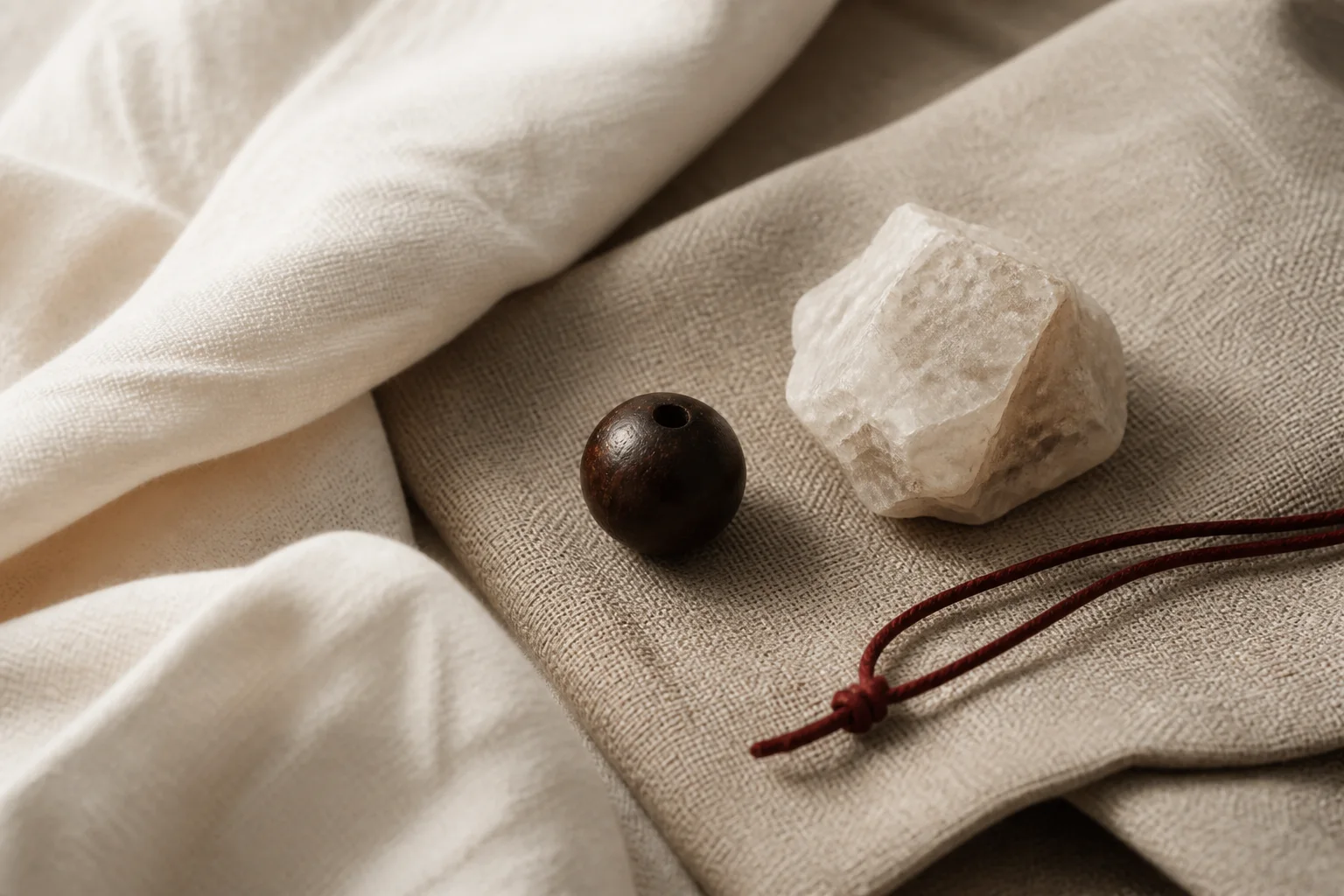
Before choosing a wood bracelet, look for clarity in the description and restraint in the promise. Ask about the named material, the construction, the fit, and the care routine. Then look at the object as a composition. Does the dark element feel grounded rather than opaque? Does the lighter stone create a small opening? Will the bracelet work with the clothes and movements that actually make up your week?
Glacial Current is built around that balance: pale blue clarity, warm agarwood, and silver-toned detail in a single-loop stretch form. It is not trying to turn material into a miracle. It lets the wood provide depth while the cooler stone keeps the circle open, giving you a piece that can be read differently as the light and the day change.