VARIATION IS INFORMATION
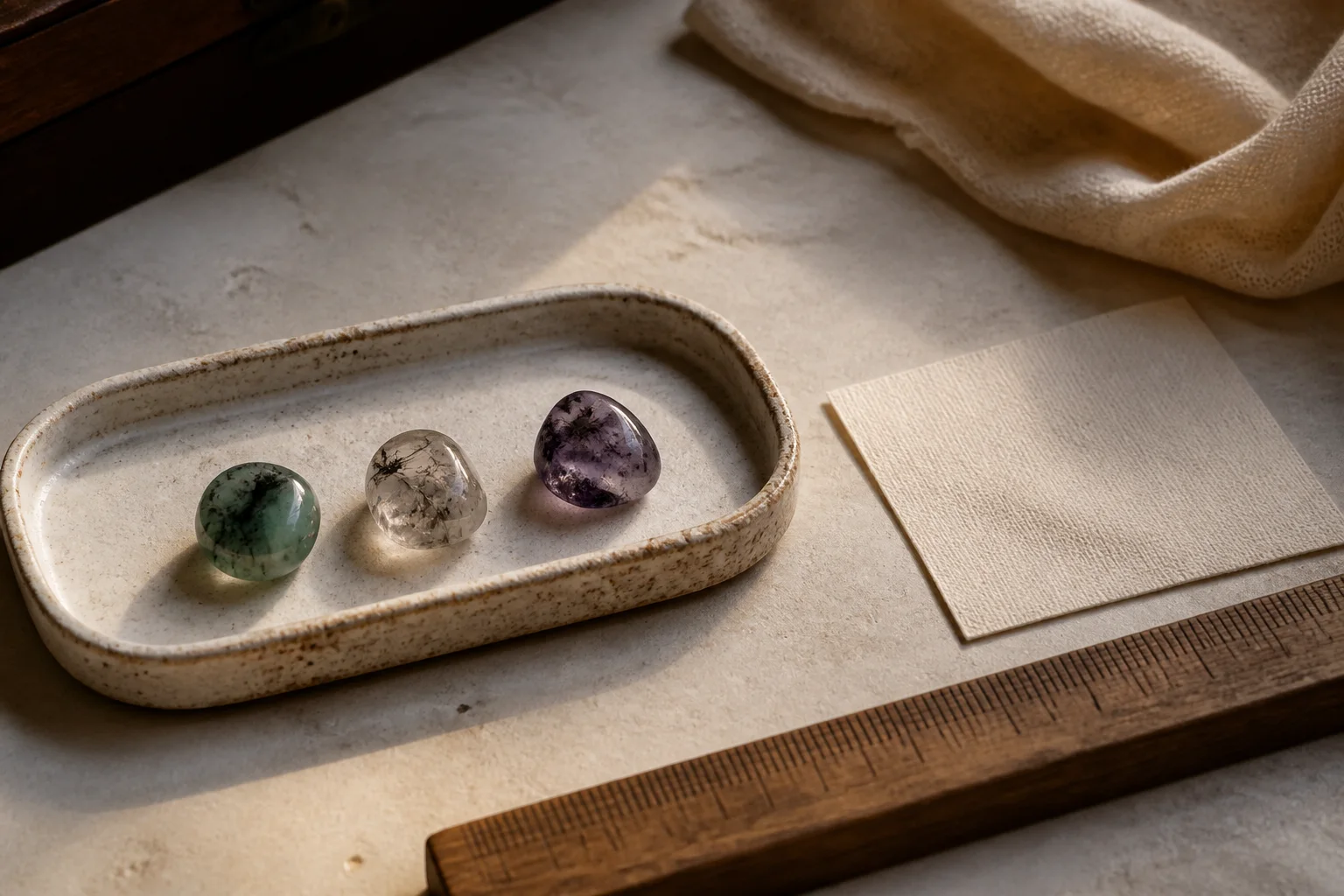
A natural stone does not need to look identical from every angle to be worth keeping.
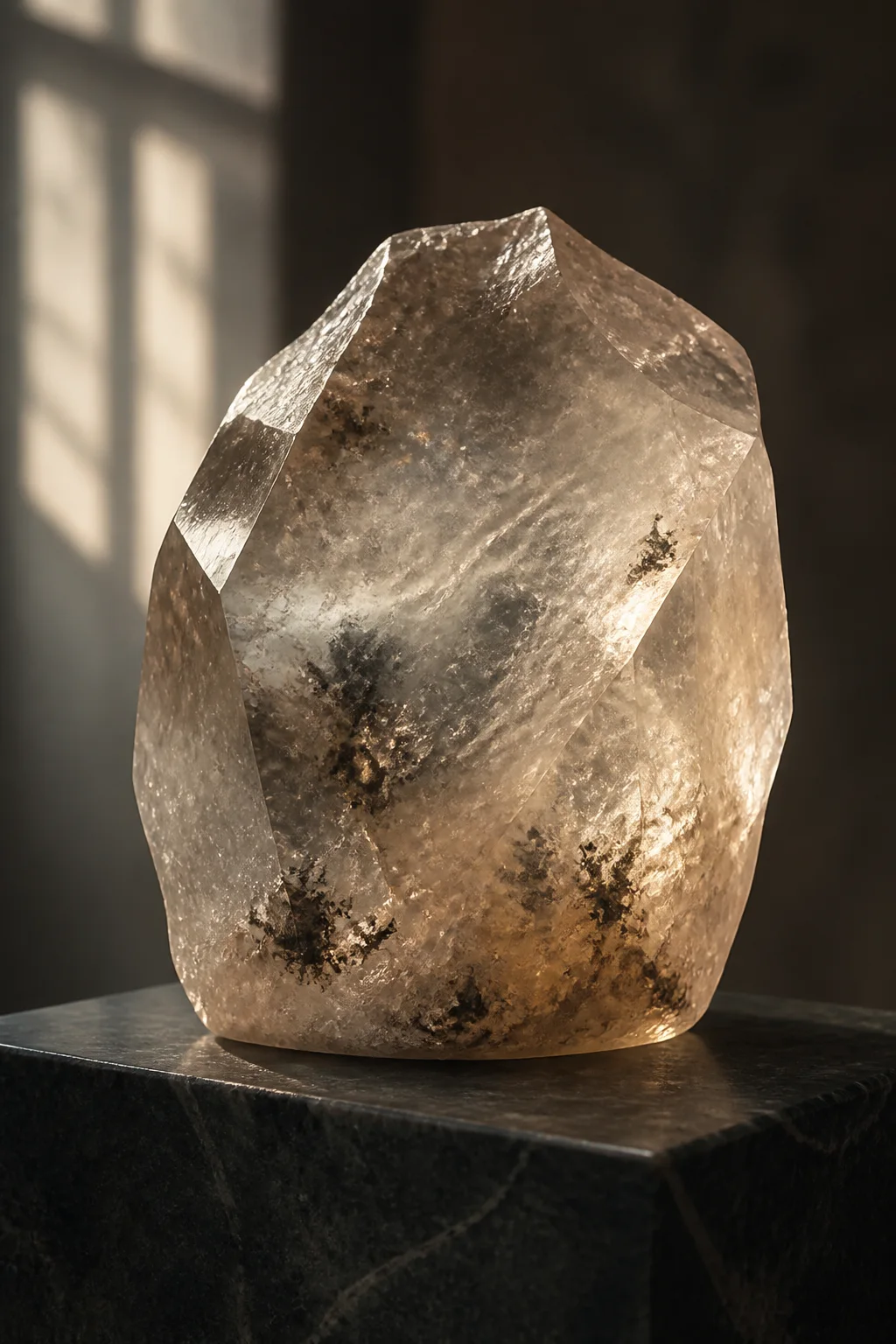
When a material arrives through a screen, the temptation is to sort it quickly into good and bad. A perfectly even surface feels dependable; a veil, speck, cloud, or shift in tone can look like an error. But natural materials carry histories of formation, cutting, polishing, handling, and light. A small difference may be beautiful, neutral, or important depending on what it is and how the piece is made. The eye should notice before it judges.
This does not mean every irregularity is a virtue, or that a seller can use the word natural to avoid explaining anything else. It means character and verification are different questions. You can like the quiet asymmetry of a stone while still asking what material it is, whether it has been treated, and what care it needs. Appreciation becomes more trustworthy when it does not have to pretend that uncertainty is proof.
“A mark can make a stone memorable without making a claim on its behalf.”
WHAT AN INCLUSION CAN TELL YOU
An inclusion is a feature to inspect, not a personality test for the stone.
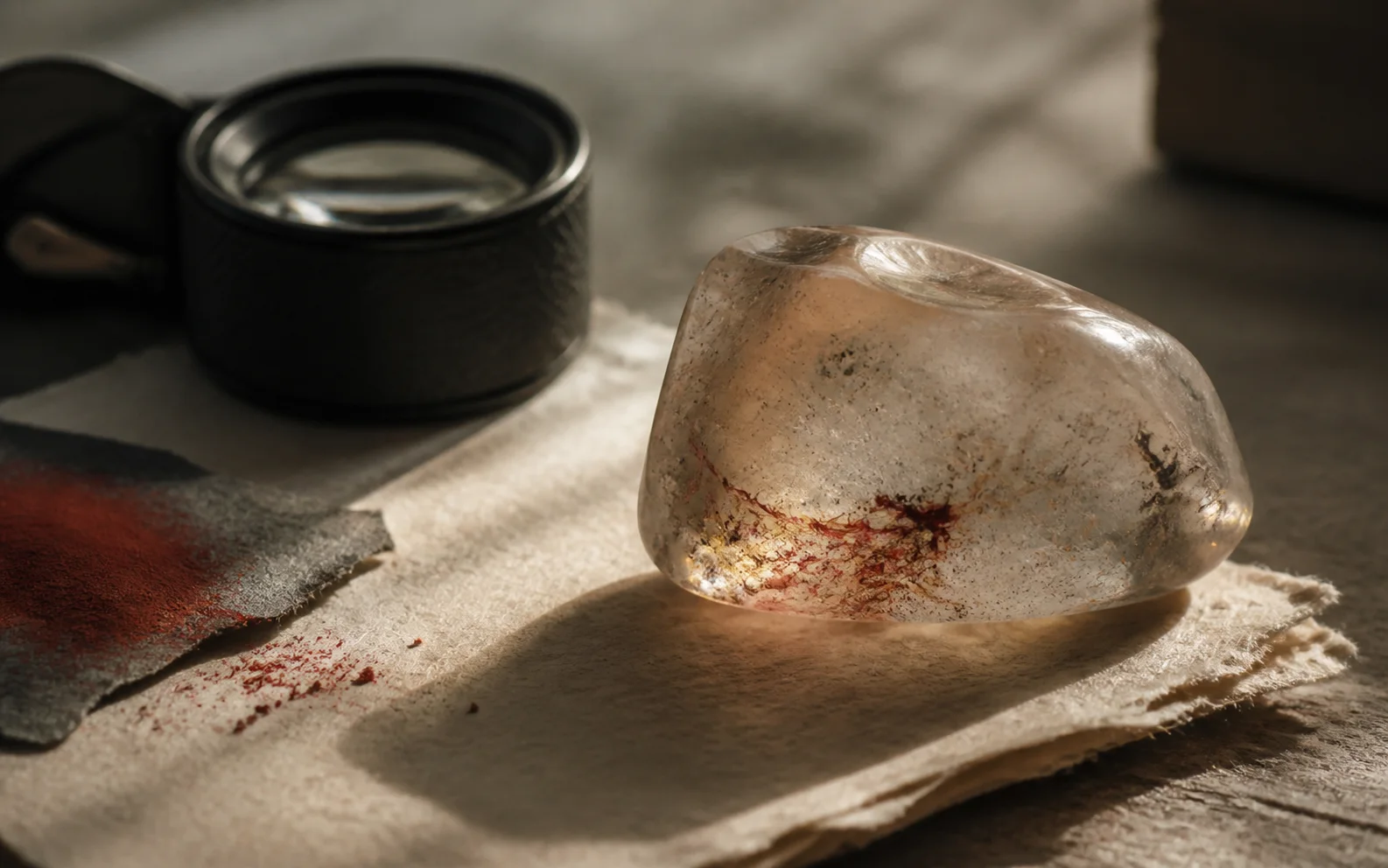
Gemological education describes inclusions as internal features such as mineral crystals, needles, fluids, clouds, or cavities. Depending on the gem, they can affect transparency, create optical effects, or help a trained professional distinguish natural material from synthetic or treated material. Their meaning is relational: the type, position, quantity, and host stone all matter. One dramatic photograph cannot carry that whole context.
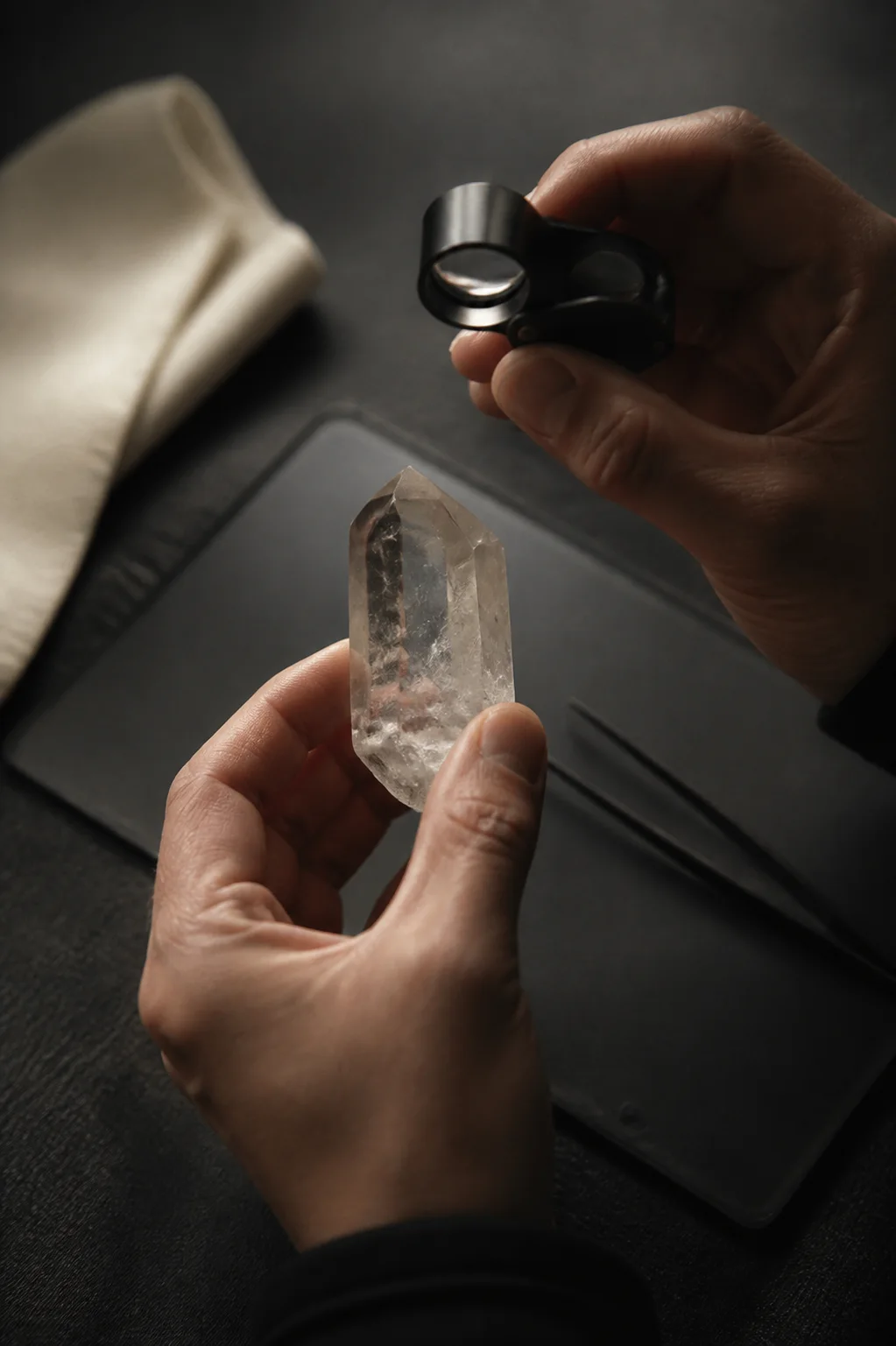
A useful consumer habit is to describe what is visible in ordinary language before using specialist language. Is the detail inside the stone or on its surface? Does it move when the stone is rotated? Does it catch light, interrupt it, or simply change the color? These observations do not replace a professional report, but they make the conversation with a jeweler more precise. The goal is not to sound expert. It is to know which question you are actually asking.
WHAT THE EYE CANNOT PROVE
A beautiful photograph can show a surface. It cannot certify a stone's full story.
Lighting, camera distance, color grading, and screen settings all influence the way a gemstone appears online. A backlit crystal may look unusually luminous; a deep shadow may make a color appear richer; a close crop may make a small feature feel much larger than it is in the hand. These are reasons to value imagery as an introduction, not as a laboratory result. Ask for dimensions, material naming, treatment disclosure, and care information when those details affect your decision.
The same discipline applies to the word untreated. Treatment can alter a gem's color, clarity, stability, or appearance, and the appropriate disclosure depends on the material and the process. A responsible description tells you what is known and leaves unknowns visible. If a claim matters to the purchase, it should be supported by a record, a seller's clear disclosure, or an independent report rather than inferred from a visible mark.
CHOOSE BY EVIDENCE
A better material decision starts with four small checks, not one dramatic promise.
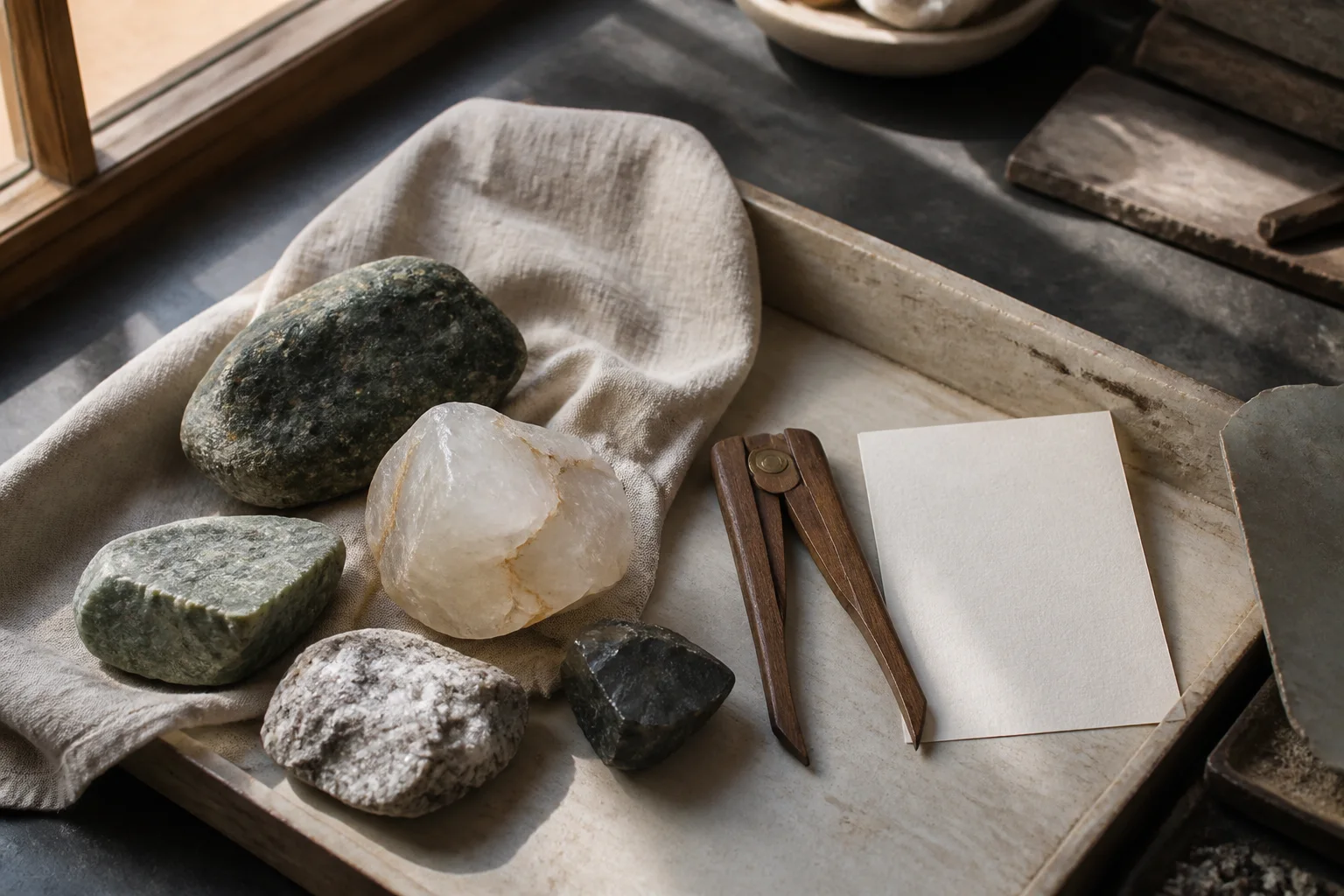
First, ask for the exact material name and whether the piece uses a natural, synthetic, composite, or treated component. Second, ask how the stone is finished and which surfaces are most vulnerable to impact or chemicals. Third, compare the seller's photographs with the written description: do the scale, color, and visible variation agree? Fourth, decide whether you are choosing for verified material information, for the feel of the object, or for both. Different priorities are allowed, but they should not be confused.
This checklist is especially useful when buying a meaningful piece. Emotional language can make a purchase feel urgent, as if hesitation means missing a rare moment. A slower question protects the meaning from the pressure. You are not reducing a stone to a specification sheet. You are giving the object a fair chance to meet the life it will actually enter: a desk, a commute, a sleeve, a pocket, or a quiet shelf.
CARE IS PART OF THE READING
To understand a material is also to understand what the day will ask of it.
Gemstone care is not a universal ritual. Different materials respond differently to heat, prolonged water, perfume, household chemicals, abrasion, and sudden impact. A safe baseline is simple: follow the seller's specific care guidance, keep the piece away from strong chemicals, wipe it gently after wear, and store it so harder objects do not scratch softer surfaces. If a stone is an unknown composite or has a treatment, conservative care is the more honest choice.
Care also changes the relationship between appearance and time. A mark that was once noticed as a flaw may become part of the object's record; a surface that loses its polish may be telling you that the routine needs adjusting. The point is not to preserve a stone in an imaginary untouched state. It is to keep the material legible enough that its future remains a continuation of its real use.
KEEP THE STONE HONEST
The right stone is the one whose visible character and actual care can live with you.
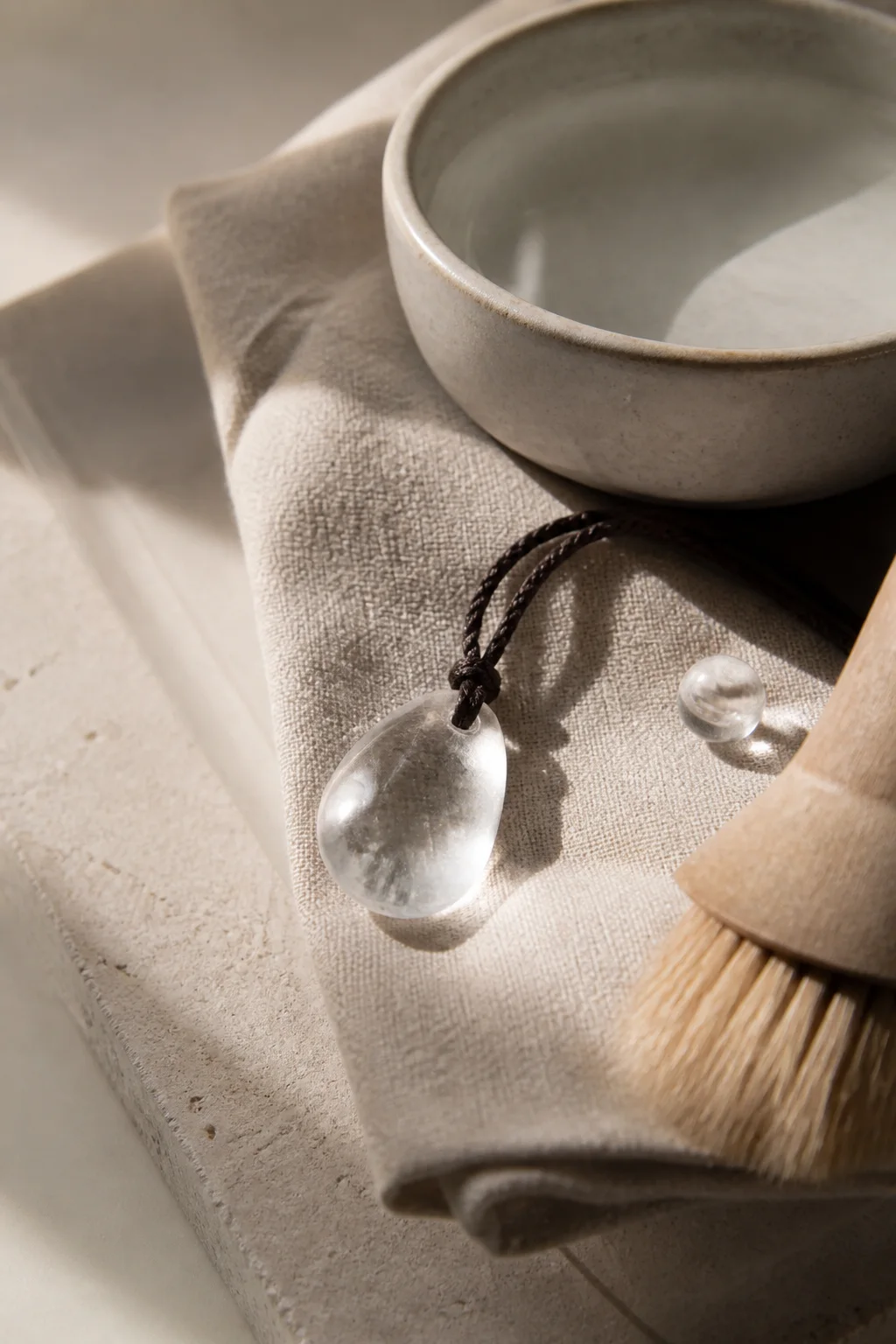
Clear Quartz Wisdom is a deliberately quiet bridge between material literacy and everyday wear. Its clear quartz composition and minimal design let natural variation remain part of the object without asking the stone to promise clarity, healing, or a better outcome. The reason to choose it is more grounded: a clean, versatile piece whose surfaces can be observed, cared for, and given a personal association over time.
Choose the stone because you can name what you know, accept what you do not, and live comfortably with the care it requires. That is not less romantic than a perfect story. It is a more durable kind of attention, one that allows the material to stay a material while still becoming part of your life.