ROUTINE AND RITUAL
A routine helps a task happen; a ritual helps a moment become noticeable.
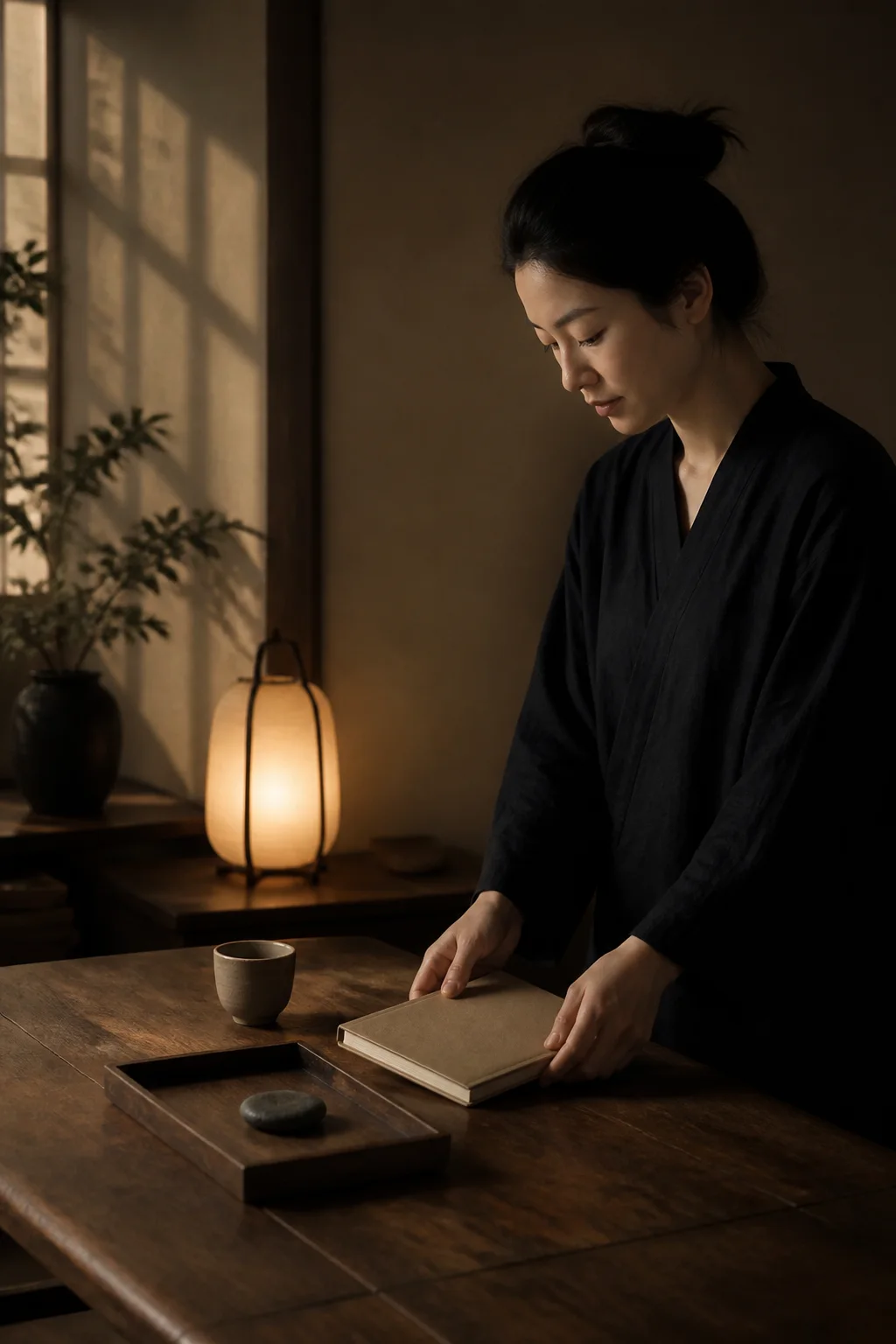
You already have routines: opening a laptop, washing a cup, checking a door, taking off a coat, or setting an alarm. They reduce the number of decisions required to move through a familiar day. A ritual can use the same dependable shape, but it adds a layer of attention. The action becomes a small marker between one kind of time and another. It does not have to be elaborate, sacred, or shared to matter.
Research on family rituals distinguishes symbolic practices from routines that simply organise work. That distinction is useful even when the practice is private. The meaning is not hidden in the object by itself. It is created by the connection between an action and what the action helps you remember. A cup of tea can be only a beverage, or it can become the first signal that the workday is over. The difference is the attention you return to it.
“The ritual is not the object. The ritual is the relationship between the object and the moment.”
START WITH A TRANSITION
The strongest cue is usually a moment that already happens without your permission.
Choose the hinge rather than inventing a new appointment. The first drink after waking, the moment you close a work document, the train door opening at home, or the pause before turning off a lamp can all hold a small practice. A cue that already exists is easier to notice than a vague instruction to be more mindful at some point later. Place the action where the day already has an edge.
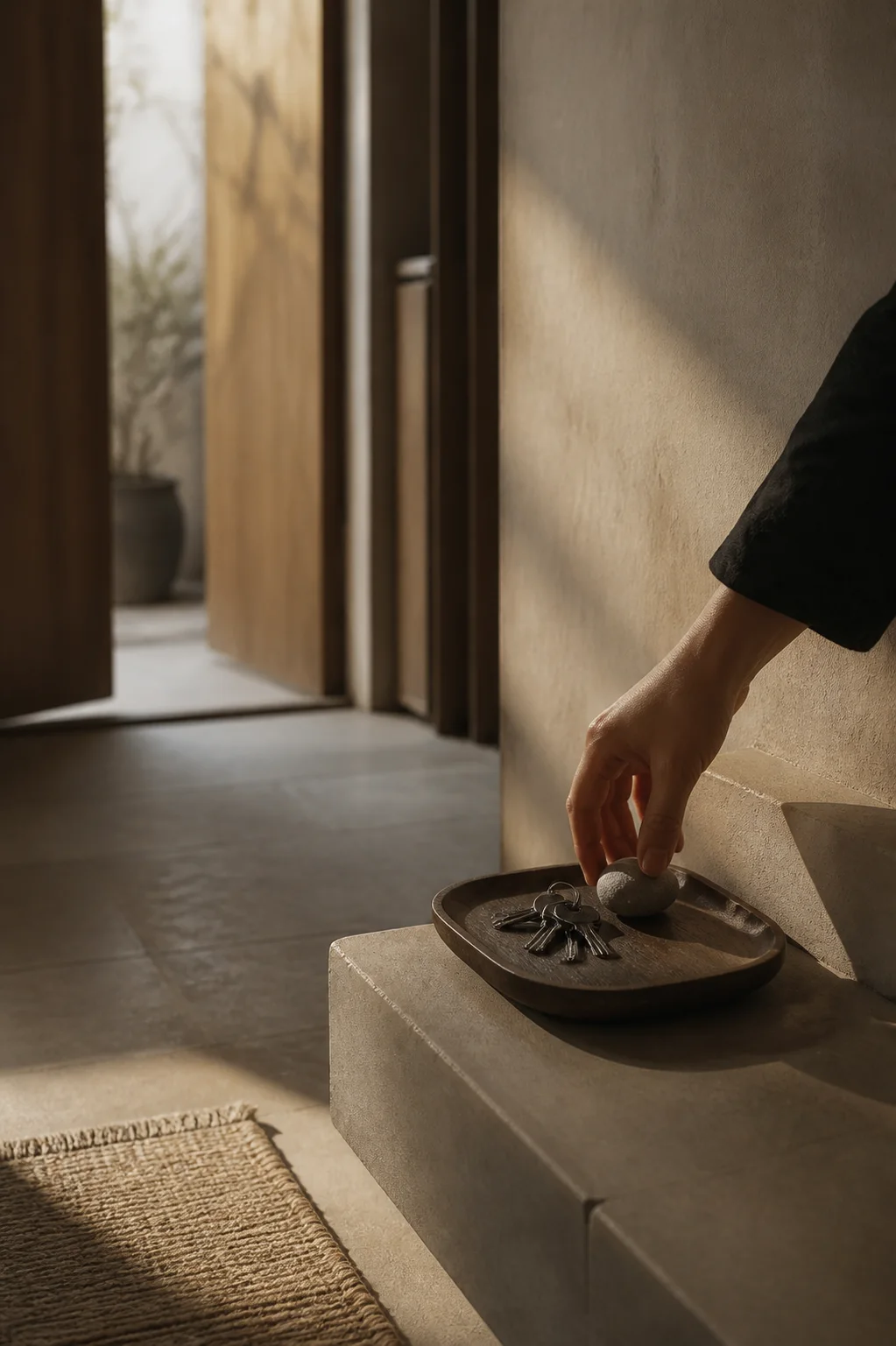
This is also where context matters. Habit research emphasises that repeated behavior is shaped by surroundings and cues, not only by a person's intention. If the object lives in a drawer you never open, it has no chance to become a useful reminder. If it sits beside the keys, tea, or notebook you already reach for, the environment does part of the remembering. Good ritual design is often a quiet edit to a room.
MAKE THE CUE SMALL
A ritual should fit inside the life it is meant to support.
Begin with one physical action and one sentence. Touch the stone, put the keys down, open the notebook, or take one breath before you answer a message. Then name the quality you want to bring into the next hour: steadiness, patience, attention, courage, or enoughness. The sentence does not need to sound wise. It only needs to be clear enough that you recognise it when the day becomes noisy again.
The scale matters because an oversized practice turns into a test of character. Miss one day and the whole promise feels broken. A smaller cue can be resumed without drama. The goal is not a perfect streak; it is a reliable return. If three breaths are all the situation allows, three breaths are a complete practice. The object is there to make the return easier to remember, not to grade your performance.

GIVE THE OBJECT ONE JOB
A meaningful object becomes clearer when it is asked to remind you of one thing at a time.
Choose a single job for the object. It might mark the beginning of focused work, the boundary between work and rest, or the decision to speak more directly in one conversation. Avoid loading one piece with every hope you have. Too many instructions make the cue visually and emotionally noisy. One clear association is easier to recognise, and it leaves space for the object to gather new memories without losing its first line.
Let the association remain yours. A bracelet does not create calm, guarantee protection, or repair a difficult day. It can meet your hand when you remember to pause, and that meeting can become useful through repetition. The distinction protects both the wearer and the design. You are not outsourcing responsibility to a material. You are choosing a material place to return to the responsibility you already have.
A FIVE-LINE PRACTICE
Try a five-line version that can be completed before the next ordinary thing.
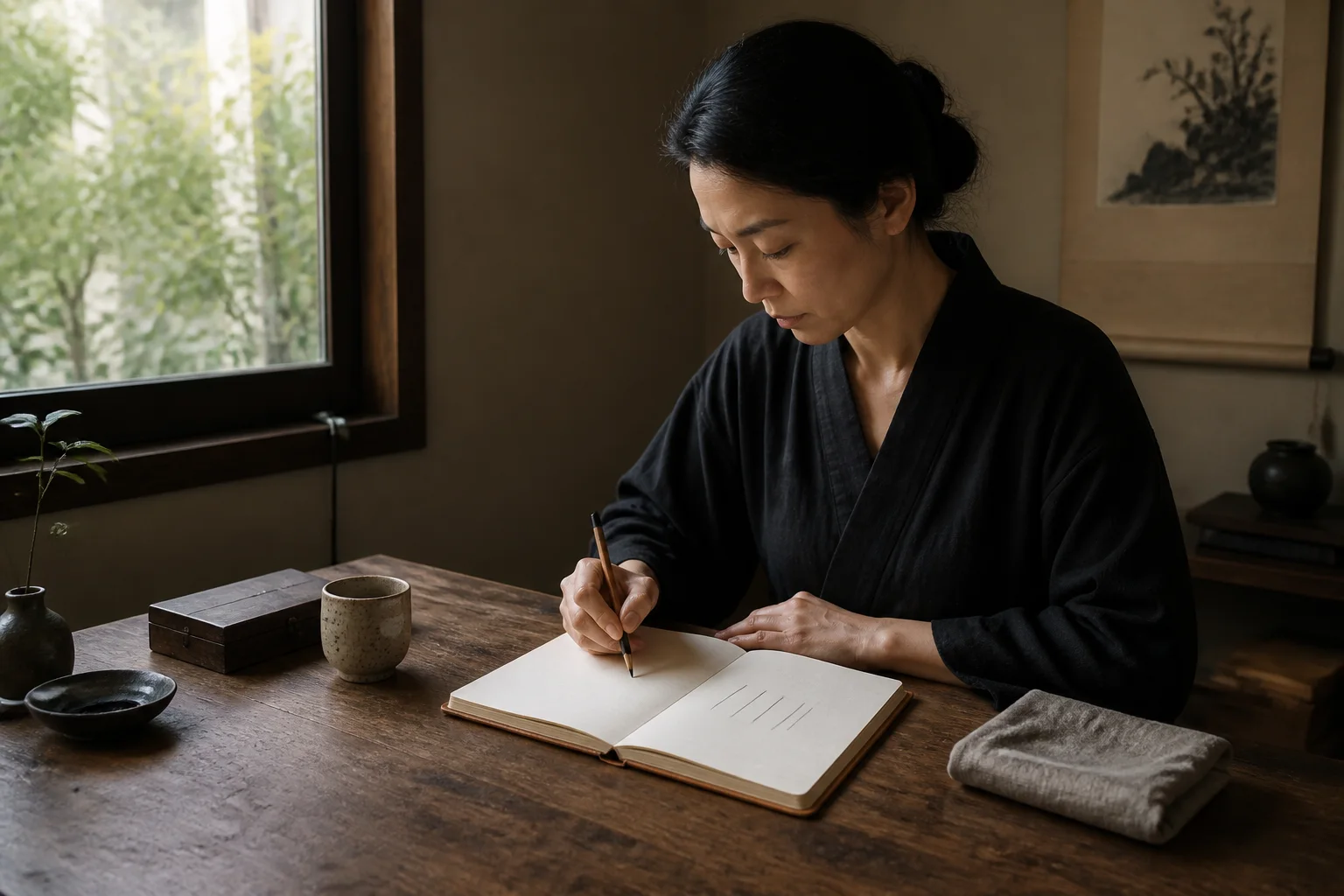
First, arrive: put down what you are carrying. Second, notice: name one sensation, sound, or fact in the room. Third, choose: say the quality you want to practice next. Fourth, act: take one small step that expresses it. Fifth, release: let the moment continue without demanding a special feeling. The entire sequence can take less than a minute. Its strength comes from clarity and return, not from the length of the pause.
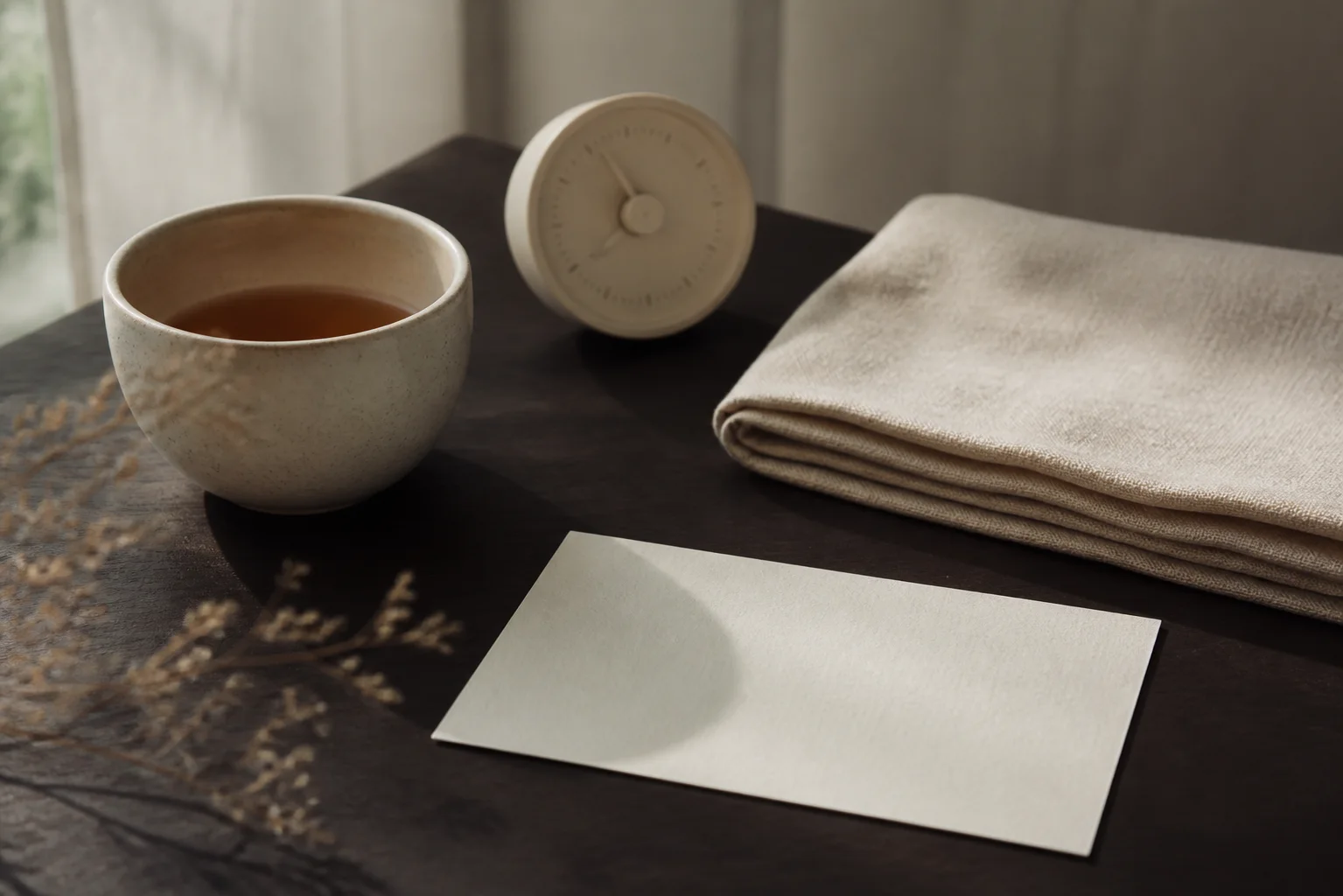
Write the five lines on a card if words help, or keep them as a silent sequence if you prefer privacy. Use the same sequence for a week, then ask what the cue has actually changed. Did you become more aware of a transition? Did one decision become easier to name? Did the ritual add pressure instead of relief? Honest review is part of the practice. You are allowed to edit or retire it when the season changes.
KEEP THE RETURN
A ritual earns its place by helping you return, not by making you feel transformed every time.
Amethyst Calm is suited to this quieter kind of practice: natural amethyst with restrained silver accents, designed for a calm and versatile presence around study, work, or a private pause. The material does not perform a result. It gives the hand a tactile point of continuity while the wearer decides what calm, focus, or transition means in the actual day.
Keep the practice honest enough to live with. If it helps, repeat it. If it becomes another demand, make it smaller. If the object no longer carries the association you need, change the association or let it go. Meaning is not a contract you sign once. It is a pattern you are free to notice, revise, and carry forward.