Material fact
What the material is.
Colour, structure, common treatments, and care boundaries belong here. Visual resemblance alone does not establish origin, grade, or naturalness.
YUANCHARM JOURNAL / MATERIAL ATLAS
Material comes first. Explore what these stones, woods, organic materials, and natural craft materials are, how they are commonly understood, and where interpretation ends.
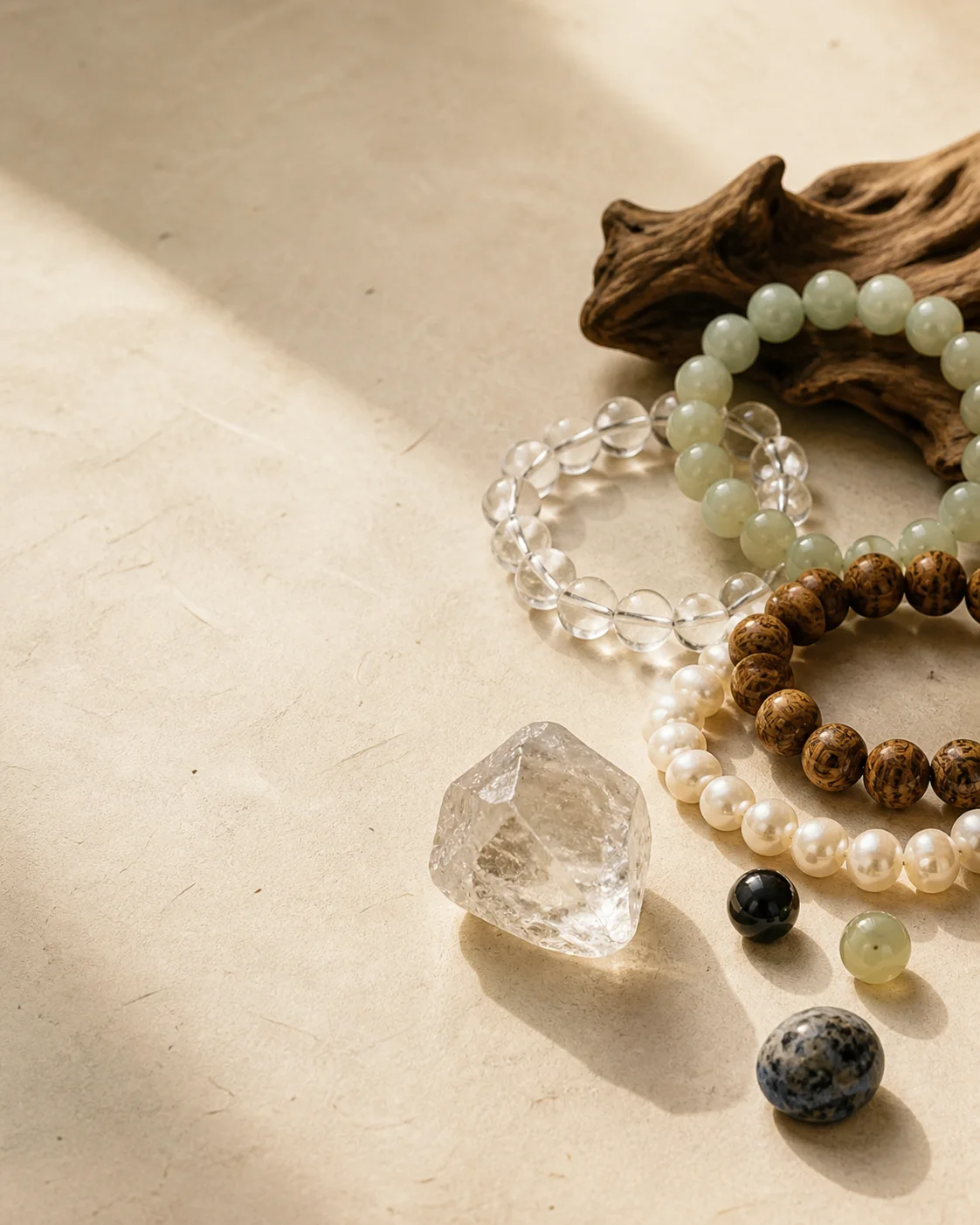
HOW TO READ A MATERIAL
A stone can have a measurable structure, a long cultural history, and a personal meaning. We keep those layers visible instead of blending them into one promise.
Material fact
Colour, structure, common treatments, and care boundaries belong here. Visual resemblance alone does not establish origin, grade, or naturalness.
Cultural context
Names, rituals, birthstone traditions, and symbolic language can be meaningful without becoming a scientific or medical claim.
Personal meaning
Five-elements and astrology notes are reflective, school-dependent references. Keep the final meaning personal, and keep the choice grounded in care.
THE SEVEN FAMILIES
Each family keeps its own visual language, care rhythm, and evidence boundary. Open a family to move through the full reference index.
THE REFERENCE INDEX
The words “meaning” and “energy” below describe cultural or reflective associations. They are not medical advice, diagnosis, treatment, or a guarantee of an outcome.
Every entry has its own material photograph. The image is a visual reference; identification follows the evidence note.
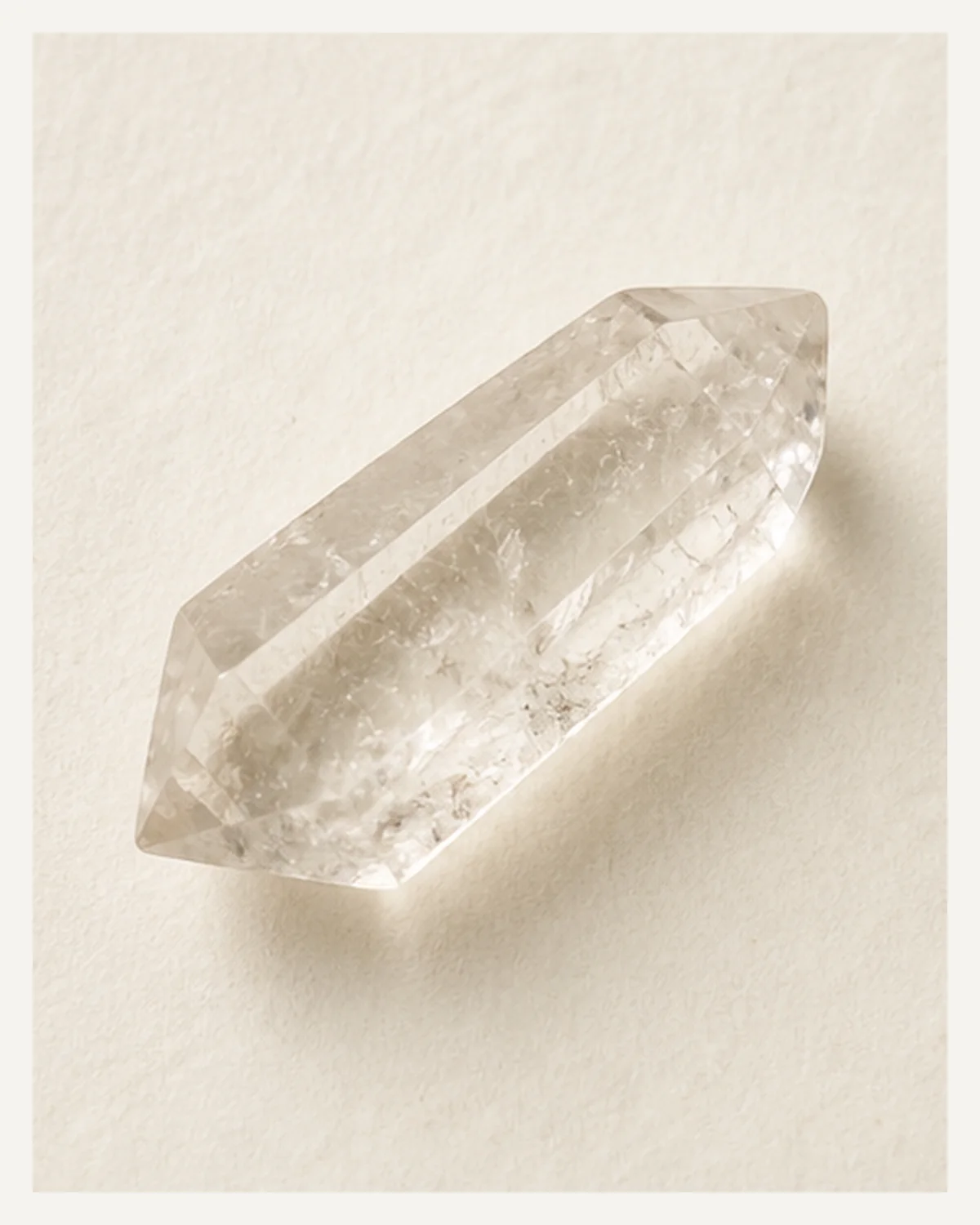
Quartz is crystalline silicon dioxide. Clear or milky colour can come from transparency, inclusions, and microscopic structure.
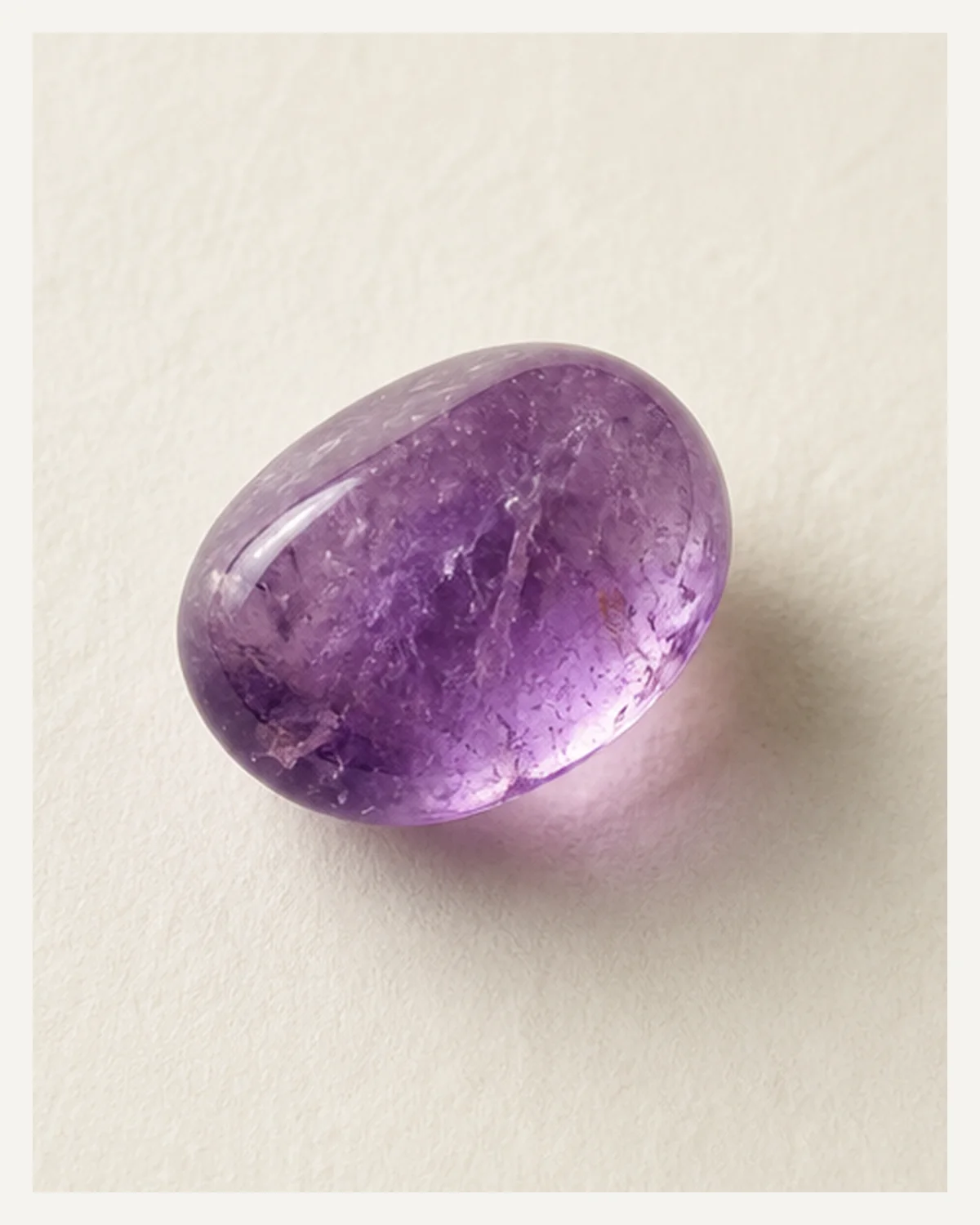
Purple quartz whose colour is linked to iron-related processes and natural irradiation.
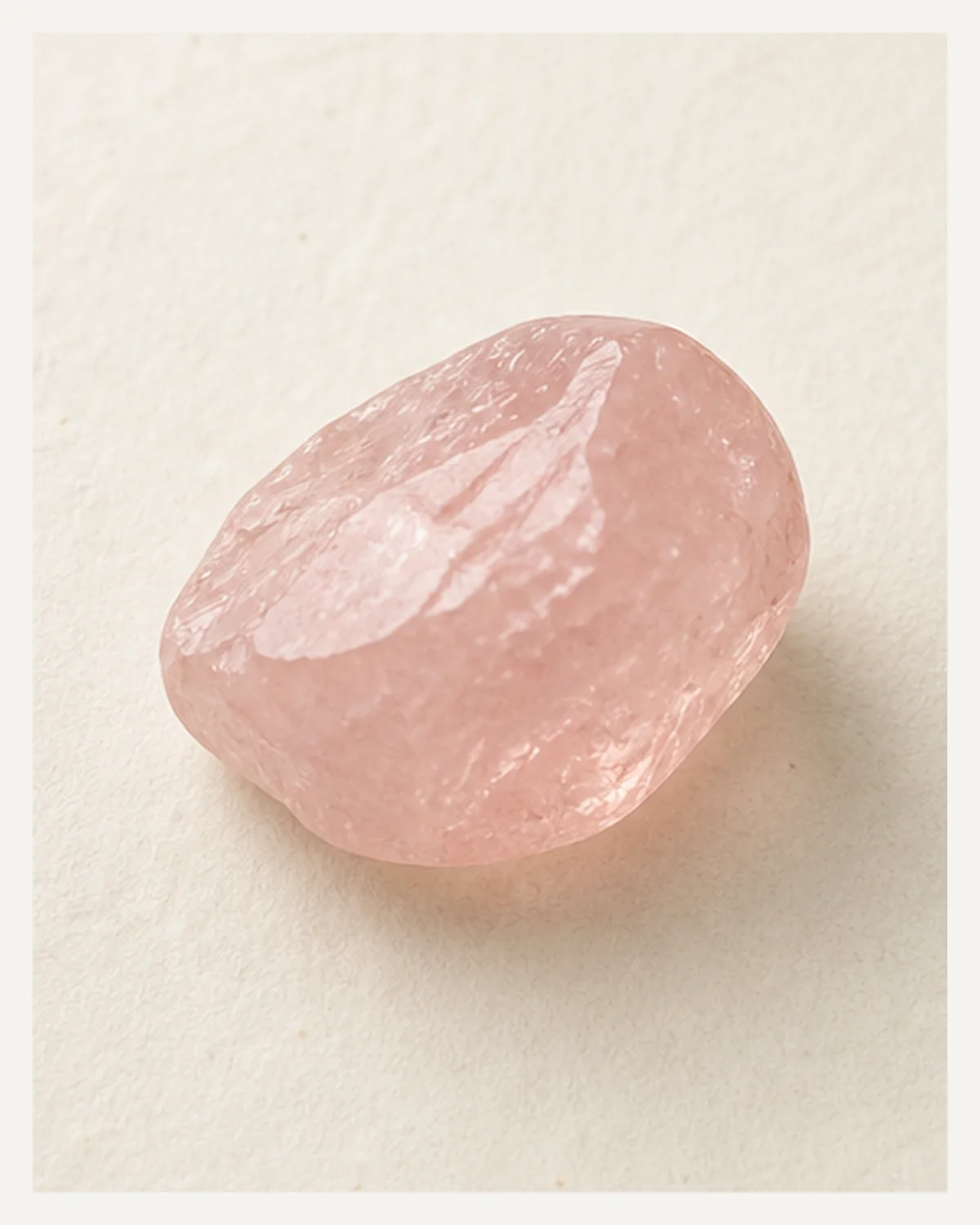
Pink quartz coloured by trace elements and structural features within the material.
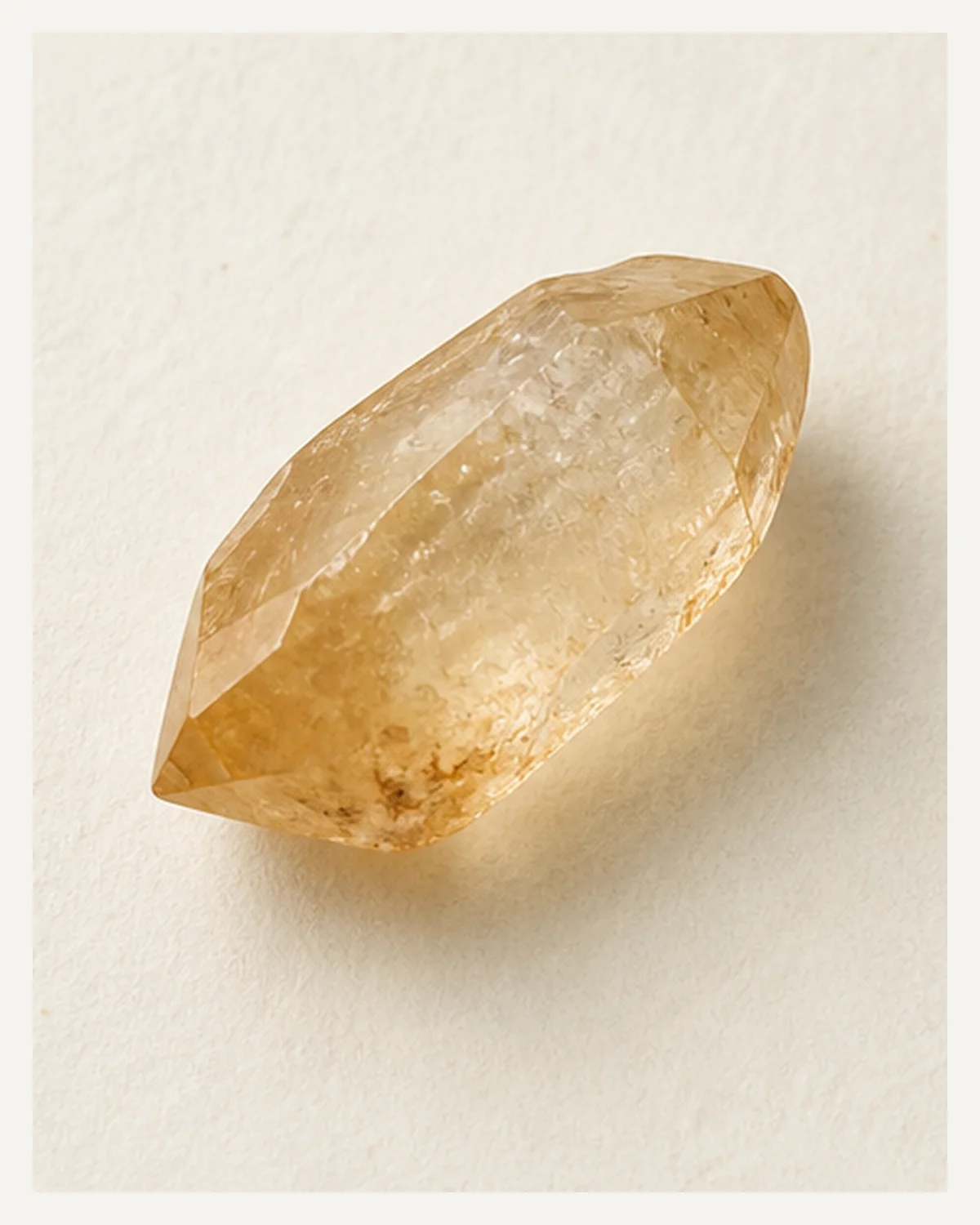
Yellow to orange quartz. Much market citrine is heat-treated amethyst or smoky quartz, so treatment language matters.
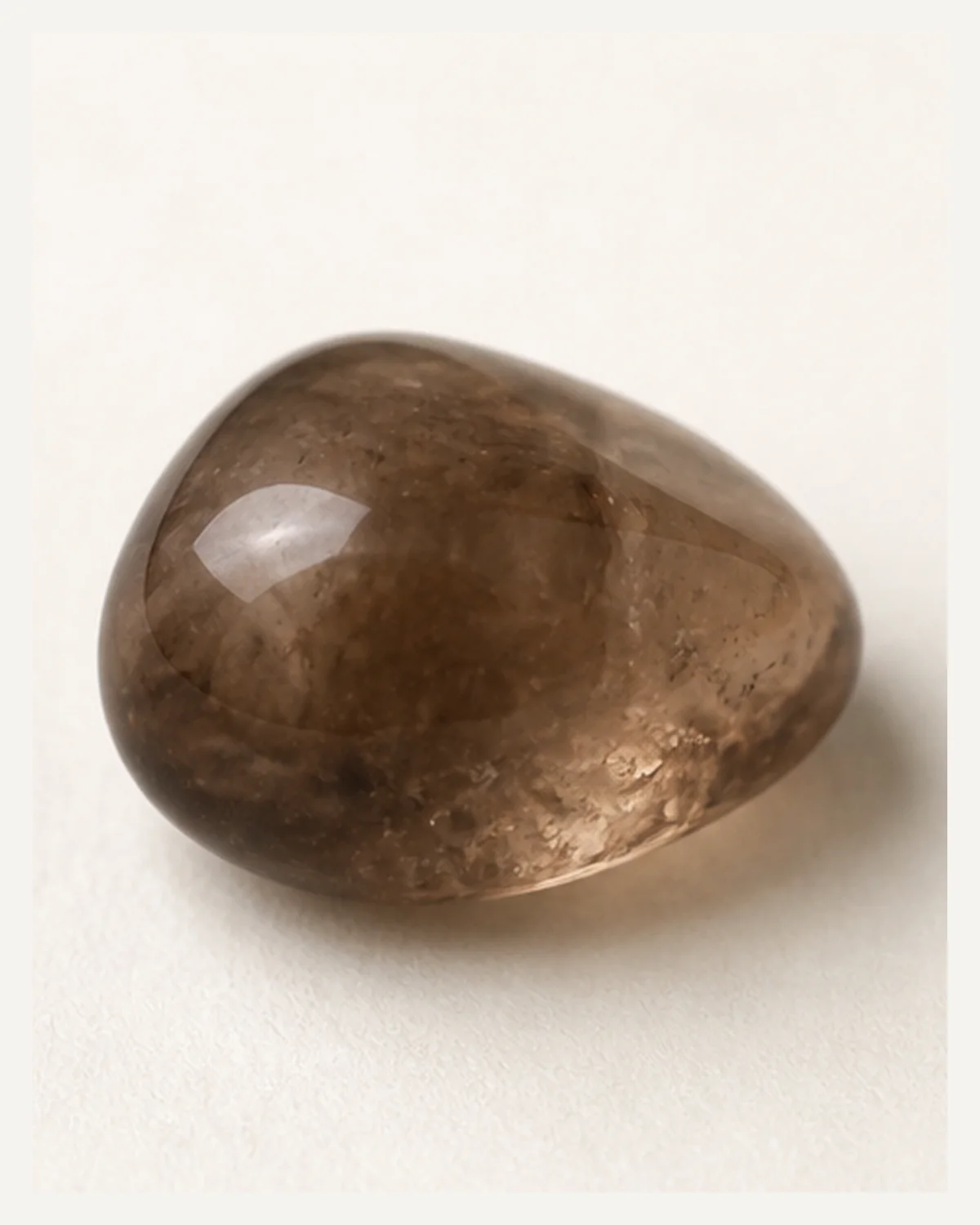
Brown to grey quartz whose colour can be natural or enhanced through irradiation and heat.
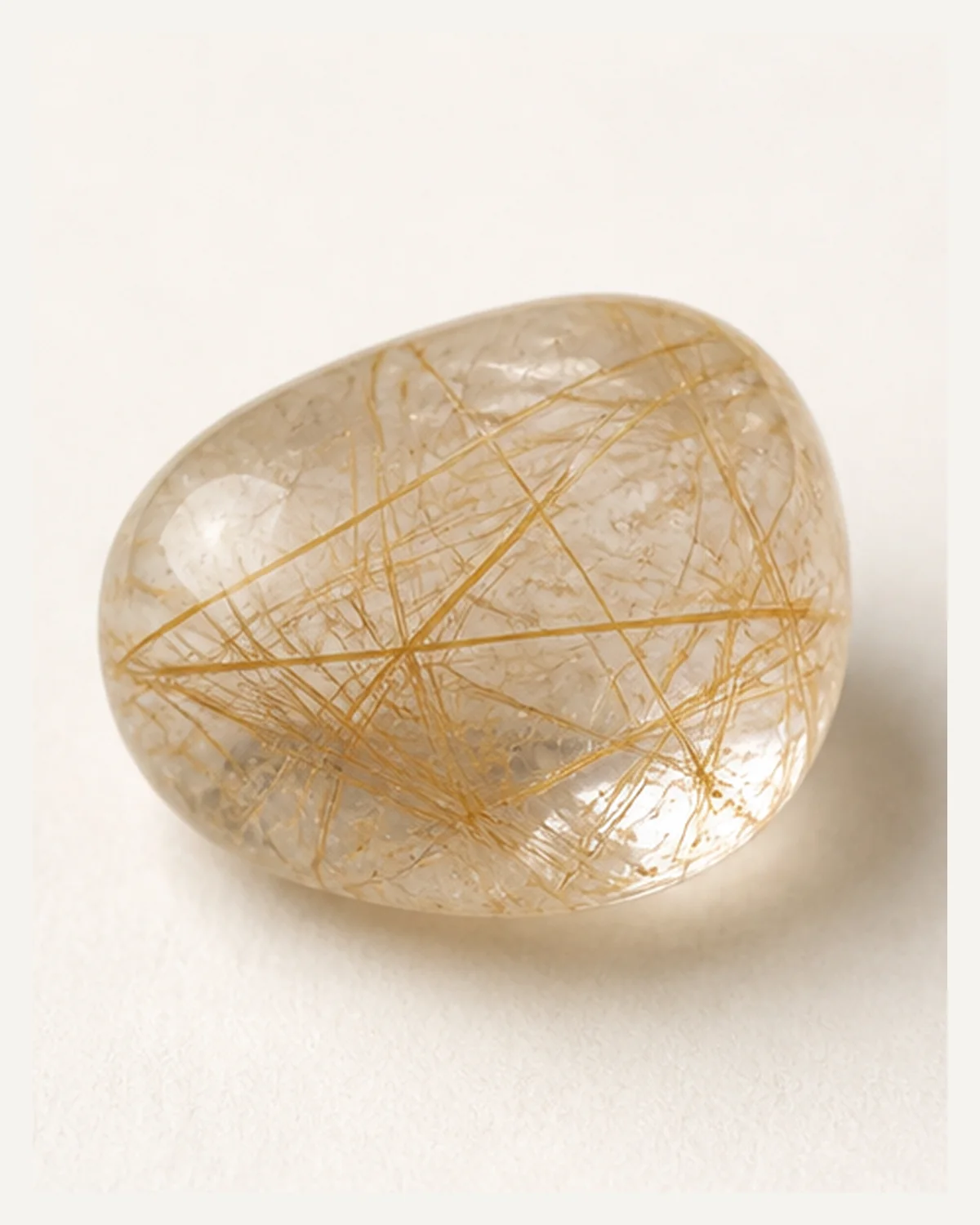
Quartz containing visible needle-like or hair-like mineral inclusions, commonly rutile but not always.
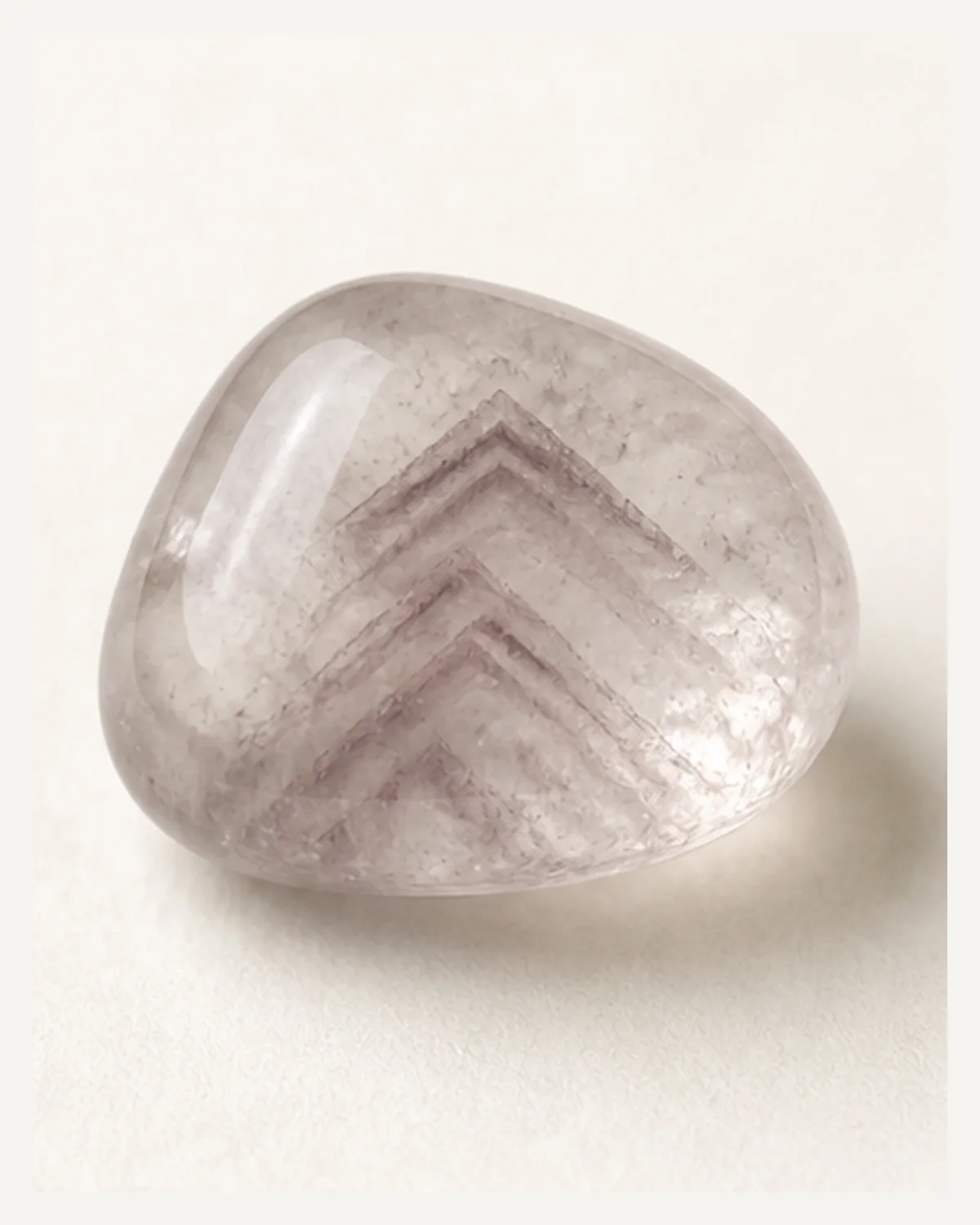
Quartz showing earlier growth stages or mineral layers enclosed by later crystal growth.
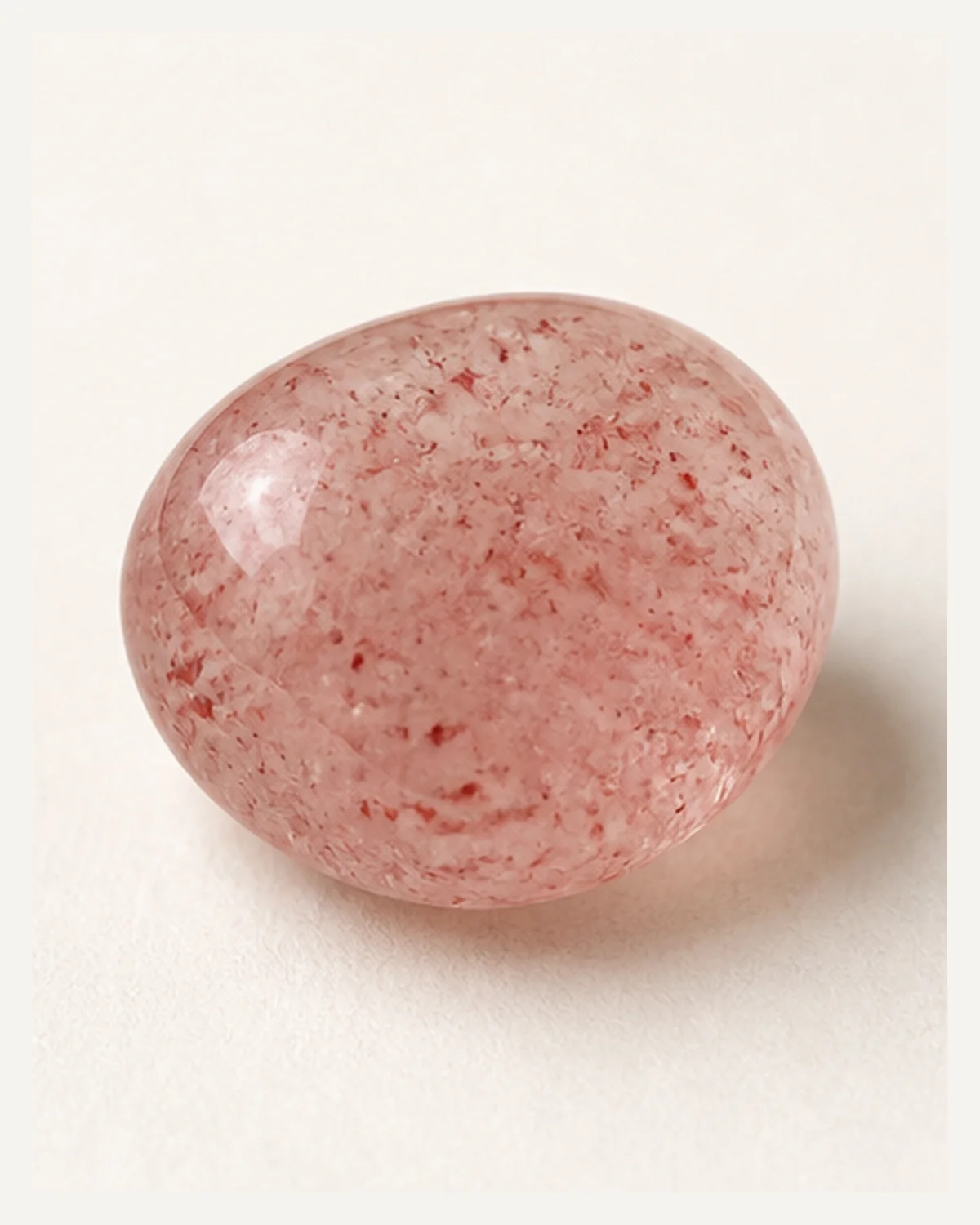
A broad market term for pink or red quartz with visible inclusions. The name does not identify one single mineral type.
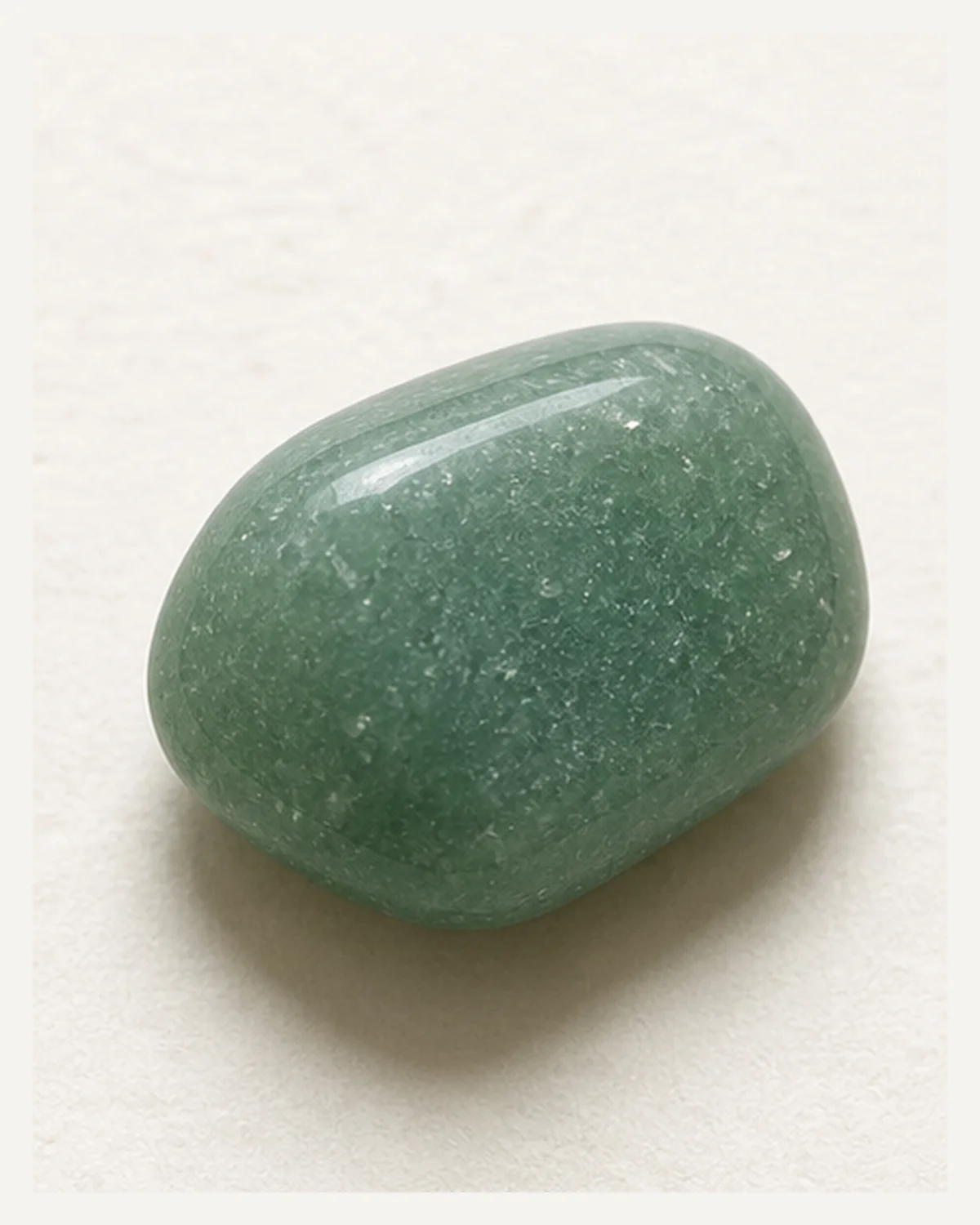
Quartz or quartzite with reflective mineral inclusions that can create a soft aventurescent effect.
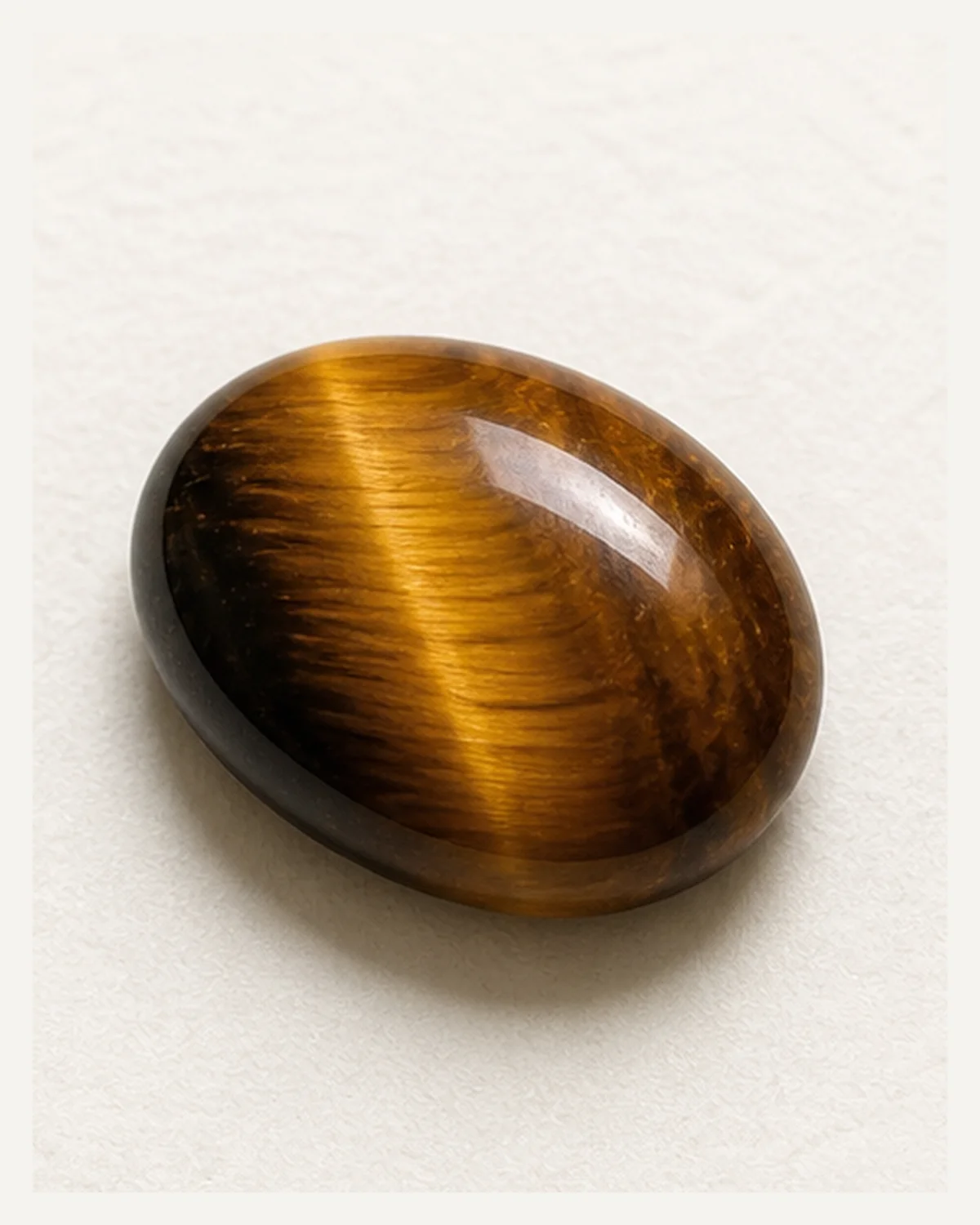
A chatoyant quartz material with a moving band of light created by aligned fibrous inclusions.
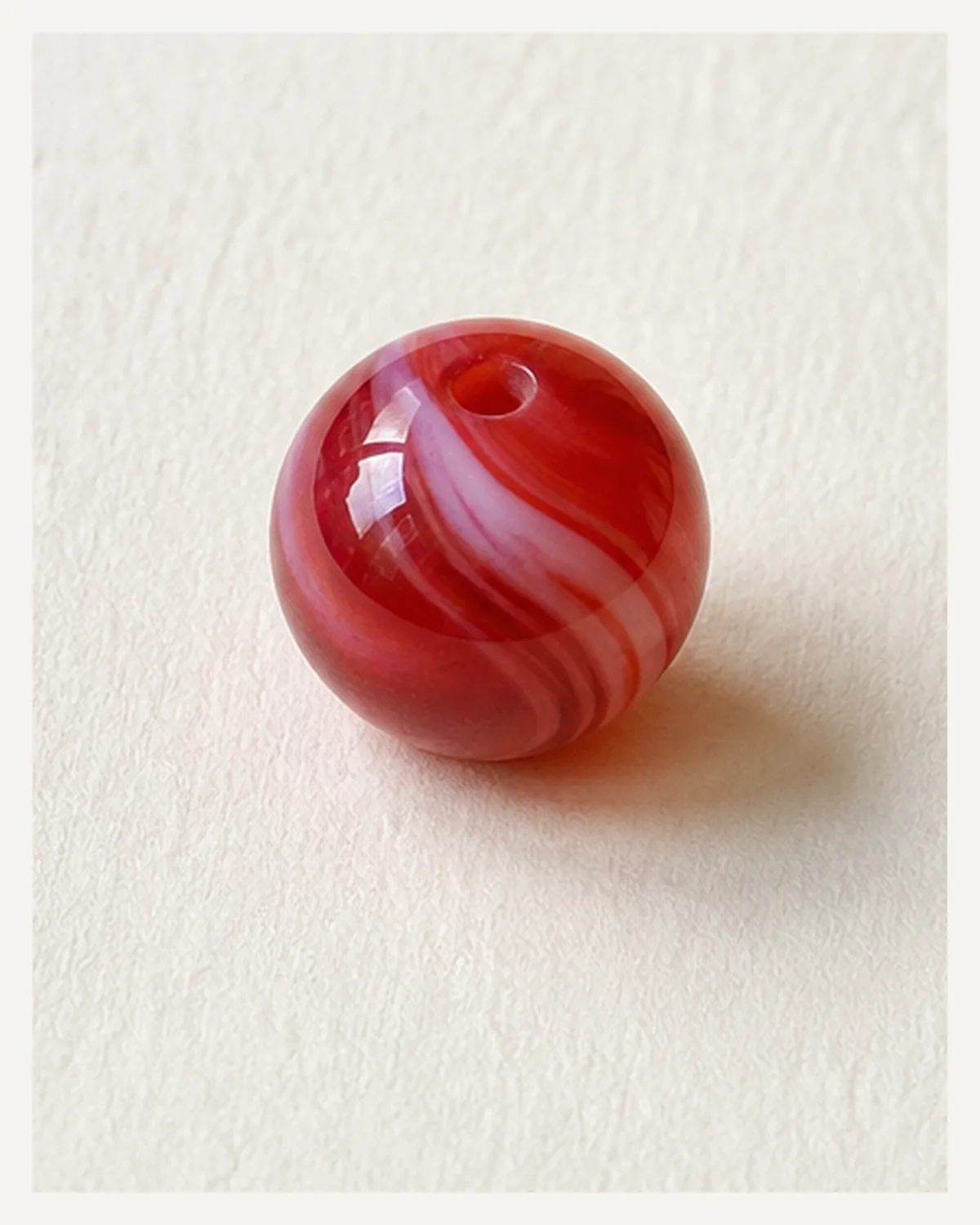
A banded form of chalcedony, a microcrystalline silica material whose layers can be natural or enhanced.
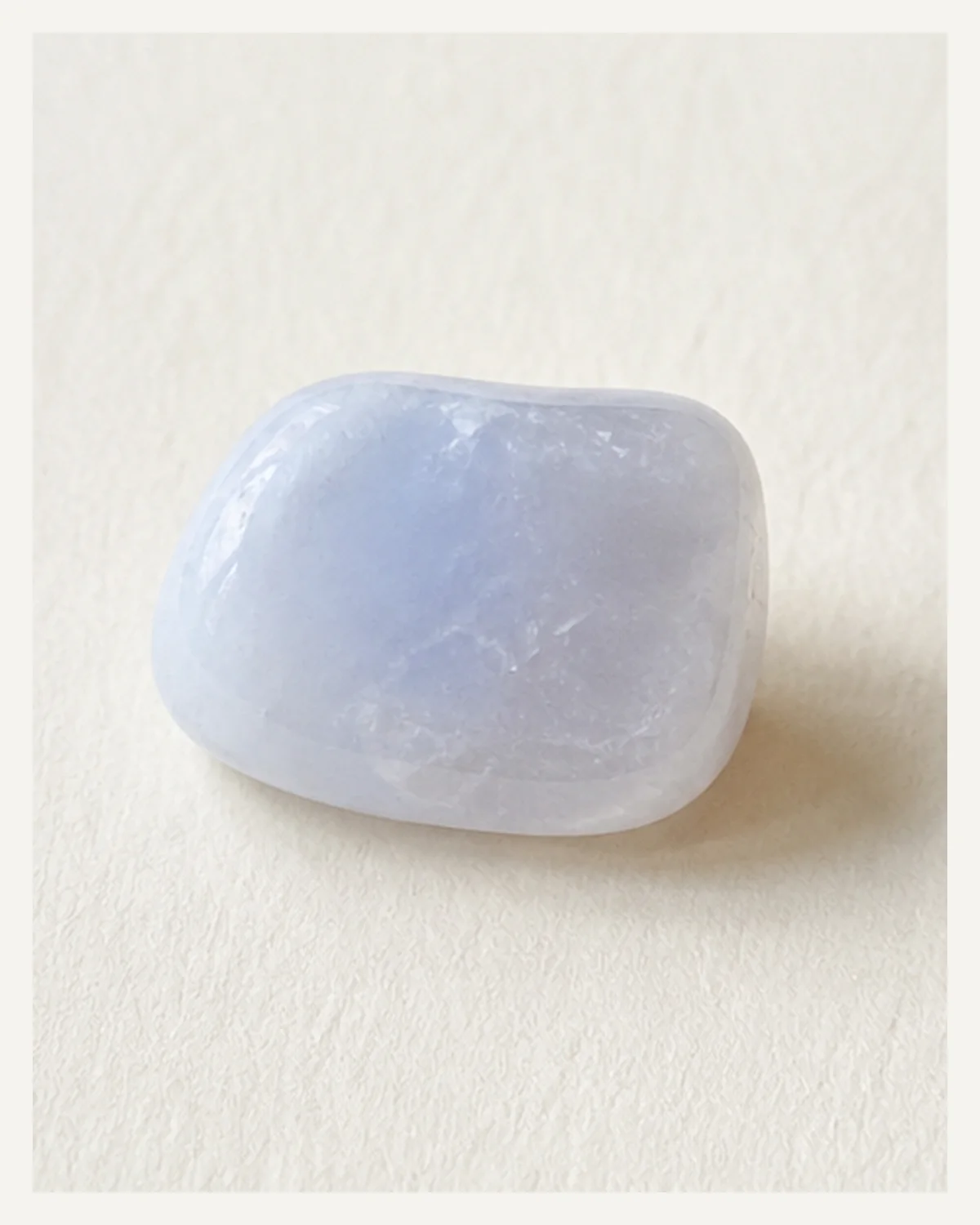
A microcrystalline variety of silica. Blue, green, pink, and other colours may be natural, treated, or market-made.
THE CRAFT LAYER
Our sourcing notes are a starting point for conversation: the grain that asks for gentler care, the inclusions that make every bead individual, and the finish that changes how a piece settles into daily life.
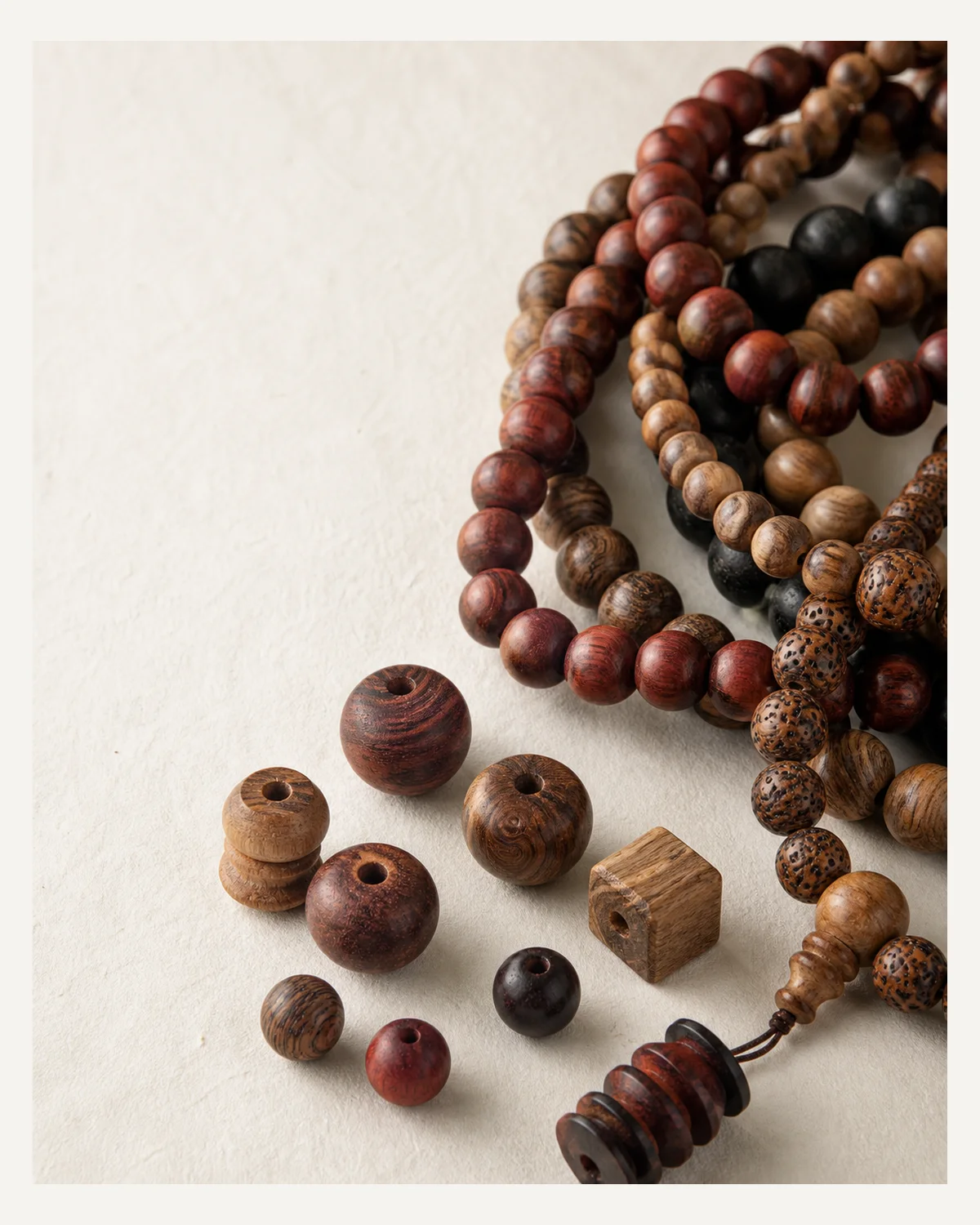
01 / Grain and gesture
Grain, pores, inclusions, translucency, and small shifts in tone are material signals, not defects to erase. They are also why an image can never replace a physical review.
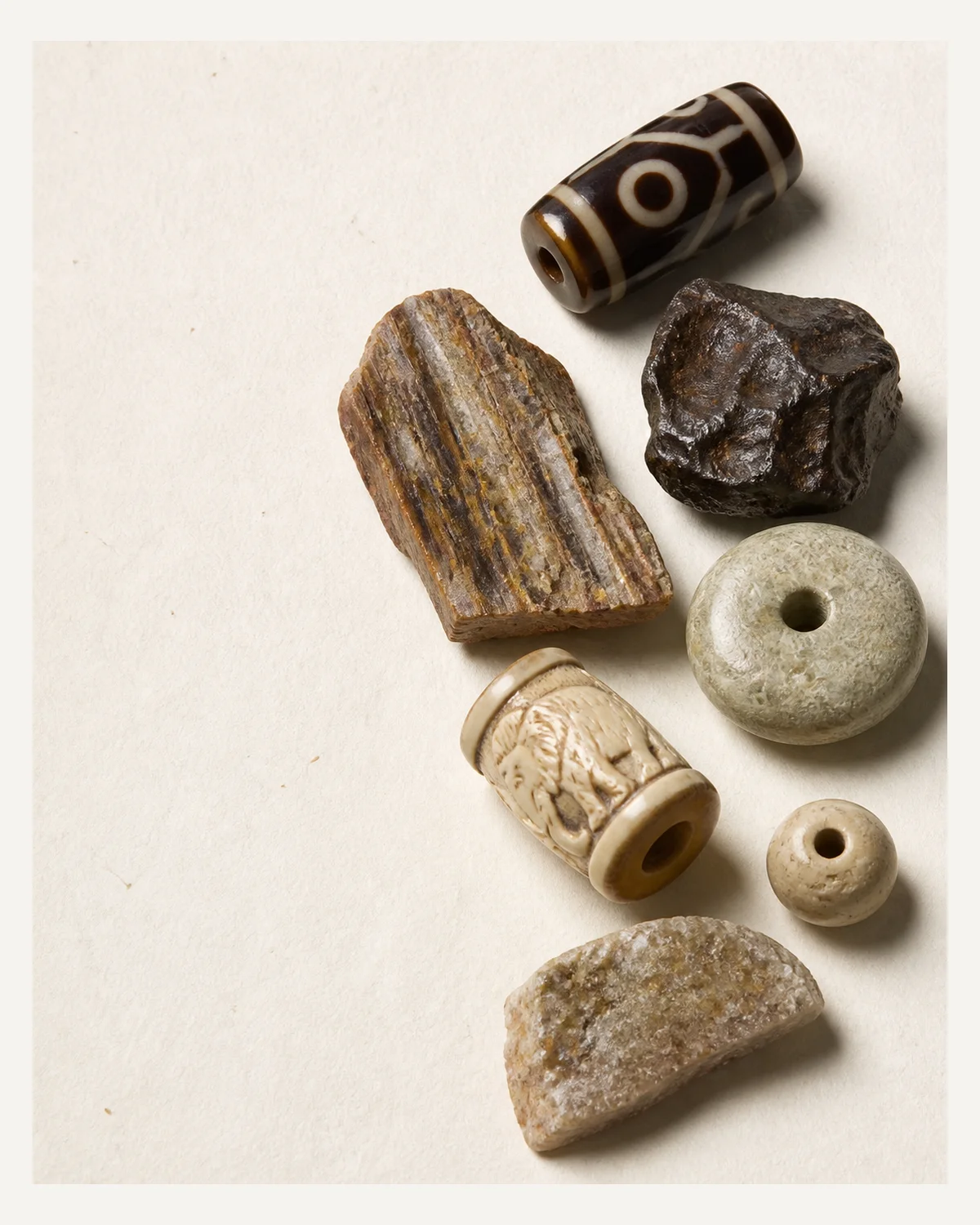
02 / The honest boundary
A polished surface, a name, or a beautiful story can invite attention. It cannot independently verify composition, treatment, origin, or safety. Those questions belong to the evidence trail.
Read the source noteCARE, CONTEXT, AND CLARITY
The most useful “effect” of a material is often practical: how it feels in the hand, how it changes with wear, and whether its care fits your routine.
Wood, shells, pearls, and softer surfaces ask for gentler handling and less moisture.
Five-elements and astrology language changes across schools, regions, and personal practice.
These references are not a substitute for medical advice or a claim of treatment.
A reference image can guide a conversation; it cannot certify the material in your piece.
EDITORIAL FRAMEWORK
This atlas is informed by foundational gemmological and mineralogical knowledge, established approaches to material identification, and the cultural traditions that have shaped how natural materials are understood and worn. Mineral facts, cultural context, and reflective language are intentionally kept distinct. Images serve as visual references for orientation; the material in an individual piece is confirmed by its own product information and evidence.
These notes are educational and editorial. Composition, treatment, origin, and care requirements remain specific to each piece and should be confirmed through product documentation and physical review.