WHY IT FEELS PRECISE
A dense chart can feel like certainty because it gives many kinds of uncertainty a visible place.
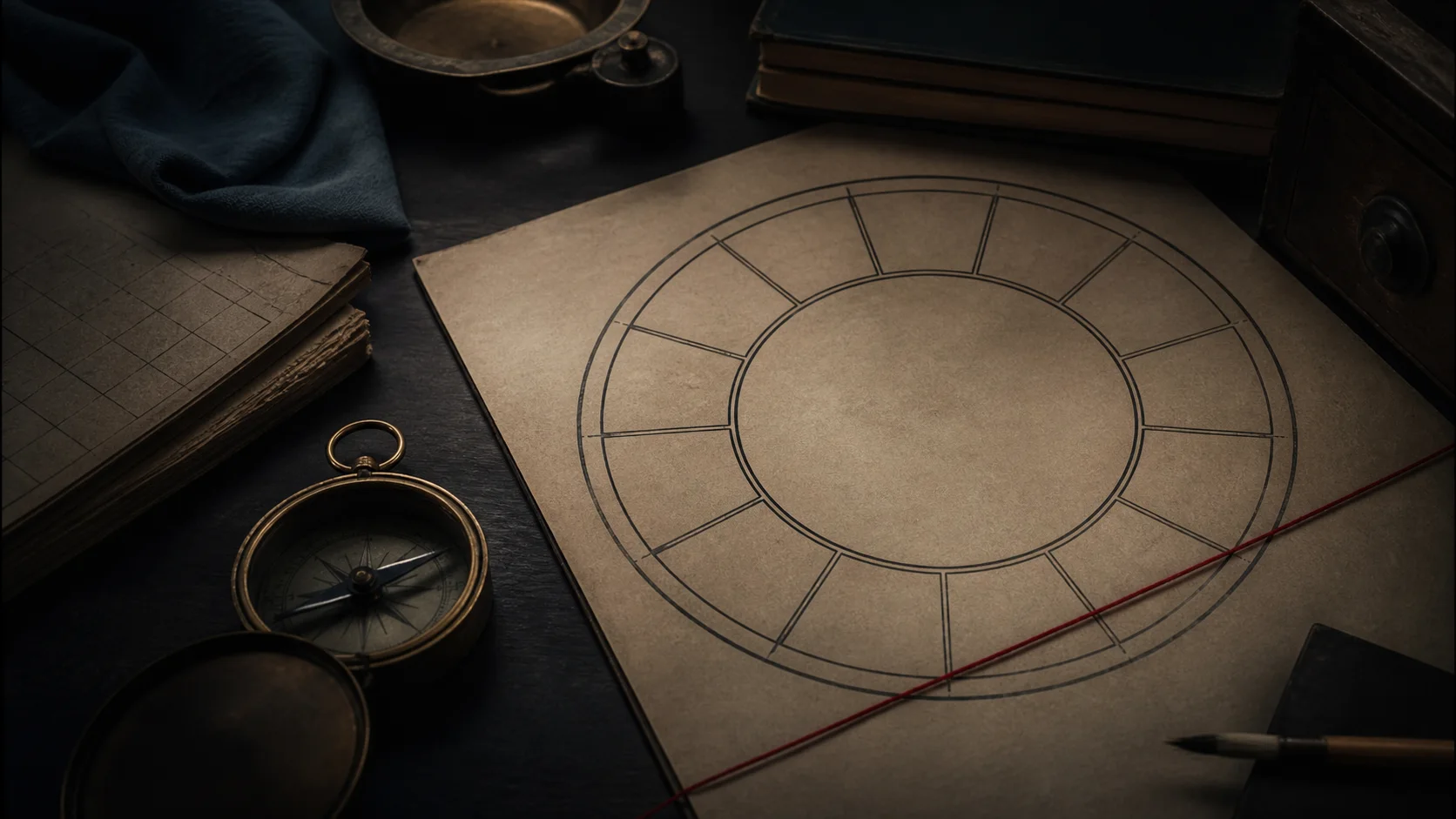
Zi Wei Dou Shu is often introduced in English as Purple Star Astrology. A reading begins with birth information and arranges symbolic stars across a chart of twelve palaces, or life domains. The visual density can be persuasive: there are names, positions, relationships, and layers that appear to describe a person from several angles at once. That structure can feel relieving when a life is difficult to name in ordinary language.
Precision of arrangement is not the same as certainty of outcome. A chart can organise a question without proving what the future will do. The first ethical move is therefore to slow down. Notice which part is a traditional term, which part is an interpreter’s explanation, and which part is a personal association that only the reader can test against lived experience. The chart may start a conversation; it cannot finish one for you.
“A structured language can clarify a question without becoming the authority over the person asking it.”
THE CHART IS AN ARRANGEMENT
Think of the chart as a map of relationships between symbols, not a list of fixed personality labels.
The twelve palaces give the reading a set of recurring lenses: selfhood, family, partnership, work, resources, movement, and other areas that shape a life. Star groupings then add texture to those lenses. One symbol may draw attention to responsibility; another to movement, visibility, learning, or constraint. The meaning does not live in a name alone. It emerges from placement, relationship, timing, and the question being asked.
This is similar to reading a landscape map. A contour line is not the walk itself. It tells you something about shape, slope, and possible effort. The actual walk includes weather, shoes, company, construction, and the decision to turn back. Use chart language in the same way. Let it suggest where to look, then compare the suggestion with what has actually happened and what you can choose next.


TWELVE PALACES AS LENSES
The palaces are more useful as questions about domains of life than as sealed rooms with one permanent meaning.
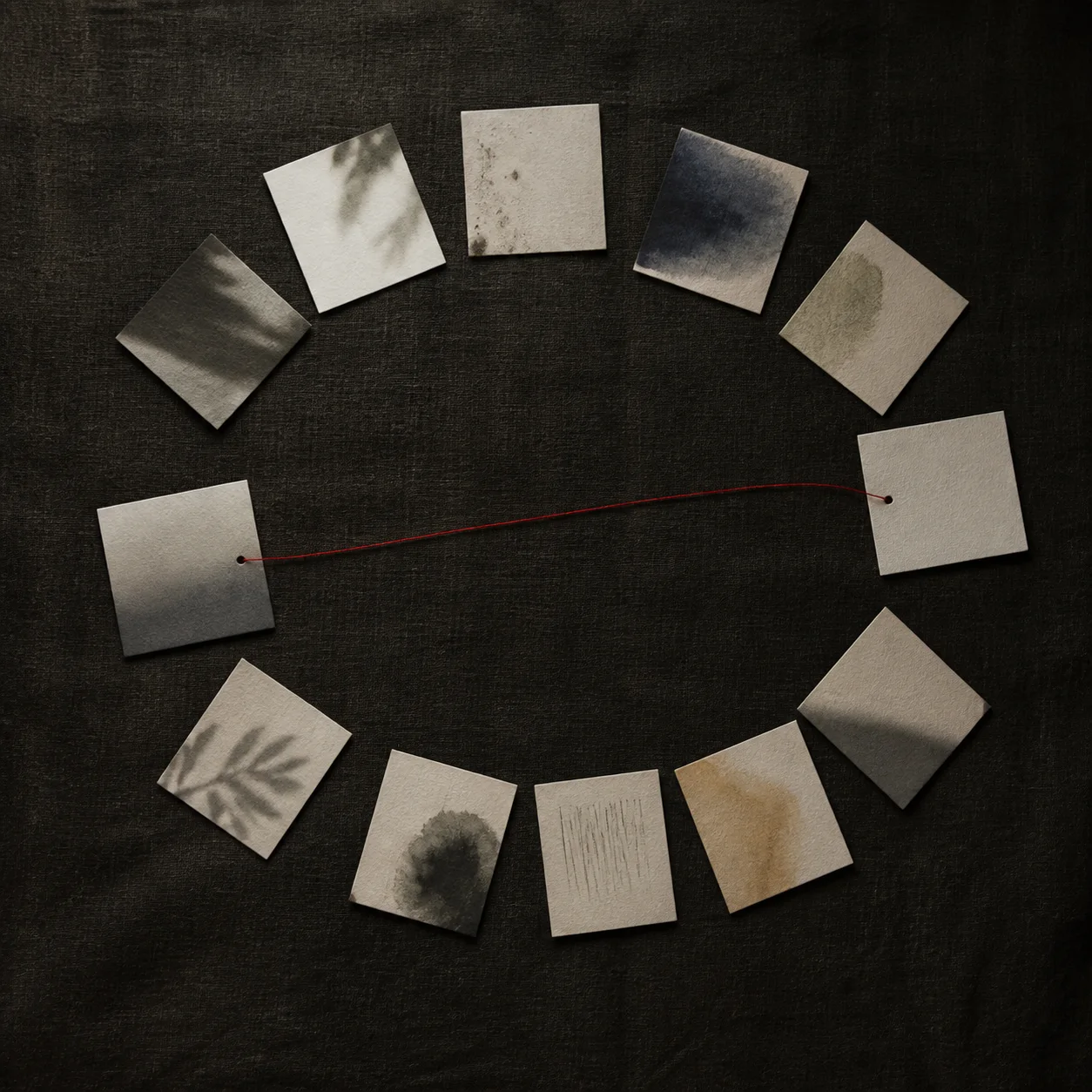
Begin with one domain that is already active. If work is changing, look at the career or achievement lens. If a relationship is under strain, look at the partnership lens and then ask what the rest of the chart is making visible about self, family, or communication. Do not force every palace to speak at once. A complete chart can still be approached one room at a time, with enough quiet to tell signal from projection.
Write down three columns: what the chart language seems to suggest, what I can observe in my present life, and what remains unknown. The third column matters. It keeps interpretation from becoming a story that only confirms itself. You may discover that the chart’s most valuable function is not naming a destiny but showing where you have been using one old explanation for several different problems.
HISTORY NEEDS HUMILITY
A traditional system deserves context, and its history should not be simplified into one dramatic origin story.
Popular accounts often attach Zi Wei Dou Shu to the legendary figure Chen Tuan and present the system as if it arrived fully formed from a single source. The historical record is more complicated. Traditional attributions, later textual transmission, printed manuals, regional practice, and modern interpretation do not always line up neatly. A respectful introduction should make room for what is known, what is traditionally claimed, and what remains debated rather than turning uncertainty into a more marketable myth.
That humility also changes the reading experience. Cultural context is not a disclaimer added after the interesting part. It tells you how to hold the language. You are encountering a historical practice with its own vocabulary and lineages, not borrowing a mysterious aesthetic to make a generic personality quiz feel deeper. Learn the terms, cite the limits, and let the person in front of the chart remain more complex than the chart.
THREE QUESTIONS BEFORE A VERDICT
A useful reading should leave you with better questions, not a sentence you are afraid to disobey.
Ask three questions. First, what pattern is this reading inviting me to notice in my current life? Second, what evidence supports that observation, and what evidence does not? Third, what is one small action that would give me more information without putting my agency at risk? The action might be a conversation, a boundary, a practical review of money or time, or a decision to wait until more facts arrive.
Keep a reading dated. Return to it after a month and mark what became clearer, what changed, and what never belonged. This turns fate language into a reflective record rather than an authority you keep obeying. Do not use a chart to diagnose illness, guarantee money, decide someone else’s feelings, or replace professional advice. When a situation needs real support, choose real support. A symbolic tool is strongest when it knows where its reach ends.

CARRY THE QUESTION
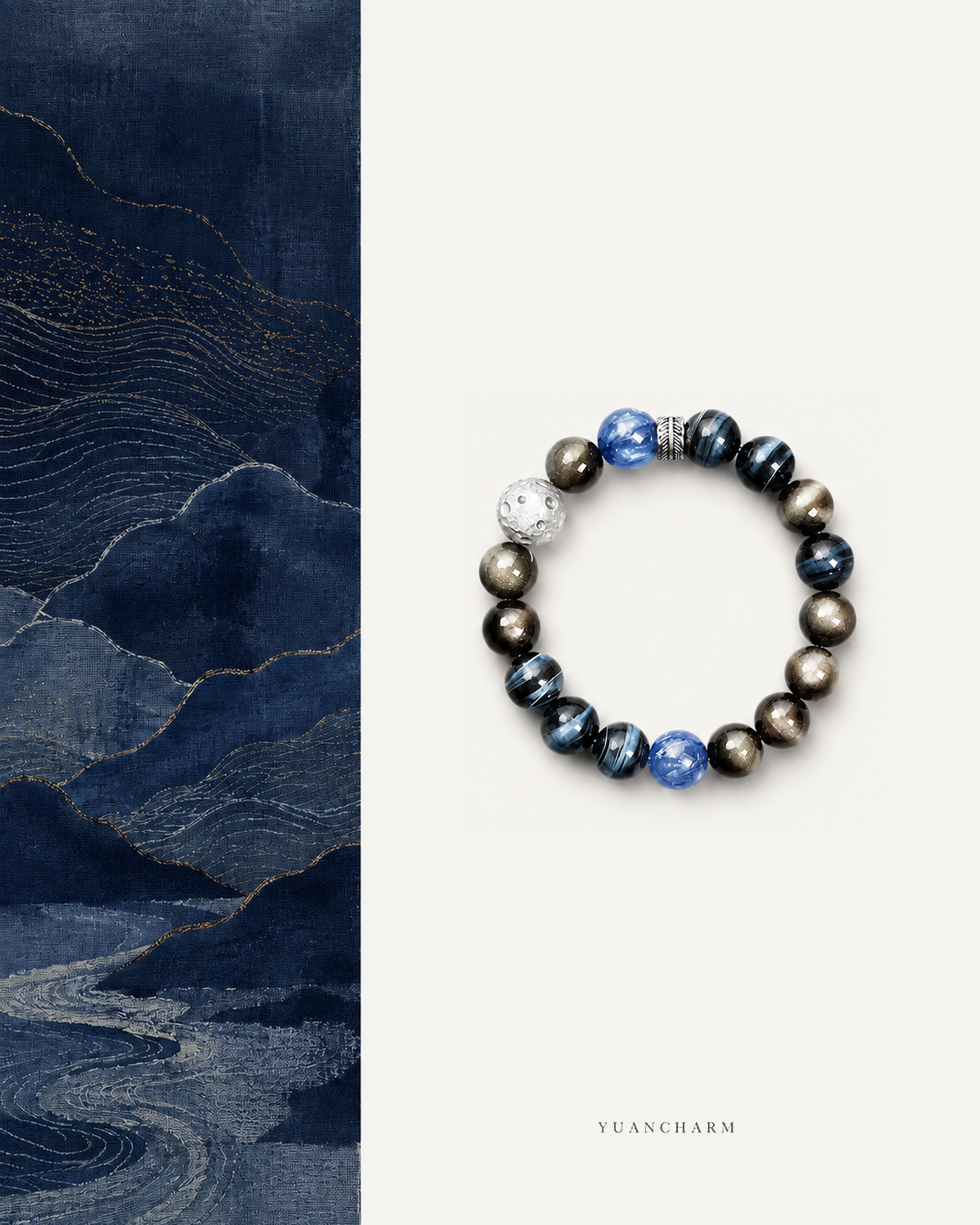
Midnight Meridian is an object for carrying a question, not a verdict about where you are going.
Its deep blue and graphite tones, banded blue accents, silver-toned detail, and circular rhythm echo the article’s central idea: a life can have structure without becoming fixed. The design gives the eye a point to return to when a question is still moving. It does not claim to translate a chart, protect you from uncertainty, or make an interpretation true. The wearer remains the person who notices, decides, and revises.
If you enter YUAN FATE, begin with one reading and one honest question. Let the result be language you can examine rather than an instruction you must follow. Record what resonates, what does not, and what practical step would help you learn more. Fate is not made smaller by admitting uncertainty. A reading becomes more humane when it leaves enough room for the life that exceeds its symbols.