LOOK BEFORE YOU NAME
The first responsible act is simply to notice what is actually in front of you.
A motif often reaches us as a feeling before it arrives as a fact. We see a circle, a knot, a cloud, a guardian animal, or a repeating line and immediately begin to supply a story. That impulse is not wrong. Visual language works partly because it creates a quick emotional response. The trouble begins when a response is mistaken for a complete history, or when a borrowed description is repeated as though it were true everywhere and for everyone.
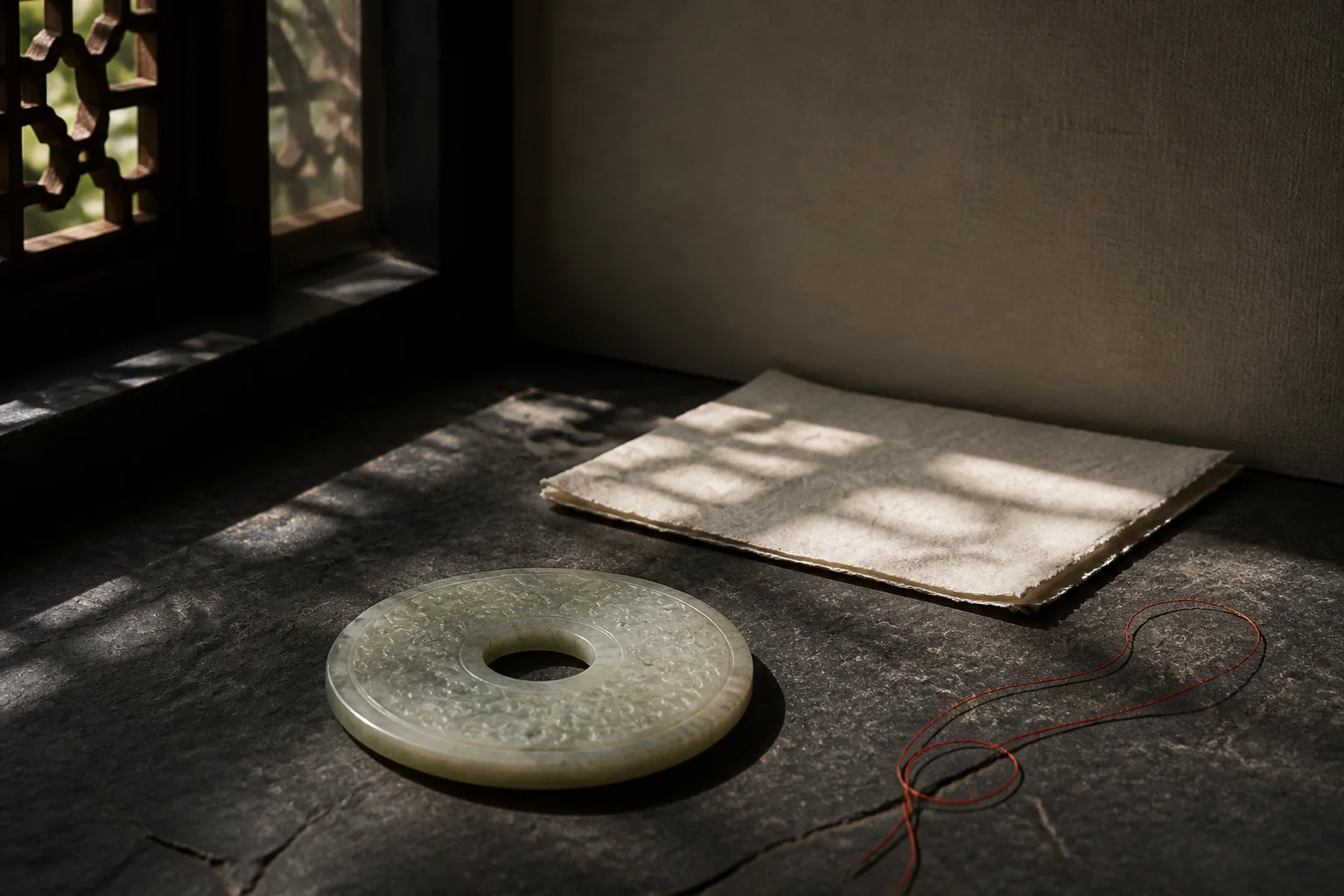
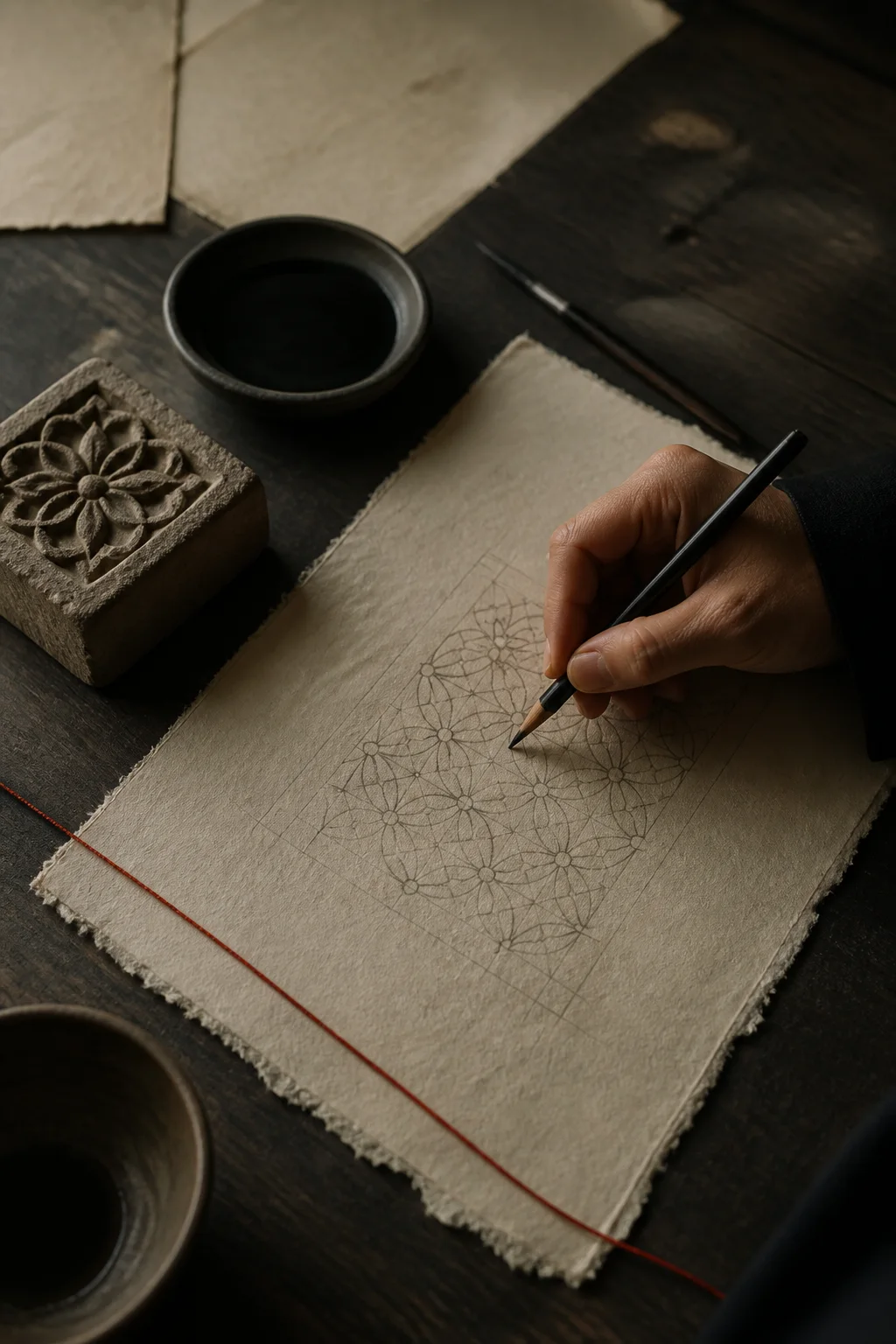
Start with the form itself. Is it carved, painted, woven, stamped, or assembled? Does it belong to a building, a vessel, a garment, a ritual object, or a contemporary accessory? What materials, scale, placement, and surrounding details change the way it is read? These questions slow the eye just enough to separate observation from interpretation. They also make room for the possibility that an object can be beautiful before its story is fully known.
“Attention is not a delay before meaning. It is the beginning of meaning.”
PLACE BEFORE MOOD
A motif has a place, a maker, and a history before it becomes a mood board.
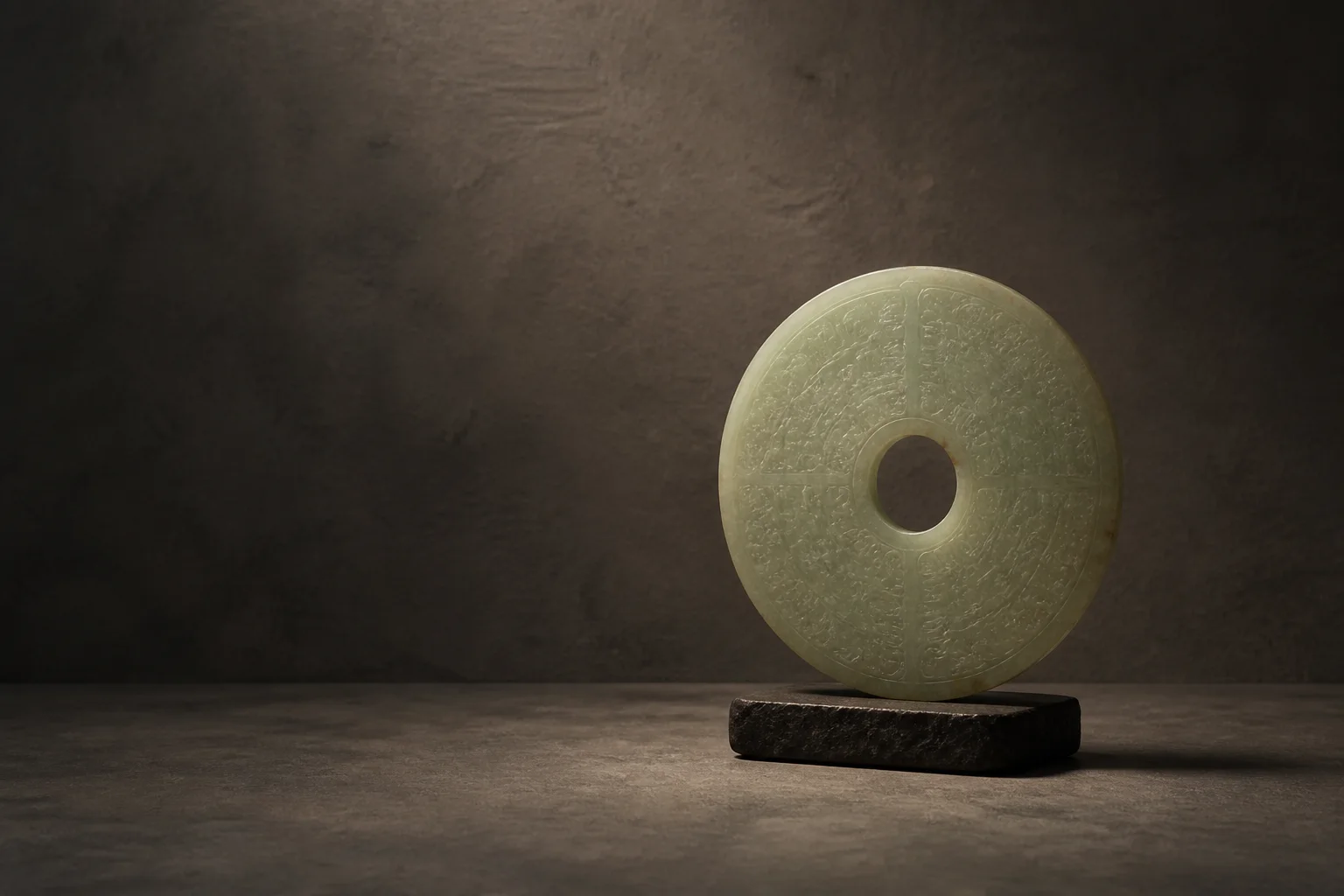
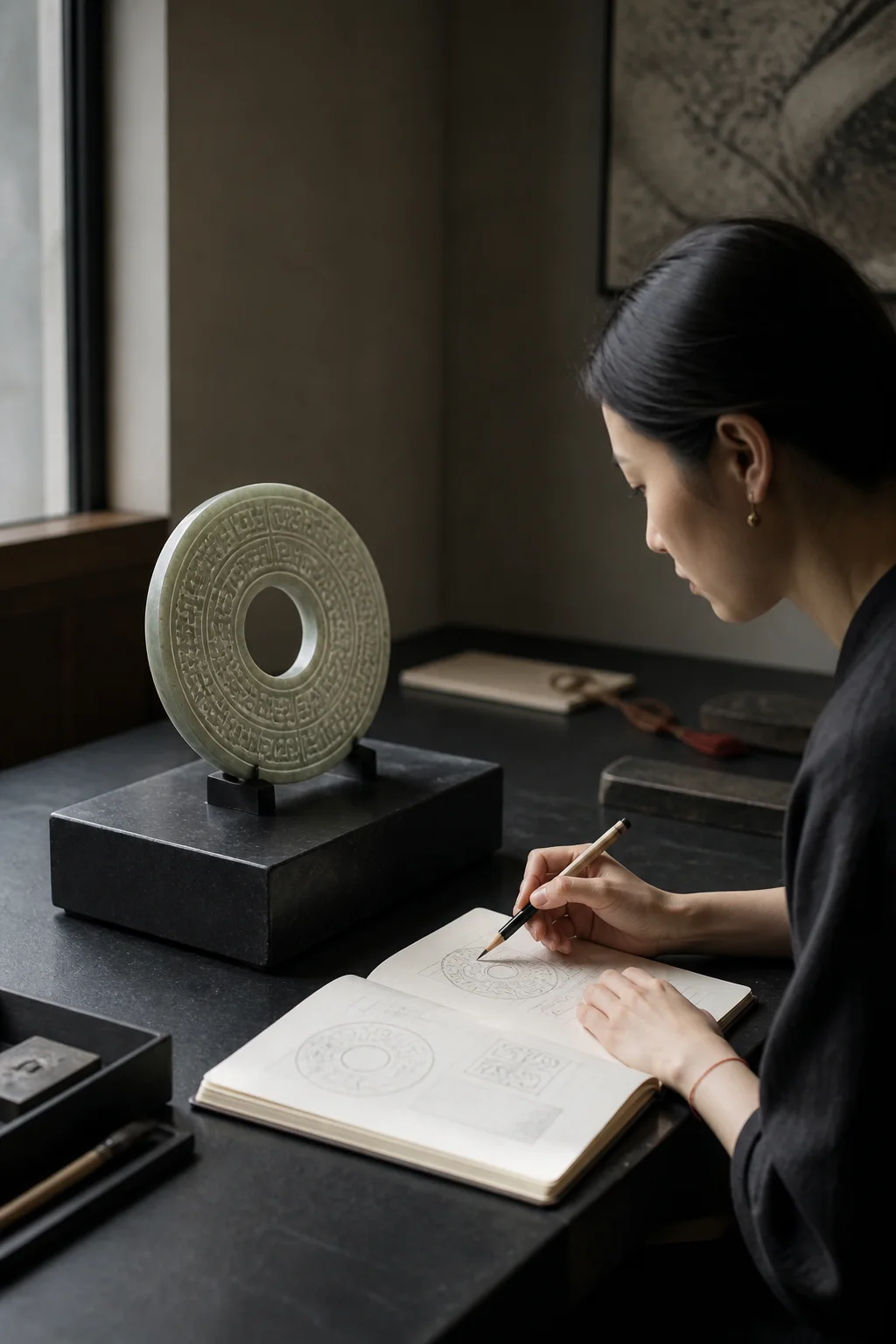
Museum collections show how often a familiar shape has travelled across time and use. Jade, for example, has been admired for its material qualities and associated with different values across Chinese histories, but no single modern caption can stand in for every object. The same broad form may carry different weight depending on its date, location, function, and the people who handled it. Material beauty can survive a change of context; meaning does not always travel intact.
This is a useful distinction for contemporary design. A piece inspired by an old shape may be an honest act of translation, but it should not quietly present itself as the original ritual object or as the owner of one ancient promise. Say what the design is doing now. Name the visual decision, the material contrast, or the emotional direction. Precision makes the new work more interesting because it lets the past remain specific instead of turning it into decoration without a home.
UNKNOWN IS USEFUL
When the record is incomplete, uncertainty protects the object from a story that is too neat.
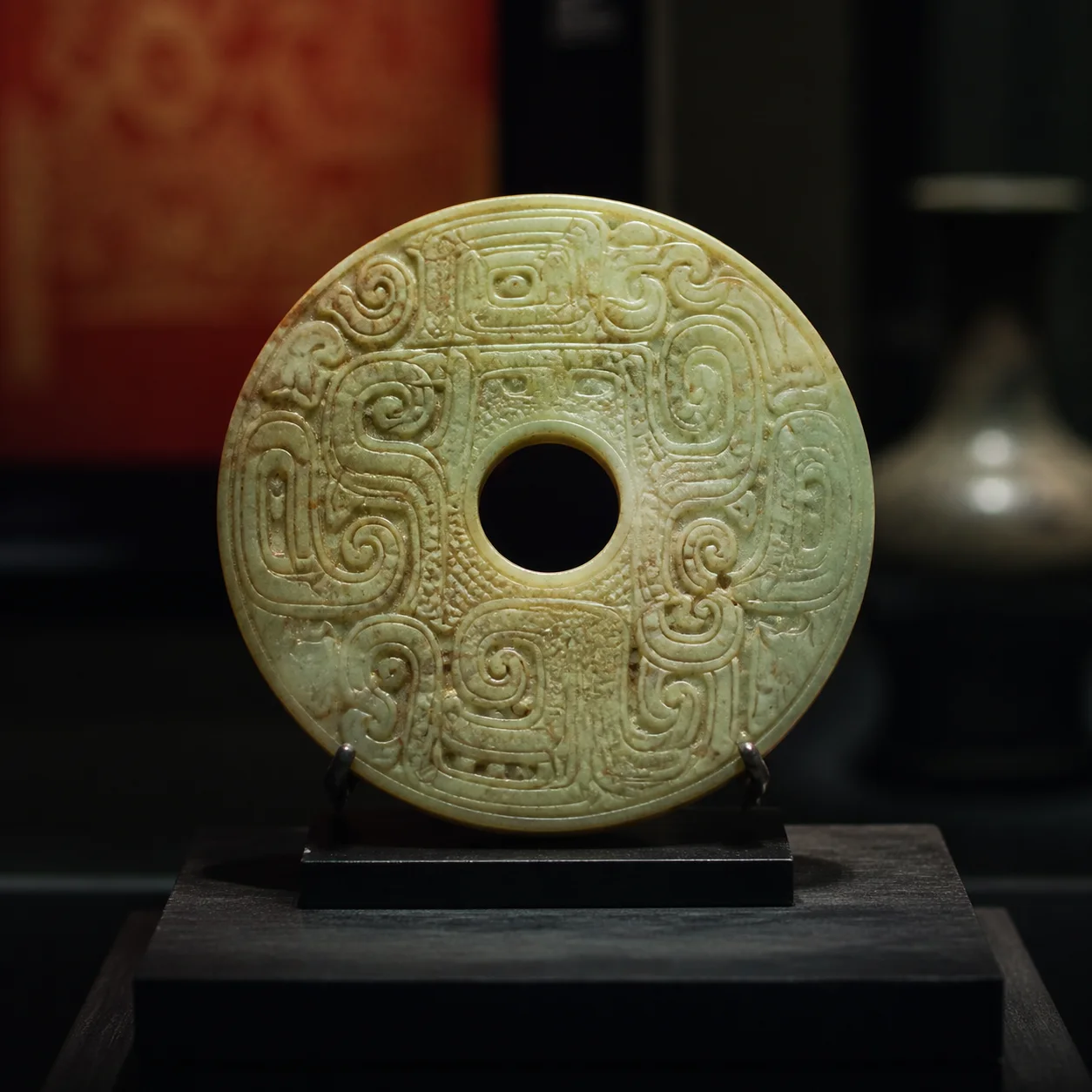
Historical interpretation is not a machine that converts every shape into a fixed definition. The Smithsonian discussion of an early jade tube, for instance, preserves questions about its original meaning and function rather than pretending that a later explanation is certain. Other objects invite comparison with bracelets, disks, or ritual forms, yet comparison is not proof. The gap in the record is part of the record. It tells us to hold the object with curiosity instead of forcing it to perform certainty.
That habit is especially valuable online, where a short sentence can turn into a repeated claim within minutes. Before you share a symbol, ask whether you are describing what a source says, what a community currently practices, or what the form suggests to you personally. Those are three different kinds of knowledge. Keeping them separate is not academic fussiness. It is a way of respecting the people and histories that made the form available to your imagination.

TRANSLATE WITHOUT PRETENDING
Modern design can carry an echo of a motif without claiming to own its entire meaning.
Translation is not imitation with the labels removed. It is a sequence of choices: which proportion to keep, which edge to soften, which material to place beside it, and which color to let speak first. A contemporary talisman may borrow the calm of a circular structure, the tension of a tied line, or the balance of repeated units while remaining clearly a new object. Its meaning is made through present use, not inherited automatically through resemblance.
This is where restraint becomes a form of respect. Let one accent remain legible. Give the eye enough quiet to understand the design before adding more references. If the object is meant to accompany a personal intention, describe that intention as yours or the wearer's. A private association can be sincere without being universal. The difference between a claim and an invitation is often only a few careful words, but those words change the ethics of the whole encounter.
A THREE-PASS READING
Use three passes: describe the form, locate the context, then choose your own line.
On the first pass, write only what a camera could record: shape, line, surface, material, scale, and placement. On the second, locate the object as honestly as you can. Look for a museum record, a maker's account, a community source, or a reliable historical explanation. Mark what is established and what remains open. On the third, ask what the form brings up in your own life. Does it help you remember patience, return, courage, connection, or a boundary? That answer can be personal and still be worth having.
The three passes keep the emotional response alive without asking it to masquerade as research. They also make shopping more discerning. Instead of asking whether a product contains a powerful symbol, ask what you can actually see, what the maker says the design is for, and whether the object gives your own meaning enough room to grow. A good object does not need to over-explain itself in order to stay with you.
CARRY THE QUESTION
The most durable symbol may be the question you keep returning to.
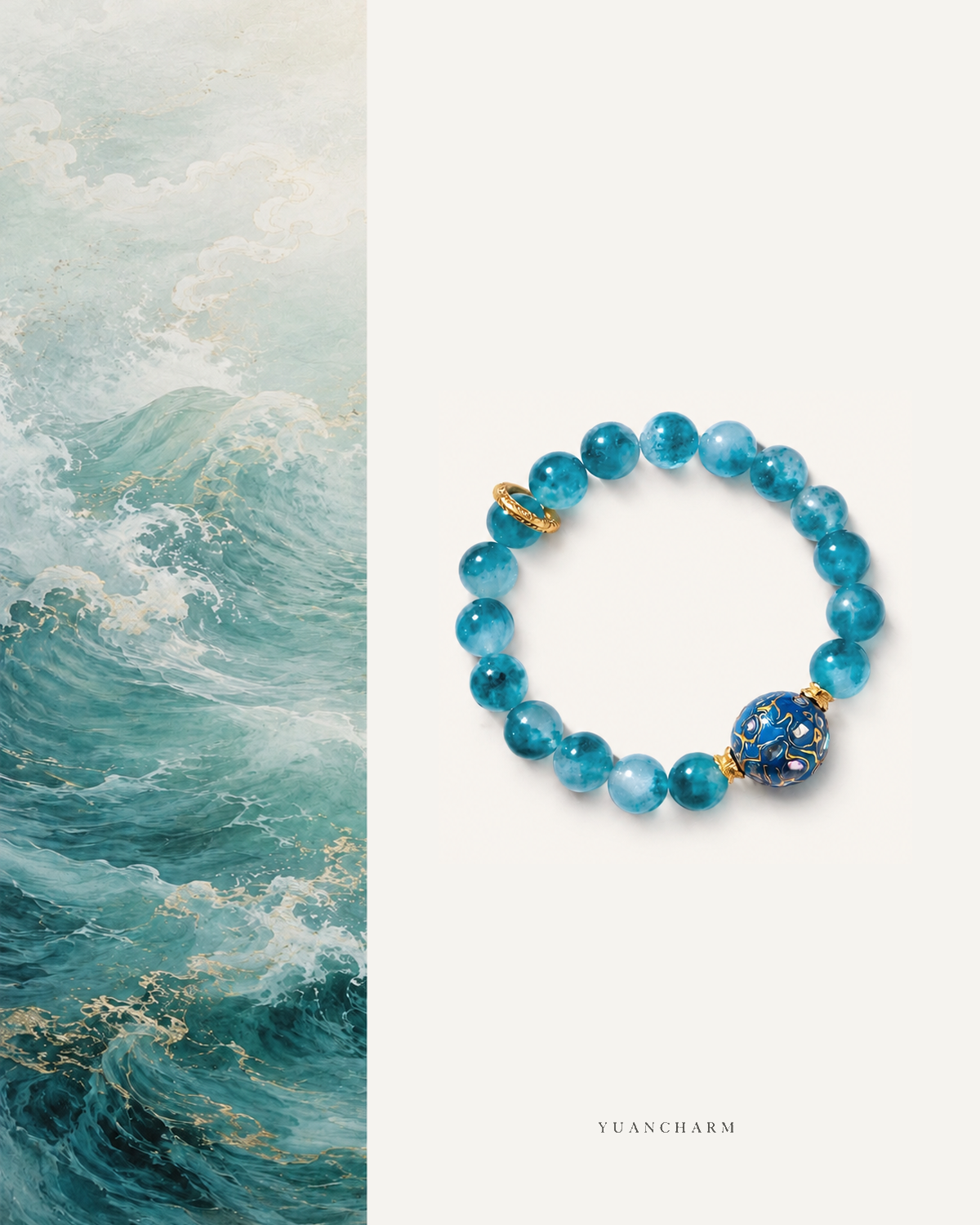
Azure Crest is designed in this spirit: blue chalcedony, a lacquered focal accent, and gold details arranged as a contemporary composition rather than a claim to one inherited emblem. Its value is visual and tactile first. If it becomes meaningful, that meaning can come from the question you choose to associate with it: what deserves a clearer edge, what needs more patience, or what kind of presence do you want to practice this season?
A symbol does not have to solve the future to accompany the present. Let the object remind you to look again, verify what you can, and keep your own interpretation proportionate to the life it is meant to serve. The thread between culture and personal meaning becomes stronger when neither side is forced to disappear.